Espoma Organic
  • Products
    • Close
    • Product Line Overview
    • Plant food finder
    • Garden Fertilizers
    • Potting Soils
    • Lawn Fertilizers
    • Liquid Fertilizers
    • Single Ingredients
    • Conventional Plant Foods
    • Animal Care Products
  • Where to Buy
  • Our Story
    • Close
    • Our Story
    • Locations
    • Historical Timeline
    • Our Commitment
    • Directions
    • Solar
    • Join our Team
    • Espoma Brand Partners
  • Learn
    • Close
    • Espoma Blog
    • FAQ’s
    • Pocket Guide
    • Espoma Guides
    • Garden Clubs
    • Safe Paws Lawn
    • PRODUCT FACT SHEETS
    • Fertilizer Fundamentals
      • Close
      • Understanding Plant Nutrition
      • Reading Labels
      • Choosing the Right Type of Fertilizer
      • Terms & Definitions
    • Gardening Projects
    • Resource Links
  • Contact Us
  • Menu Menu

Tag Archive for: organic plant food

Step-by-Step: Prep the Garden for Winter

November 4, 2015/in Fall Gardening

Did you feel that? Jack Frost has flown in for the season. We’ve already felt the first nip of cold weather, which means your garden has, too.

For many, the first frost date arrives in late October or early November.

Help your garden weather the cold this season. Prepare the lawn and garden beds now for an easy, fruitful spring.

Gardening for winter consists mostly of outdoor cleanup, followed by an indoor revival. Cleanup first, though!

winter lawn

Clip, Drip and Equip the Garden before Winter

  • Discard the Deceased. Compost spent annuals and vegetable plants.
  • Protect Perennials. Water perennials (rose bushes included!) once more. Then, after the ground freezes, cut perennials back to 3”, and remove any dead or diseased cane on roses. Finally, mulch.
  • Create a Clean Slate. Remove weeds from garden beds and then create superb soil. Take the soil test and add organic amendments as needed. After a hard freeze, mulch beds.

winter-lawn-care

So Long to the Lawn

  • No More Mow. Stop mowing the lawn once the grass stops growing, usually in late October or early November.
  • Seal the Seed. Reseed bare, thin spots in the lawn.
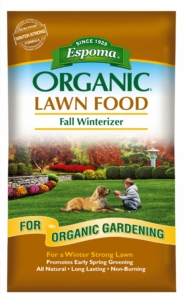
  • Winterize to Win. Apply Espoma’s organic Fall Winterizer to cool-season grasses. This is hands down the year’s most important lawn fertilization!

winter garden tips

Ta-Ta for Now Trees

  • Leave the Leaves. Turn those golden leaves into garden gold by composting them!
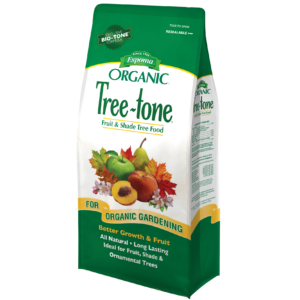
  • Bolster the Bark. Feed trees with an organic tree fertilizer, such as Espoma’s Tree-tone for winter sustenance.
  • Stare at the Bare. After the leaves have fallen, examine your tree for weak spots and problems to prevent damage from fallen tree limbs during snow storms.

Your garden’s been put to bed for the winter and will surely sleep soundly. Now, let’s focus on those incredible indoor plants to keep you gardening all winter long.

*****

Featured Products:


Where to Buy

https://www.espoma.com/wp-content/uploads/2015/11/bush-582239_640.jpg 480 640 espoma https://www.espoma.com/wp-content/uploads/2023/05/espoma-logo340w-1.png espoma2015-11-04 14:50:392023-11-13 14:16:47Step-by-Step: Prep the Garden for Winter

Host a Haunted Homegrown Halloween Dinner

October 27, 2015/in Fall Gardening

Round up the whole gang and dress in your best for a spine-chilling, homegrown Halloween meal.

Start by gathering the fruits of your organic fall gardening efforts, or head to your local farmer’s market to see what’s in season.

Boo! Prepare a Spooky and Scrumptious Homegrown Halloween Dinner (Because even goblins and ghouls prefer homegrown on Halloween.)

halloween decor

Scary Snacks. Cook up a few frightful and finger-licking good snacks.

  • Phantom Pumpkin Pudding – Stuffed with yummy cranberry-raisin bread pudding.
  • Cackling Caramel Apples – Use fresh-picked apples for the best taste!
  • Ghouly Goodies – Make with homegrown or local eggs.
  • Midnight Morsels – Dark cheeses and fruits elevate this cheese tray from berry to scary!

Capture

Frightening Feast. All the best fall flavors featured in fangtastic dishes.

  • Witches’ Brew – A cursed homemade cider.
  • Sinister Soup – A terrorific tomato soup.
  • Autumn Arugula Salad – Shadowy colors and supernaturally good squash.
  • Acorn Squash Cauldrons – Overflowing with chestnuts, apples and leeks.
  • Bewitched Brussel Sprouts – Oozing balsamic goodness.

halloween decor

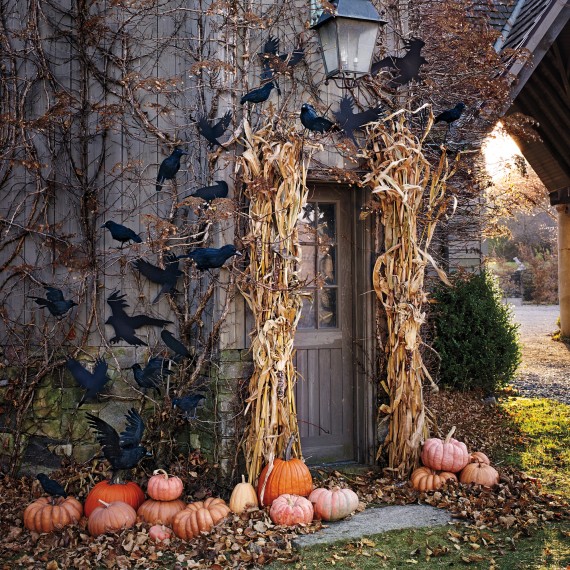
Daring Decor. Use organic and recycled material to create eco-friendly Halloween decor.

  • Stack, scatter and spread pumpkins and gourds inside!
  • Transform old wine bottles into decorative jack-o-lanterns.
  • Add corn stalks and Indian corn.
  • Make a spooky skeleton using recycled milk jugs.
  • Plant paranormal plants in dark containers using organic soil. We’re thinking: spider plants, earth star plants, black orchids and Venus flytraps.

And don’t forget to Post a Pumpkin. Whether you carve, paint or bedazzle your pumpkin, there is still time to show it off in our “Pumpkin Decorating Contest.”

  • To enter, like Espoma on Facebook.
  • Click the Contest Tab and upload a picture of your pumpkin.
  • The photo with the most “likes” on November 3 wins $250. So encourage friends to vote.

Talk about a hoot of a Halloween party! Imagine how much fun your friends and family will find this homegrown Halloween garden dinner!

https://www.espoma.com/wp-content/uploads/2015/10/Capture2.jpg 476 739 espoma https://www.espoma.com/wp-content/uploads/2023/05/espoma-logo340w-1.png espoma2015-10-27 08:32:442024-09-06 13:32:41Host a Haunted Homegrown Halloween Dinner

Score More from Your Organic Fall Garden Crops

October 6, 2015/in Fall Gardening

Organic gardening in the fall always feels like such a treat. Even though the leaves may be changing, your veggie garden is still going strong! While the seasons are transitioning, you’re making the most of every moment — going to football games, bundling up in cozy sweaters, and munching on homegrown produce.

Help your organic garden to produce more veggies than ever this fall with these four tips.

1. Feed to Succeed. Feed your veggies once a month for a bigger, bountiful harvest. This is especially important if you had other crops planted in the same spot earlier. Those crops depleted the garden soil of its nutrients. Luckily, an organic plant fertilizer replenishes the nutrients to keep your produce growing strong.

Step-by-step instructions on adding an organic plant fertilizer here!

2. Pick of the Pack. The more you pick, the more produce you get! Once your crops start ripening, go out and pick every day.

Here’s when to harvest your organic veggies:

  • Lettuce and spinach: Cut outer leaves when young and tender.
  • Kale: Pick when the leaves are as big as your hand.
  • Carrots: Pick when the top of the carrot is 1”
  • Broccoli: Cut broccoli when its head is 4-7”
  • Cauliflower: Cut when its head is between 2-3”

3. A Fresh Feast. Plan your weekly dinners around what’s in harvest in the garden. This is the last hurrah for homegrown meals from the garden, so make the most of it. Of course, save some for winter,

4. Discover the Cover. If the chance of frost arrives earlier than expected, protect your crops. Water and then cover with a sheet, blanket or tarp. Use stakes to keep the cover from touching the plants.

Crunch! How amazing is it that you’re still harvesting veggies from your organic garden in autumn?!

https://www.espoma.com/wp-content/uploads/2015/10/veggies-646107_640.jpg 326 640 espoma https://www.espoma.com/wp-content/uploads/2023/05/espoma-logo340w-1.png espoma2015-10-06 10:13:212019-05-07 10:08:08Score More from Your Organic Fall Garden Crops

One, Two, Three – What Soil Tests Numbers Really Mean

September 15, 2015/in Fall Gardening

With just a tiny bit of water, a handful of seeds and some sunshine, your garden makes its own magic.

Well, almost! Your plants get all their food from the soil, too. After a busy summer, it’s time for your soil’s checkup, so your soil can keep growing its best.

Perform a soil test to see what your soil needs. And, we’ll help you understand what those numbers mean!

Scoop, Snoop and Score Soil.

Your soil’s health is a mystery waiting to be solved. All you need to do is grab a handful of soil and examine it. Send it off to your local extension service. Or, get down and dirty, and DIY it. Here’s how to perform a soil test.

Soil tests measure the nutrients available to plants along with their pH level. Garden soil should be between 6.0-7.0 pH, while the ideal pH for grass is 6.5-7.0.

  1. Low pH? Power the Sour. You’ve got sour, also called acidic, soil with a pH level under 7. Before remedying, remember some plants like this! Raise soil pH levels by adding Espoma’s Organic Garden Lime.
  2. High pH? Treat the Sweet. Soil with a pH level over 7 is known as sweet, or alkaline, soil. To fix, add Espoma Organic Soil Acidifier.

Conclusion Confusion. Understanding Soil Test Numbers

Looking at your soil test, your head may start spinning. What do all those numbers mean? Stick with us, your teacher at Espoma’s Garden School, to learn!

  1. When to N. The “N” on your soil test stands for nitrogen, which helps leaf growth. To raise nitrogen levels, add an organic fertilizer with a higher nitrogen level. Or, use blood meal or fish meal. To lower nitrogen levels, choose a fertilizer with less nitrogen.
  2. Be the P. “P” represents phosphorus, which helps plants flower and grow fruit. Need more phosphorous? Use an organic fertilizer with a higher percentage of P. Or, add bone meal. To lower phosphorous numbers, cut back on the P on the fertilizer bag.
  3. Way of the K. “K” stands for potassium, which helps plants resist diseases and grow healthy roots. If you have too much K, use an organic fertilizer with less potassium. Likewise, if you need more, opt for an organic fertilizer with a higher number K. Or, add sulfate of potash or greensand.

Strong, healthy soil gives way to stronger, bigger and better plants. Talk about a productive day in the garden!

https://www.espoma.com/wp-content/uploads/2015/09/soil-766281_640.jpg 425 640 espoma https://www.espoma.com/wp-content/uploads/2023/05/espoma-logo340w-1.png espoma2015-09-15 13:09:472019-05-07 10:08:09One, Two, Three – What Soil Tests Numbers Really Mean

Fall into Fall. Easy Ways to Transform Garden

August 18, 2015/in Lawn, Vegetable Gardening

Those dog days of summer are hot, hot, hot. But, the end is surely in sight!

Yes, that means cooler weather is on its way. Fall will settle in soon — especially if the “Back to School” ads are any indicator.

Get your garden ready for the coming season. Stick with us, and you could be eating fresh lettuce in October — maybe even November!

Help Your Garden Fall into Fall

  1. Enchant the Plants. Plant fall veggie starts or transplants You can even sow seeds directly into the garden. Choose fast-growing, frost-tolerant plants such as broccoli, cabbage, kale, cauliflower, beets, carrots, green onions, lettuce and spinach.
  2. Do the Can-Can. If your harvest is maturing faster than you can eat it, store it! There are many ways beyond canning to stockpile your fresh produce for winter. Try making jams or pickles. Freeze raw fruit, veggies or herbs. Make tomato sauce, or slow-roast them.Longfield Gardens
  3. Boost your Keep annual flowers blooming as long as possible! The trick? Apply Espoma Organic’s Flower-tone often!
  4. Ahead with Red. Tomato plants not performing anymore? Or have lackluster leaves? Feed ‘em Tomato-tone to help them pull through until the first frost.
  5. Divide in Stride. Divide and transplant spring-flowering and other dormant perennials. To reduce stress, do so during the coolest part of the day, and don’t skimp on the water!
  6. Finish with Gusto. Deadhead flowers to keep them flowering. Also, keep pinching off those suckers on tomatoes! They can create a heck of a mess later on.
  7. Bury the Bulb. While you’re tidying up, plant those dreamy, spring-blooming flower bulbs.

Ah, the garden will soon be ready for fall. For now, though, the summer sun is still shining! Kick back, relax and enjoy every last drop of summer.  

https://www.espoma.com/wp-content/uploads/2015/08/canning-728269_640.jpg 426 640 espoma https://www.espoma.com/wp-content/uploads/2023/05/espoma-logo340w-1.png espoma2015-08-18 08:07:262019-05-07 10:08:09Fall into Fall. Easy Ways to Transform Garden

Don’t Stall! Start Veggie Seeds for Fall

July 21, 2015/in Fruits & Vegetables, Vegetable Gardening

Today’s garden is bursting full of fresh fruits and veggies! There is nothing better than picking and eating a tomato, bean or pepper fresh off the plant.

Yet – we aren’t always so lucky. With fall around the corner, we are already thinking about how to prolong that never-ending supply of delicious, homegrown produce.

Now is the time to start cool-season seeds indoors.

Reap What You Sow: Starting Cool-Season Seeds Indoors for Fall

organic gardening

  1. Get the Goodies. For fall crops, pick the hardiest and most frost tolerant seeds, so they can survive the first frost. Some of our favorites include broccoli, cabbage, kale, cauliflower, beets, carrots and spinach.
  2. Time to Prime. Find your first fall frost date. Look at the number of days to harvest on each seed packet. Use that number to count back from the first frost date, so the seeds have time to mature. Play it safe and add two weeks since plants can grow slower during short fall days.
  3. Awaken the Seeds. Fill seed starting trays within ¼” of the top with a high-quality organic seed starter, like Espoma’s Organic Seed Starter. Read each seed packet to learn how deep and far apart to plant seeds. Cover with soil, press down, label and lightly water.
  4. Store and Cover. Lightly cover the tray with plastic wrap. Keep in a sunny spot near a south-facing window.
  5. Smart Watering. Keep seeds moist by placing the tray in a pan of shallow water until the water seeps up from the bottom. Refill when empty.
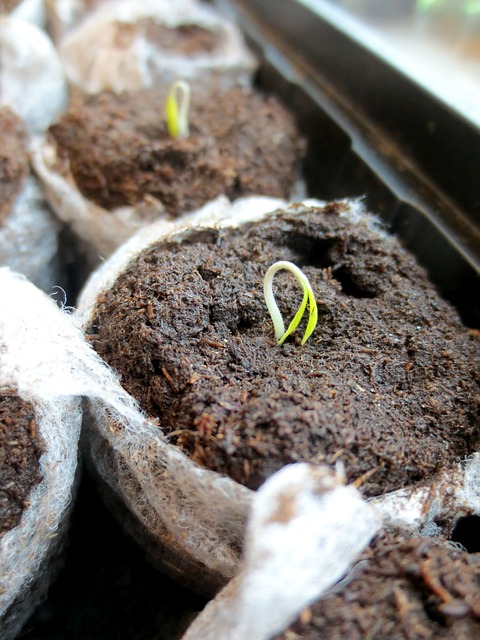
  6. Break Out Sprouts. When leaves start to poke from the soil, remove plastic wrap. Feed with an organic fertilizer, like Espoma’s Plant-tone.
  7. A Home Away from Home. Two weeks before planting outside, begin hardening off seeds. Move outside for a few hours a day, increasing time outdoors daily. Also, reduce watering without letting the soil dry out.
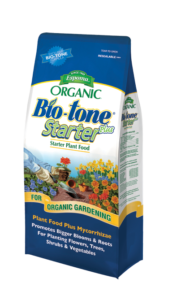
  8. All Grown Up! Gently remove plants from see starting tray, and plant in a prepared bed. Mix-in organic starter plant food to help them adjust and grow strong, such as Espoma’s Bio-tone Starter Plus.

Crunch! You’ll be munching on homegrown produce well into fall. How amazing (and tasty!) is that?

https://www.espoma.com/wp-content/uploads/2015/07/leaf-430419_640.jpg 480 640 espoma https://www.espoma.com/wp-content/uploads/2023/05/espoma-logo340w-1.png espoma2015-07-21 11:26:432024-09-06 11:19:27Don’t Stall! Start Veggie Seeds for Fall

Growing Blueberries Is Easy With These 4 Tips

July 6, 2015/in Fruits & Vegetables

Pancakes, tarts, pies, we love adding blueberries to any recipe. And we’re not alone.

The U.S. Department of Agriculture recognizes July as National Blueberry Month! If any fruit deserves its own month, it’s the all-American blueberry.

Take advantage of peak fruiting season to celebrate this delicious little berry.

Health Benefits

Not only delicious and popular, blueberries are one of the top 10 healthiest foods.

These nutritional powerhouses are packed with antioxidants that help guard against cancer and heart disease. Blueberries are low in calories, but rich in fiber and vitamins. One serving of blueberries serves up almost 25 percent of the recommended daily intake of Vitamin C. Plus, blueberries have a favorable impact on blood sugar regulation in persons already diagnosed with type 2 diabetes.

Convinced?

Grow your own blueberries – It’s easy!

The secret to blueberry success, according to berry expert Amelie Brazelton Aust, at Fall Creek Farm & Nursery who’s been growing blueberries on her family farm since she was a child, is the Four Ps — planting, pruning, picking and protecting.
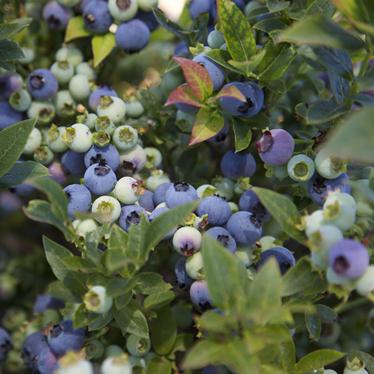
JELLY BEAN Brazelberries blueberries on bush

‘Jelly Bean’ BrazelBerries blueberries

Simply follow these four simple tips to help bushes flourish season after season!

1. Planting

First, plant the right variety. Compact blueberries, like those from BrazelBerries, are perfect for growing in containers, raised beds or even directly in the garden. We recommend using Espoma Organic Bio-tone Starter Plus at the time of planting to help produce large root systems very quickly. This will help ensure that new plantings get maximum water and nutrients from the soil to minimize transplant loss.

Once you’ve chosen a blueberry bush, plant it in a sunny spot with at least six hours of sun each day.

Next, consider the soil. Blueberries love acidic soils. A pH of 4.5-5.5 is ideal. A simple soil test indicates acidity, which can easily be adjusted with a balanced organic fertilizer. Soil kits and amendments are available at any local garden center.

Give the plant’s roots plenty of growing room when planting in a container.

Plant dwarf blueberry bushes in pots 16” or more in diameter and water deeply and regularly to make sure all of the soil within the pot is moist.

2. Pruning

Cutting branches off any plant can be daunting, but it’s best for the plant. Pruning gives berries more space between branches, allowing air to flow freely and preventing disease.

“It’s best to prune blueberries in late winter when the plants are still dormant,” says Aust, “but I’ve pruned mine in the spring before flowering, and they’ve done great.”

Remove stems that are damaged, old, or dead. Take out up to a quarter or even a third of the bush, then trim it up to a neat and tidy look.

Fertilizing is recommended in early spring. “Choose a balanced, organic, slow-release fertilizer for acid-loving plants,” Aust says.

Aust recommends a second application of fertilizer in late spring to give the plants an extra burst of energy for fruit production.
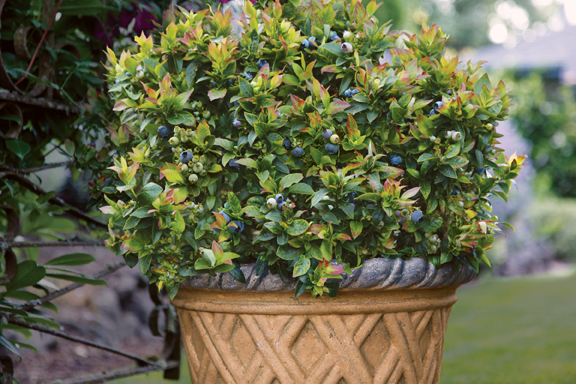
BrazelBerries Jelly Bean in italian pot

‘Jelly Bean’ BrazelBerries blueberries

3. Picking

With planting and pruning in the bag, the next step — picking — is the payoff. Be sure to watch your berries carefully and pick them before the birds do! Aust suggests getting one berry for yourself and one for the birds.

4. Protecting

A little protection ensures your blueberry bush will thrive for another bountiful season. Keep critters away by covering bushes with bird netting in the spring.

Winter weather poses the biggest risk to berry bushes, so be sure to protect roots.

“In very cold regions, apply a deep layer of mulch around the base of the bush to protect the roots,” Aust says. “Blueberries in pots are easiest to protect from the cold — just move the pots into an unheated garage or against a building and cover them with thick mulch, burlap, or a blanket.”

Spring’s sudden cold snaps endanger emerging growth, as well. Be sure to cover blueberry bushes with burlap or blankets when the forecast calls for frost once buds and flowers are emerging.blueberry pancakes Jamie oliver

Are you growing berries this year? What will you be making with them?

Check out this super easy one-cup blueberry pancakes recipe from Jamie Oliver:

blueberry pancakes Jamie oliver


Featured Products:


Where to Buy

https://www.espoma.com/wp-content/uploads/2015/07/BRAZELBERRIES-Perpetua-Blueberry-cluster-c2013-Fall-Creek-all-rights-reserved.jpg 2592 3888 espoma https://www.espoma.com/wp-content/uploads/2023/05/espoma-logo340w-1.png espoma2015-07-06 13:08:202023-06-27 15:06:38Growing Blueberries Is Easy With These 4 Tips

Don’t Leave Hanging Baskets Out to Dry…

June 30, 2015/in Container Gardening, Flowers, Landscaping, Spring Gardening, Summer Gardening

Hanging baskets make great visual impacts when they are filled to the brim with bright summer blooms. They add instant color to any spot and are a sign of warm weather.

Though as days get hotter and the summer rolls on, hanging baskets can start to look tired: drooping blooms, minimal flowers and straggly plants.

Your hanging basket isn’t doomed. It just needs a good ol’ fashion pick-me-up.

Refresh your hanging baskets to keep them partying all summer long

Get ready to give your hanging baskets a make-over. With these tips, your hanging basket will be back in its prime in no time.

Photo Courtesy Proven Winners

Photo Courtesy Proven Winners

Take the Heat Off Hanging Baskets

  1. Test the Waters Hanging baskets need more water when temperatures rise. During the peak of summer’s heat, water baskets in the morning until water drips from the drainage holes. Check them again in the afternoon to see if they need more water. On windy days, hanging baskets dry out, so they will need even more water.
  2. Food for Thought. Feed hanging baskets  with an organic flower food, like Flower-tone or the new Bloom! liquid plant food. Because of how much water baskets need, nutrients are frequently flushed from the soil. Regular feedings give your hanging baskets the energy they need to shine and bloom continuously.https://www.espoma.com/liquids/
  3. Drop Dead Gorgeous Blooms. As flowers fade, pinch them off where they meet the stem. Deadheading hanging baskets keeps them producing flowers and prevents them from going to seed.
  4. Which to Switch. Not every flower blooms all summer. If one of your flowers is done blooming for the season, swap it out. Gently remove the flower, replace it with a vibrant plant and fill with an organic potting soil.
  5. What to Cut. When your hanging basket is looking a bit wild or leggy, cut it back by 1-2”.

Look at that! Your hanging baskets already look better. Keep up these tips throughout the summer to keep hanging baskets fresh, beautiful and blooming.

https://www.espoma.com/wp-content/uploads/2015/06/flowers-164815_1280.jpg 722 1144 espoma https://www.espoma.com/wp-content/uploads/2023/05/espoma-logo340w-1.png espoma2015-06-30 08:20:202024-08-16 13:54:28Don’t Leave Hanging Baskets Out to Dry…

Oh Snap! Pick and Serve Fresh Green Beans

June 23, 2015/in Vegetable Gardening

The best time of the year is here! Harvest season!

And our green beans have never looked, well, greener. They’re ready to be picked and cooked for a yummy side dish. The best part is you’ll be picking and cooking beans now through late July.

Learning when and how to harvest green beans does take a bit of practice. Hang with us and in a few days, you’ll be a green bean pickin’ pro!

Give Beans the Green Light

  1. Pinch the Pod.  Harvest green beans when they’re 4-7” in length and the width of a pencil. Most importantly, they should be firm to the touch and have no visible bulges.
  2. They’re About to Snap!  With one hand, hold the bean where it connects to the vine. With the other hand, hold the vine. Now pinch off with your thumb.
  3. Cool (Green) Beans. Refrigerate in an airtight container. They’ll keep for about 4 days.

Put the Beans to the Test! Taste Test Green Beans with this Delicious Recipe  

As soon as beans leave the vine, you want to taste them! So, we always have a recipe ready to go ahead of time. Try one of our favorite recipes below.

Green Bean Salad with Mustard Vinaigrette

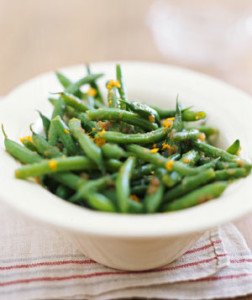
Ingredientsgreen bean recipe

  • 1 ½ lb. freshly picked green beans, trimmed
  • 3 tablespoons EVOO (Extra-Virgin Olive Oil)
  • kosher salt and pepper
  • 1 tablespoon Dijon mustard
  • 2 tablespoons sherry vinegar
  • ½ cup sliced almonds, toasted

Instructions

  1. Boil Water.  Boil a pot of water over high-heat.
  2. Rinse and Trim.  Meanwhile, rinse and cut the stems off your fresh green beans.
  3. Cook. Add 1 tablespoon salt and boil the beans until tender, usually 4-5 minutes. Then drain and run under cool water.
  4. Whisk. Combine mustard, vinegar, oil, salt, and pepper.
  5. Drizzle. Place in serving dish and evenly coat with mixture.
  6. Sprinkle. Scatter almonds over beans.
  7. …and Serve!  

Picking green beans is easy – and delicious. Get ready to enjoy fresh green beans all summer.  Yum!

https://www.espoma.com/wp-content/uploads/2015/06/beans-598185_640.jpg 478 640 espoma https://www.espoma.com/wp-content/uploads/2023/05/espoma-logo340w-1.png espoma2015-06-23 12:07:482019-05-07 10:08:44Oh Snap! Pick and Serve Fresh Green Beans

Repurpose on Purpose: Trash Transforms into Beautiful Containers

June 23, 2015/in Flowers, Landscaping, Spring Gardening

Container gardening adds a whole new element of style and flair to your outdoor space. Not only do you get to showcase DIY containeryour style through plants, but also in the unique pots you choose. It’s twice the fun!
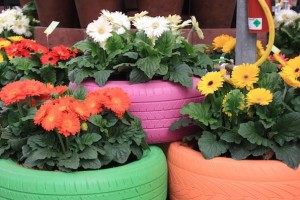
And you can do it for the planet, too. Growing herbs, veggies and flowers already makes the world a greener place. Now reuse and repurpose a forgotten item into an invigorated planter. Upcycling creates less waste and saves money, too.

Create a repurposed container for a beautiful (and thrifty!) container garden.

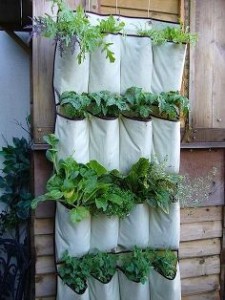
Your soon-to-be favorite container may already be in your house. Almost any vessel can be repurposed into a garden container! You’ll be amazed by what you discover (and by what containers you didn’t even know were hiding in your cupboards).

Up for Grabs: Upcycled Containers

  1. Pin Your Style. Create a look that is truly all your own. Decide if you want a rustic, modern, country or bold look. Then browse Pinterest for inspiration.
  2. Start the Search. Browse your kitchen, closet, garage and cupboards for items you no longer use. Any size works! Branch out to yard sales, thrift stores and flea markets for more unique looks.
  3. Add a Special Touch. Personalize your container by painting it, covering it in old wallpaper, or even turning it into a mosaic. Get crafty!
  4. Show Them the Drill. Then Fill. Drill holes in the bottom of your repurposed container to provide drainage. Without drainage holes, soil becomes too wet and causes roots to rot. When ready, fill with the ideal potting soil, Espoma’s Organic Potting Mix, and your favorite plants.
60bc838855263aa8a8875fd58e171bca

These upcycled tires are stacked and painted- as seen by Ellen Wells at Syngenta

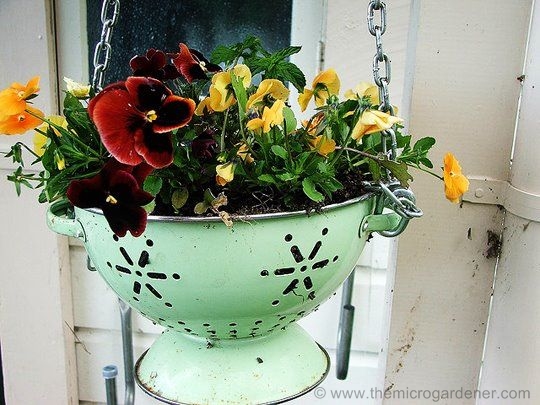
Colander-planter_wm

A colorful, retro colander makes a great hanging container

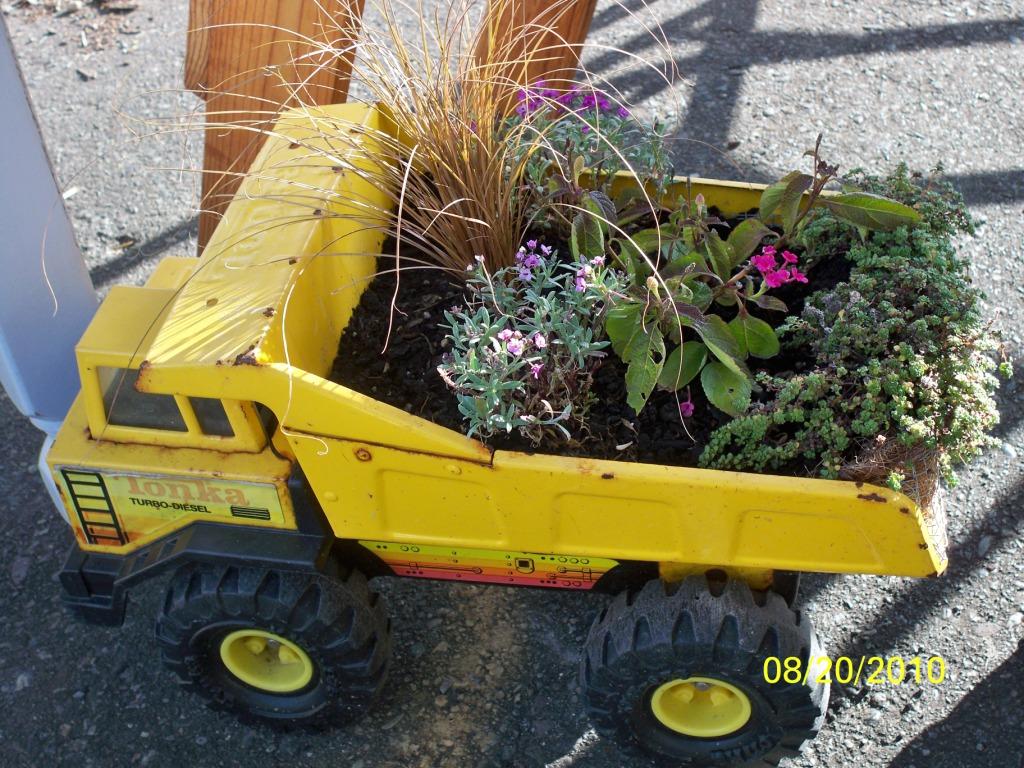
Toy-truck-planter

Think outside of the (toy)box

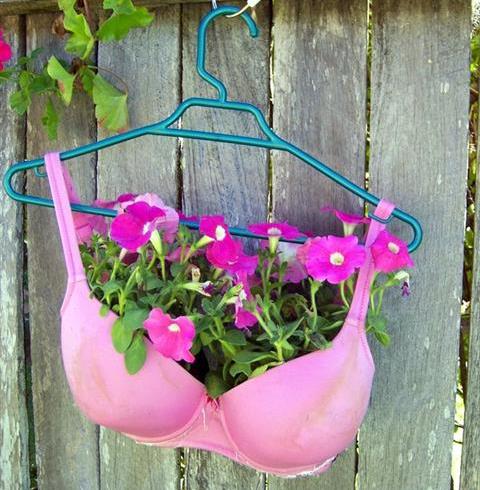
bra-planter

And, of course, the bigger the better for this container…

Other Types of Repurposed Containers:

Get inspired by some of our favorite items to turn into garden planters below.

  • Teacups and teapots
  • Pitchers
  • Tires
  • Boots and shoes
  • Colanders
  • Desk drawers
  • Buckets
  • Wine crates and whiskey barrels
  • Wheelbarrows and wagons
  • Clothes and lingerie
  • Toolboxes
  • Suitcases
  • Watering cans

Creating repurposed containers is a quick, affordable and fun way to expand container gardens. Once you start, the possibilities are endless!

*thank you MicroGardener for the photos!


https://www.espoma.com/wp-content/uploads/2015/06/Capture2.jpg 261 527 espoma https://www.espoma.com/wp-content/uploads/2023/05/espoma-logo340w-1.png espoma2015-06-23 08:07:142019-05-07 10:08:44Repurpose on Purpose: Trash Transforms into Beautiful Containers
Page 22 of 23«‹20212223›
Where to Buy

Get News & Updates

Recent Posts

  • Video: Feeding Evergreens with Skye Hamilton 🌲
  • VIDEO: A Formal Garden Tour with Summer Rayne Oakes
  • VIDEO: Repotting in the Greenhouse with Garden Answer
  • VIDEO: How to Winterize Your Chicken Coop with Summer Rayne Oakes
  • VIDEO: Planting Spring Bulbs in Containers 🪴🌷 with Summer Rayne Oakes

Tags

All-Purpose Potting Mix bio-tone Bio-tone Starter Bio-tone Starter Plus Cactus Mix caring for houseplants Container Gardening DIY project Espoma espoma grown espoma organic Espoma Organics Espoma Video fall gardening Family fert flower garden flowers garden Garden Answer Gardening gardening tips gardens grow holly-tone houseplants Indoor! indoor gardening indoor plants Kaleb Wyse organic organic fertilizer Organic Gardening organic plant food Organic Potting Mix Outdoor Gardening Planting plants Potting Mix potting soil Spring Gardening summer rayne oakes vegetable garden Vegetable Gardening Wyse Guide

Espoma. A Family Tradition Since 1929.

Espoma Organic logo
  • Espoma Dealer
  • Espoma Pro
  • Garden Club
  • Privacy Policy

Scroll to top