Video: Planting Maple Trees with Garden Answer!
When planting new trees, don’t forget to add a healthy combination of Espoma Organic Bio-tone and Iron-tone to help them establish fast. Watch the full video with Garden Answer!
Featured Products:
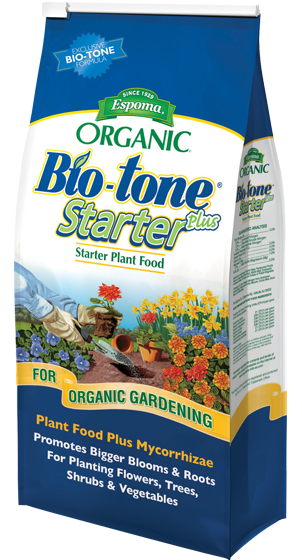
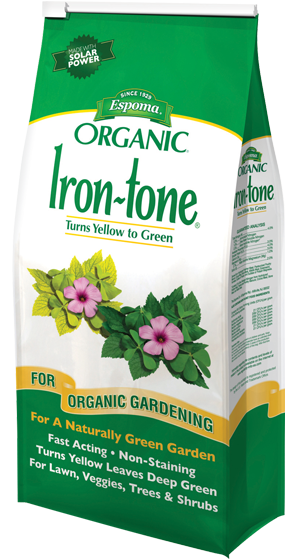

When planting new trees, don’t forget to add a healthy combination of Espoma Organic Bio-tone and Iron-tone to help them establish fast. Watch the full video with Garden Answer!
Featured Products:
Are your tomato plants growing out of control? Time to tie them up with Bloom and Grow Radio‘s Tying and Fertilizing Tomatoes video featuring Tomato-tone!
Featured Products:
A little vitamin boost from Bio-tone Plus before amending your soil is key when planting up a fresh tomato path. More great tips from Bloom and Grow Radio in the full video!
Products Featured


We’re thrilled to jump back into our Q&A series where we highlight the talented folks who are working hard behind the scene to make Espoma so great. Today we’re shining the spotlight on Dave Jackson, Vice President of National Accounts! We’ve been lucky enough to have him with us for just over three years now during which he’s continually impressed his colleagues and customers alike.
Let’s learn a bit more about Dave’s day-to-day life and his favorite Espoma products! Keep reading to find out his secret is for the ultimate curb appeal.
Q. What’s your favorite part of your job?
A. My favorite part of my job is presenting new products and merchandising ideas to customers and helping them grow their business.
Q. How has COVID-19 affected your day-to-day?
A. Interacting face-to-face with customers has been replaced with virtual meetings and digital presentations. I miss the customer interaction and store visits.
Q. What about your personal life? Any new hobbies and/or habits helping to pass the time?
A. It has been nice to spend more time with my kids who are taking classes from home. They can’t escape!
Q. What are you most looking forward to when the world gets back to normal?
A. I look forward to visiting my parents and family and getting to a few favorite restaurants.
Q. Tell us about your personal garden, yard, or plants.
A. I maintain my own lawn and landscaping, including a rock garden and a few containers on the patio.
Q. What is your top gardening tip?
A. Make sure you get your kids to help when it’s time to do the mulching!
Q. What’s one Espoma product you couldn’t live without?
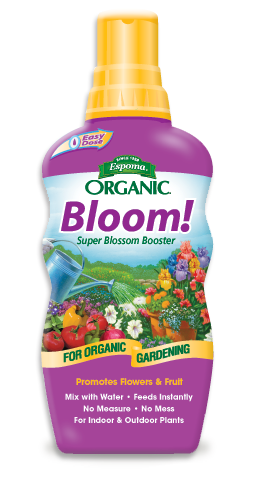
A. I’m amazed by how well my flowers look soon after using Bloom! Liquid Plant Food. It’s quick and easy.
Q. What do you enjoy most about caring for your gardens?
A. I enjoy trying different containers of annuals, perennials, and herbs. I also enjoy watching one of my kids mow the backyard!
Q. What made you want to enter the gardening industry?
A. I started my career with a seed company and haven’t left the industry since. It’s a great group of people!
Q. What made you want to work at Espoma?
A. I’ve always admired Espoma’s great products and packaging and jumped at the opportunity to join the team.
As always, we’re proud to have such loyal, hard-working employees that keep our company running. Stay tuned to learn more about the great folks behind the brand at Espoma.
Featured Products:
Here at Espoma, our products are only as great as the team behind them. That’s why we’re excited to begin our Q&A series where you’ll get to learn a bit more about the talented folks behind the brand. We want you to see for yourself just how our company is comprised of hard-working people who genuinely care about our customers and everything plant- and garden-related!
First up is our Southeast Territory Sales Manager, Bonnie Satterthwaite. Bonnie has been with us for 14 years! We’d love to tell you about all her and the amazing things she has done for Espoma over the years, but we figured it would be best to hear it straight from the source. So, we sat down with Bonnie and let her put it in her own words.
Q: What’s your favorite part of your job?
A: Developing relationships and often becoming friends with our customers. And, of course, the opportunity to visit all of the fabulous garden centers in my area.
Q: What about your personal life? Any new hobbies helping to pass the time?
A: I purchased a rowing machine, but have yet to leave the dock…
Q: Tell us about your personal garden, yard, or plants.
A: I truly love gardening, and I know that passion resonates with my dealers. I maintain a floral cutting garden, a white/night garden, over 150 hydrangeas, and a hydrangea graveyard.
Q: What is your top gardening tip?
A: Never think you are finally finished and get rid of non-performers!
Q: What’s one Espoma product you couldn’t live without?
A: Without hesitation, BioTone Starter Plus. I do not plant without it. I have seen what it does for plants and transplants. I have seen unsolicited “with and without” trials by garden centers who use the “trust and verify” model. It is an amazing product. I am proud to recommend all of the Espoma line, because of our dedication to quality, the environment, and the safety of children and pets.
Q: What is your favorite aspect of gardening?
A: My favorite aspect is certainly the seasonal outdoor garden beds — just tending the garden beds and the joy of watching things flourish. There comes, for me, great satisfaction from the hard work — and I find the whole process relaxing. I love a morning and late evening stroll around the garden.
Q: What made you want to enter the gardening industry?
A: I was a stay-at-home mom and my sister was a grower for a local garden center. She asked me to come and help her plant 10,000 geraniums during school hours. The owner of both the growing operation and garden center told me I talked too much to be in the greenhouse and asked if I would come to his garden shop during the busy season and talk to customers. And there you go….
Q: Tell us what made you want to work at Espoma and what makes it a special place to work?
A: I met Jeremy Brunner on a garden center bus tour and, unbeknownst to me, my Espoma adventure was about to start. I was very happy at my previous job, but Jeremy’s passion and vision for the growth of the Espoma company was something that was missing from my previous job. I wanted to be a part of something that I could see and feel was going to be spectacular. Espoma cares just as deeply for their work family as they do for their products. So, for me, there was just no question on where I wanted to continue my career.
We were so fortunate to have Bonnie join us when she did — and we hope to keep her around for as long as possible! At Espoma, we definitely pride ourselves on being able to congregate hard-working employees who genuinely enjoy the gardening industry the same way our loyal customers do. Thanks for all you do, Bonnie!
With Memorial Day in the rearview, summer is officially here once again — and while we wish that meant nothing but sunshine and barbecues, bugs seem to always make an appearance this time of year. But did you know there are ways to avoid getting bitten and bugged every time you want to relax outside?
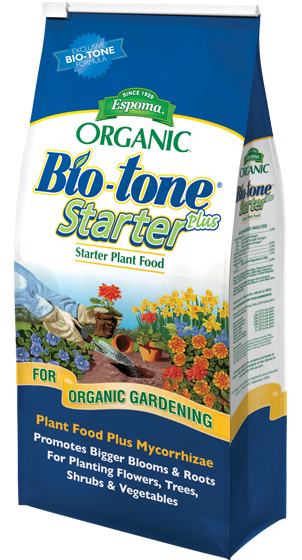
The fragrance of certain plants can actually block the receptors insects use to find us. It’s just another great reason to get a garden going in your backyard, around your patio, or anywhere you like to enjoy fresh air. All you really need to sustain these helpful plants is some good starter fertilizer like Espoma’s organic Bio-tone Starter Plus and to make sure they’re fed every two to four weeks with Grow! to ensure they get the proper nutrients.
So, if you’re getting some unwanted guests during those summer cookouts, try planting some of these simple staples.
Lemon Grass
Did you know many mosquito repelling candles and sprays are made from citronella oil? Lemon grass naturally produces this ingredient and doubles as a beautiful grassy plant for walkways and around tables. Alternatively, you can plant it in its own pot and use it wherever your local mosquitos tend to congregate.
Other Lemon-Scented Plants
Similar to lemongrass, other plants that give off a strong citrus fragrance — like lemon-scent geraniums, lemon thyme, and lemon balm — work well to repel bugs. These plants use their fresh scent to keep their leaves from being eaten — and in turn can help you keep from being bitten.

Lavender
Despite lavender’s sweet smell being quite popular among people, most insects hate it. Keeping this plant near seating areas will help ward away mosquitos and other pesky flies. A great thing about this plant is that you can use it fresh or dried to get the job done — or even just use the extracted oil. This way you have different options on how you want to decorate while still keeping the pests at bay.

Rosemary
Rosemary is a great addition to your cookout. Throw a few sprigs on the grill as you’re cooking to release its fragrance into the air. It’ll smell wonderful to you and your family but make the bugs fly in the other direction.
Basil
Basil is another herb that will keep the mosquitos away. It’s also toxic to mosquito larvae, so placing this plant near water can help discourage mosquitoes from laying eggs.
Mint
Mint’s fragrance is great at repelling pests like ants, mosquitoes, and even mice. It’s also always a nice addition to any dish, so incorporating it into your barbecue can be beneficial in more ways than one.

Garlic
If cabbage moths are just as pesky as mosquitoes in your backyard, garlic can be your saving grace. When crushed, the garlic bulbs release allicin — an enzyme that produces that classic garlic smell. Your local pests will definitely not enjoy your garlic breath, so go ahead and use it up all weekend long.
Any and all of these plants can be used purely to keep the bugs away, but they’re also beautiful decor for your outdoor area. Be sure to keep up with them all season long in order to reap the benefits whenever your cookouts come around.
Here are some of our other blogs we thought you might enjoy.
BUG OFF – Plants That Repel Mosquitoes
Perk Up Summer Containers with Stunning Annuals
Growing Scrumptious Tomatoes in Easy Containers
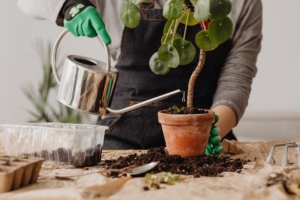
Ever notice how a moment spent tending your plants feels like a mindful pause in a busy day? You’re not just watering—you’re nurturing calm, presence, and connection. We believe that caring for your green companions is one of the most natural forms of self-care. And just like you thrive on nourishing food, your plants thrive when you feed them regularly with Espoma Organic fertilizer —gentle, effective, and safe for people, pets, and the planet.

Sharper Mind + Better Mood
Studies show that being around plants can boost memory and attention by about 20%, while reducing background noise and enhancing productivity and creativity—especially in home or little work-from-home nooks.
Soil for the Soul
That earthy scent? It comes from microbes like Mycobacterium vaccae (lovingly nicknamed “outdoorphins”), and they don’t just feed your plants—they may help boost your mood and immunity, too.
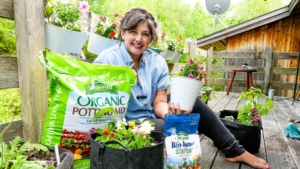
Pulling weeds, misting leaves, or simply observing new growth—these are gentle rituals that anchor us in the now. As one soothing tip from our brand partner, Maria Failla of Growing Joy with Maria, reminds us:
“Use watering or caring for them as an excuse to get up from your computer and take some ‘me-time’—because plant care is self-care.”
Pair that with feeding your plants Espoma Organic fertilizer, and you’re nourishing life in every sense.
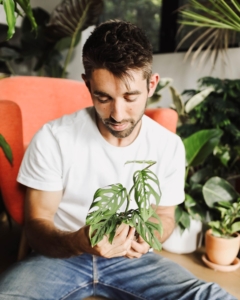
Your indoor plants do more than brighten a room—they improve your air, calm your mind, and remind you to slow down. To keep them thriving year-round, a little extra nourishment goes a long way.
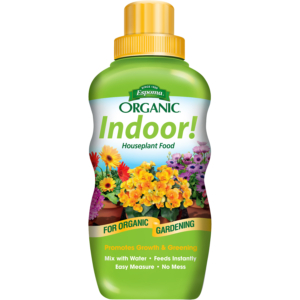
That’s where Espoma Organic Indoor! liquid fertilizer comes in. This gentle, balanced formula is made from natural ingredients and feeds instantly, giving your leafy friends the nutrients they need for lush growth and vibrant color—even in the lower light of winter months.
Self-Care Tip: Pair your plant feeding with your own wellness ritual. Set a reminder every 2–4 weeks to water and feed your plants, then take a few minutes to enjoy a cup of tea nearby. Watch how your plants respond over time—you’ll notice deeper greens, healthier new leaves, and a little spark of joy in your day.
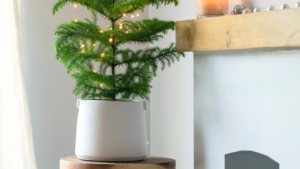
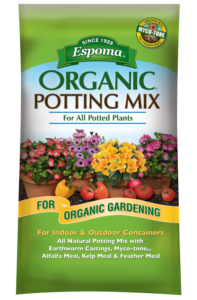
During the busy holiday season, a mini Christmas cypress or Norfolk Island Pine—with its fresh sap-like scent—can be both a peaceful décor choice and a mindful project. Pot it up in our Espoma Organic Potting Mix, give it a slow sip of water, and feed it with an organic fertilizer like Indoor! for lasting joy. It’s a gift that grows for you, not just from you.
Micro-Meditation Moments
Set a daily two-minute ritual—touch the soil, check a leaf, breathe deeply. Call it a “plant-powered reset.”
Mini Salad Gardens with Maria Failla
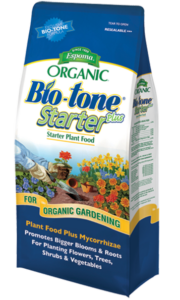
Maria Failla of Growing Joy with Maria, makes self-care—and dinner—even simpler. She grows an entire salad (including herbs, lettuce, mini-tomatoes, and edible blooms) in a single container using Espoma Organic Potting Mix, Bio-tone Starter Plus, and Garden-tone organic fertilizer for steady nourishment.
Create a Kitchen Corner of Calm
A small shelf of herbs like basil, lavender, or even mint provides an aromatic escape and practical joy when cooking. Watering and feeding them with organic fertilizer like Indoor! can become a lovely action in your daily rhythm.
Mindful Mondays with Biophilia
Start your week by simply sitting with your plants—observing new buds, leaf shapes, and subtle color shifts. This biophilic practice connects you to growth and groundedness.
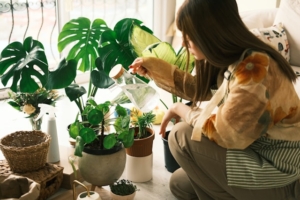
Plant care is not just about pretty greenery—it’s caring for yourself, too. You pause, breathe, tune in, and the soil responds. Whether it’s a festive tree, a potted herb, or a tranquil succulent, your green space is your sanctuary. And with a little love, light, and organic fertilizer, your plants—and your spirit—can truly thrive.
*****
Here are some of our other blogs and videos we think you will enjoy.
Give Some Green for the Holidays
Parenting Advice for New Plant Parents
Poinsettia Care Guide from Garden Answer
Featured Products:
Apartments or small spaces are invitations to get creative with décor. There are many different ways you can grow indoor plants. There are plenty of ways to keep houseplants nearby.
To maximize space, design and style, utilize a few small potted plants. Take advantage of vertical spaces with hanging baskets or a green wall. Even small DIY projects such as terrariums or kokedama can instantly perk up a small space.
When growing in containers, be sure to use Espoma’s Organic Potting Soil Mix for best results.
These houseplants are a small space gardener’s best friends:
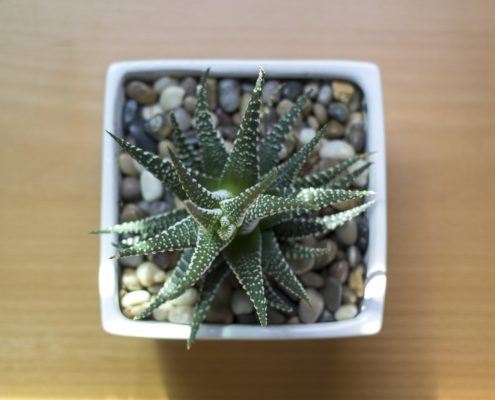
Haworthia ‘Big Band’
A big name for a small plant, but the deep green leaves with white stripes really stand out. They look very modern in small containers with a layer of white gravel on top of the soil. Keep them out of direct light. They grow 2-8 inches tall and wide.
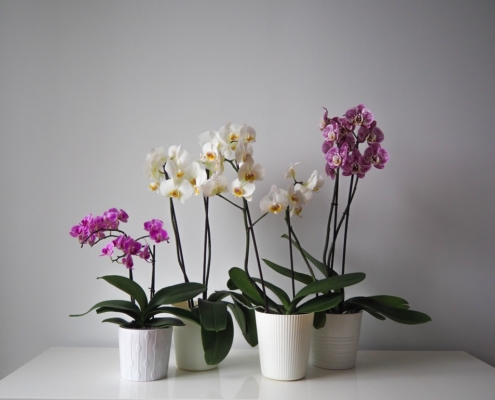
Moth Orchid
Moth orchids have long, thin stems and large flowers that create a big impact in small places. Plus, they flower for an incredibly long time. These are the easiest orchids to grow, even if you are a beginner. Bonus, they are actually more likely to flower when rootbound, so no need to add more space anytime soon. Water well once a week, then let drain completely. Feed regularly with Orchid! liquid plant food.
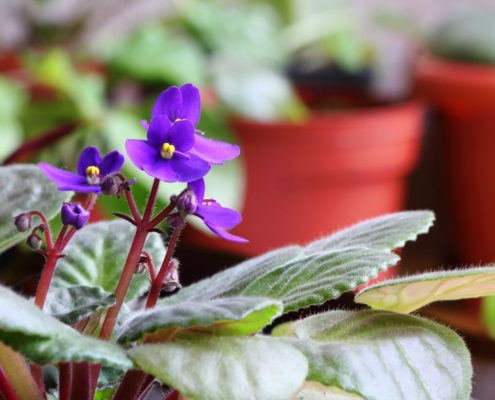
African Violet
The colorful blooms of African violets instantly add color to any room. They’re known to bloom continuously, even throughout the darker winter months. Slightly root bound plants will continue to bloom, but be sure to repot using Espoma’s African Violet potting mix at least once a year. Water African violets from the bottom to prevent leaves from rotting and never let them sit in standing water.
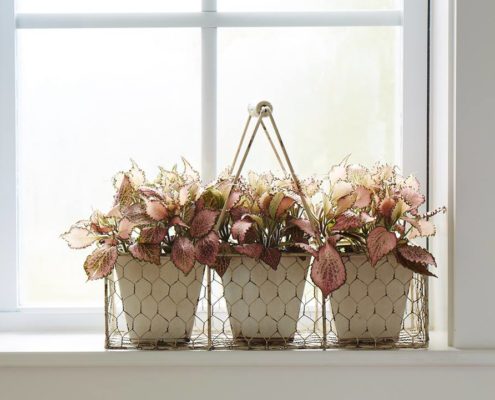
Fittonia
Also known as nerve plant, Fittonia adds a pop of color with leaves that have bright pink, white or red veins. Its petite size allows for it to be placed almost anywhere. Fittonia prefers medium to low light, but tolerates direct sun if the light is filtered through a sheer curtain.
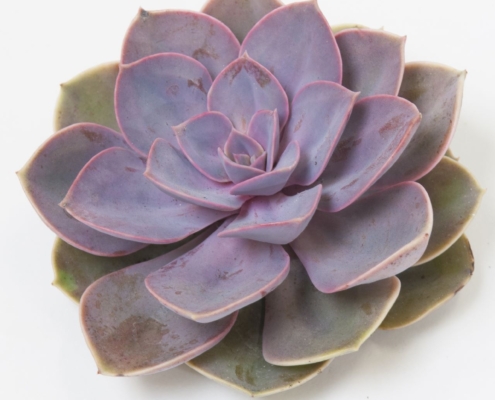
Echeveria
The echeveria is one of the most common types of succulents. Little plants like these are commonly found on office and home desks due to their easy care and small size. A common cause of death, however, is overwatering. Make sure to let your plants’ soil dry completely before giving them another drink. Feed regularly with Espoma’s Cactus! liquid fertilizer for best results.
Try these lowlight houseplants if you want greenery, but lack light. https://youtu.be/SYXv_EcBdEA
*****
Featured Products for houseplants:
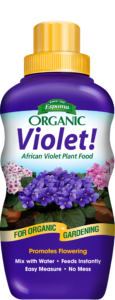
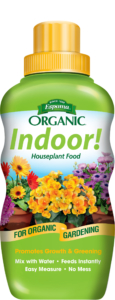
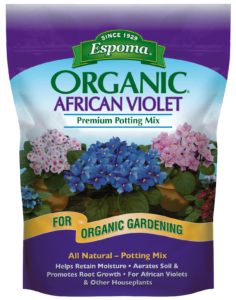
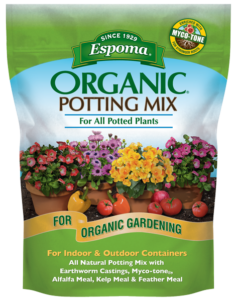
Houseplants are so much more than decorations. They help reduce stress and tension and create a relaxed and happy atmosphere. They absorb carbon dioxide and produce oxygen while purifying the air by removing toxins. They say we spend a third of our life sleeping, so let’s do it in the best possible environment, a room full of house plants.
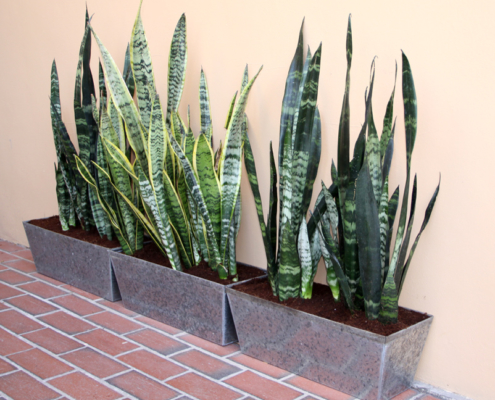
Snake Plant
Snake plants convert carbon dioxide to oxygen at night. It is also one of the easiest and most forgiving houseplants you can grow. Whether you have bright or low light, a snake plant will adjust to it. It doesn’t require much water and even if you forget to water it for a couple of weeks, it will still look great. Overwatering it is really the only way to kill it.
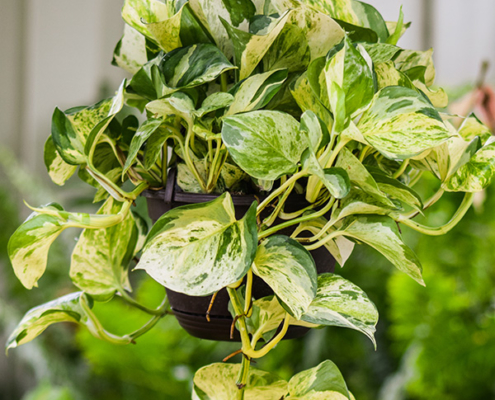
Golden Pothos
A study from NASA shows that pothos removes toxins, mainly carbon monoxide and formaldehyde from the air. This low-maintenance plant grows well in low light. Water it only when completely dry. Always pot your houseplants in quality potting soil like Espoma’s Potting Mix or a mixture of potting mix and Cactus Mix for plants like this that require excellent drainage.
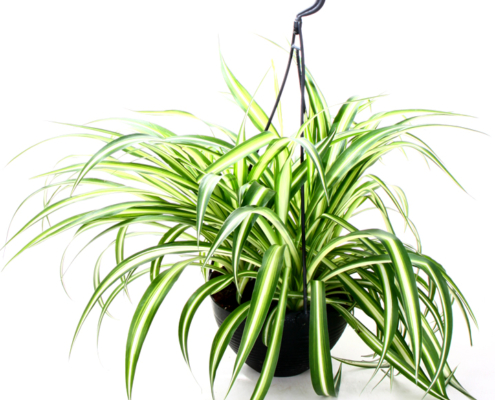
Spider Plant
The spider plant removes formaldehyde from the air, which is a common carcinogen found in many household products and items. This is another easy to grow selection that enjoys bright light, but will adapt to low light situations. Like all house plants, a regular schedule of fertilizing will help keep spider plants in tip-top shape. Organic liquid fertilizer like Espoma’s Indoor! works beautifully and has an easy dose cap, meaning you’ll never use too much or too little.
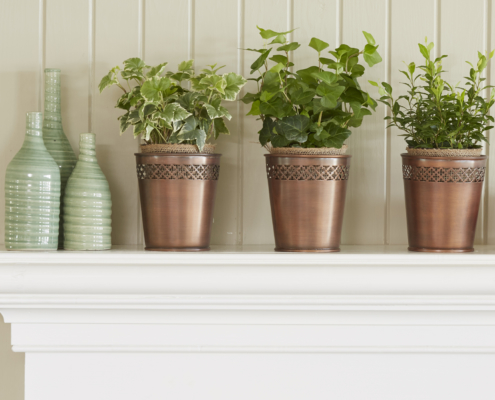
English Ivy
English ivy has the unique ability to clean the air of mold. Ivy is a trailing plant that you can train to grow up a trellis or let it cascade down from a shelf. It can be an aggressive plant outdoors, but inside it’s well behaved. Keep the soil moist, but not wet, and give it a place with indirect light.
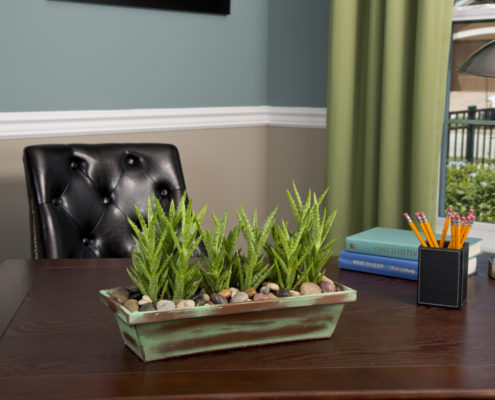
Aloe vera
Aloe has been used as a medicinal plant to heal: sunburn, cuts, insect bites, minor burns, and dry skin. It’s also an air purifier. Aloe likes bright light. Water it well every two weeks or when the soil feels very dry. Fertilize with Cactus! monthly to give it nutrients.
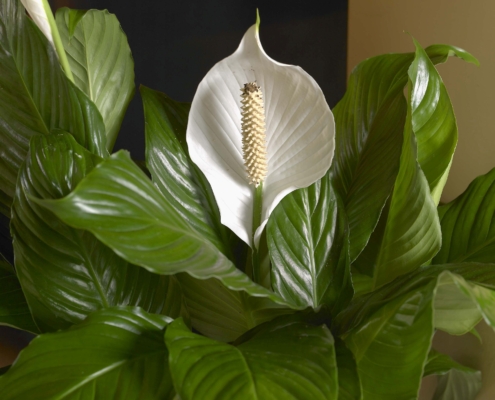
Peace Lilies
Peace lilies also made it on NASA’s list of toxin removing plants. They can absorb mold spores from the air into their leaves. It’s a pretty plant with calla-like flowers that likes bright light. Regular watering is a must (they’ll let you know when they’re thirsty by letting their leaves droop.)
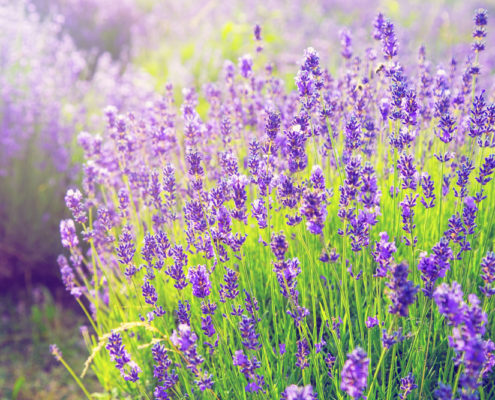
Lavender
Lavender has been used for centuries for its soothing, sleep-inducing properties. Victorian ladies used to stuff their pillows with lavender to relieve stress. Today you can find a wide array of lavender products to help whisk you off to sleep. Lavender isn’t often sold as a houseplant but you can grow it outdoors and harvest the flowers for the bedroom.
*****
Ready for more relaxing? Check out these blogs for ideas.
How to Decorate for Thanksgiving with Plants
Featured Products:
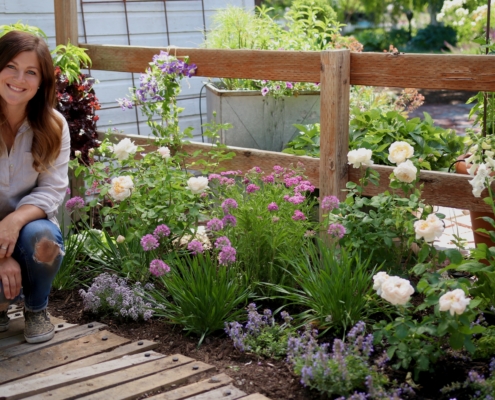
English cottage gardens date back centuries. They were used to grow vegetables, herbs for healing, fruit trees, perhaps a beehive, and common flowers. The informal style went through a renaissance in the late 1800’s when they became somewhat more nostalgic than practical.
The informal aesthetic of dense planting and natural materials is still en vogue today. In this video, Laura outlines 10 design principles to help you design a cottage garden. Before you start, make sure you have plenty of Espoma’s organic Bio-tone Starter Plus plant food to make sure your plants get the best possible start.
No Straight Lines
Cottage gardens are always informal and a touch whimsical. Avoid straight lines. Gently curving edging looks more natural and playful. If your site restricts you to a straight edge, let the plants spill over it to create an unrestrained look.
Large Groups of the Same Plant
White cottage gardens are more relaxed in their design, it is still best to use large sweeps of the same plant. Think of planting in groups of three, five or seven. That is far more restful to the eye than a jumble of onsies and twosies.
Spacing Doesn’t Matter
This is one time you do not have to follow the advice on the plant tag. Cottage gardens are always densely planted and generally grow more densely packed with time. Annuals and biennials are often used in cottage gardens and will self-sow in the border. Biennials are plants that take two years to grow and flower from seed like the foxgloves shown. Another advantage to planting things close together is that there is less room for weeds to grow.
Color Harmony
It’s very important to pick a collection of plants that have harmonious colors. Without that the border would look chaotic. Garden Answer uses a collection of soft pinks and peaches with touches of blue and lavender. It needn’t always be soft colors, but they do need to be unified in some way.
Use Varied Heights and Textures
In any planting, it’s a good idea to think about texture, height and foliage color as major design elements. Nothing blooms all the time. Varied foliage forms and colors will create interest even when the flowers aren’t in bloom. Laura uses Heuchera specifically for the silvery foliage color.
Anchor Plants/Structural Elements
This is sometimes referred to as the “bones” of a garden. It’s a structural element that all of the other plants get woven around. In this case, it’s a beautiful shrub rose named Rose ‘The Lady Gardener’, a fragrant beauty with full, apricot blossoms. The rose is repeated three times. Repetition is soothing to the eye. It’s possible to use evergreens for a slightly more formal feel, or whatever peaks your interest.
Fragrance
The first thing everyone does when they pick a flower is to hold it up to their nose. Cottage gardens are known for their fragrance. Try to select varieties that smell good at the garden center. Roses, lavender, sweet peas, and sweet alyssum are all good choices.
Not Perfectly Maintained
Along with relaxed design principles, comes relaxed maintenance. Planting tightly will discourage weeds. Annuals like poppies will self-seed and move around the border, just like the biennial foxgloves. Weeding everything that comes up might mean that you weed out these plants and inhibit their spontaneous movements.
The Look Will Change Over Time
This style of gardening is the exact opposite of a formal border filled with geometric shaped boxwood. By its very nature this is meant to be more random. People often sow cosmos, violas and other plants that have a tendency to move around. Let them surprise you. If you really don’t like where one popped up, it’s easy enough to remove.
Be Patient
Being patient is really what gardening is all about. A garden is never really finished. Enjoy the journey!
Garden Answers Plant List
Nepeta ‘Cat’s Pajamas’ – catmint
Achillea – pink yarrow
Allium ‘Serendipity’ – ornamental onion
Rose ‘The Lady Gardener’
Heuchera Dolce ‘Spearmint’ – Coral Bells
Clematis ‘Brother Stephan’
Digitalis Foxy Hybrids – foxglove
Lobularia ‘Blushing Princess’ – sweet alyssum
Here are more videos from Garden Answer we hope you will enjoy.
How to Plant Cottage-Style Flower Beds!
Plant Your Window Boxes Like Garden Answer
Succulent Pot in a Pot – Quick Version
How to Re-pot Houseplants – Quick Cut
*****
Featured Products: