Espoma Organic
  • Products
    • Close
    • Product Line Overview
    • Plant food finder
    • Garden Fertilizers
    • Potting Soils
    • Lawn Fertilizers
    • Liquid Fertilizers
    • Single Ingredients
    • Conventional Plant Foods
    • Animal Care Products
  • Where to Buy
  • Our Story
    • Close
    • Our Story
    • Locations
    • Historical Timeline
    • Our Commitment
    • Directions
    • Solar
    • Join our Team
    • Espoma Brand Partners
  • Learn
    • Close
    • Espoma Blog
    • FAQ’s
    • Pocket Guide
    • Espoma Guides
    • Garden Clubs
    • Safe Paws Lawn
    • PRODUCT FACT SHEETS
    • Fertilizer Fundamentals
      • Close
      • Understanding Plant Nutrition
      • Reading Labels
      • Choosing the Right Type of Fertilizer
      • Terms & Definitions
    • Gardening Projects
    • Resource Links
  • Contact Us
  • Menu Menu

VIDEO: Summer Rayne Oakes’ Acid-Loving Groundcover Garden!

September 7, 2022/in Blog, Gardening

Add a little pH pep to your step—your acid-loving plants will really thrive with our Espoma Organic Soil Acidifier. Take it from Summer Rayne Oakes at Flock Finger Lakes as she walks you through her acidic, edible groundcover garden!

Learn more about Summer Rayne Oakes here:

Website: homesteadbrooklyn.com

Instagram – @homesteadbrooklyn

YouTube – Summer Rayne Oakes

Twitter – @sroakes

Facebook – Summer Rayne Oakes


Featured Products:


Where to Buy

https://www.espoma.com/wp-content/uploads/2022/07/Acid-Loving-Plants-IMG_2543-scaled.jpeg 1707 2560 Matt Dauphinais https://www.espoma.com/wp-content/uploads/2023/05/espoma-logo340w-1.png Matt Dauphinais2022-09-07 17:26:022022-09-10 09:42:44VIDEO: Summer Rayne Oakes’ Acid-Loving Groundcover Garden!

Beginner’s Guide to Greenhouses

July 29, 2022/in Blog, Bloom and Grow Radio, Container Gardening, Gardening

A Beginner’s Guide to Greenhouses

There comes a time in every plant parent’s life when we start to get curious and excited about having a dedicated space for all of our plants. If you’re an outdoor gardener, the promise of a greenhouse for seed starts and overwintering plants is even more exciting!

If you feel like you’re ready to take the leap of installing a greenhouse – whether it’s a small kit, or a large structure in your backyard – consider this blog a beginner’s guide to building the greenhouse of your dreams!

This blog is inspired by Episode 151 of Bloom and Grow Radio Podcast, where host Maria Failla interviewed Patrick Grubbs, founder of Greenhouse Info. 

Do Greenhouses Need Permits? 

Before you even begin shopping for greenhouses, you need to consider licensing and permitting. In the US, we have two authorities you should keep in mind when you’re building a greenhouse: zoning regulations and building codes. Almost always, you can simply contact your local government office and they’ll be able to tell you all of the required permits for an accessory building with a permanent foundation. 

The one exception? If you’re getting a small greenhouse (or a cold frame) where you don’t need to set up a foundation, those generally aren’t regulated since they aren’t really considered permanent structures. Usually, these are cheaper greenhouse kits that cost about $500 or less. 

What’s the Best Greenhouse Construction Material?

Here are the pros and cons to each type of greenhouse material to help you choose the best option for your space. 

Glass is a classic greenhouse material. 

  • Pros: it lasts forever and is easy to maintain. It’s a great long-term option for permanent greenhouses.
  • Cons: it’s expensive, fragile, and not a great insulator in general. Insulation is really important for greenhouses, especially if you’re in a Northern climate. 

Polycarbonate is one of the most common greenhouse materials. 

  • Pros: it’s strong, durable, and much lighter than glass. 
  • Cons: it starts to yellow and degrade after about 10 years, reducing the amount of light to your plant. Opt for the UV resistant choice to help it last longer. 

Acrylic is another common greenhouse material (brand names like plexiglass). 

  • Pros: strong and durable
  • Cons: fairly expensive and heavy, contracts with temperature fluctuations so you may need a special mounting solution to attach it. 

Polyethylene is another plastic greenhouse material. 

  • Pros: can buy rolls of plastic to replace material
  • Cons: flimsy plastic, likely only used as a temporary material as it’s really only good for one season

Should I use a Greenhouse Kit or DIY My Own Greenhouse?

For a beginner greenhouse hobbyist, a kit is a great option. It’s more affordable, has instructions, and great to start with. A smaller 6’ x 8’ kit that doesn’t need a foundation is a good option and will take a few hours to put together with a group of helpers. Once you get into more of the reclaimed windows and doors for a do-it-yourself greenhouse, carpentry skills are much more of a necessity. 

If you want a permanent structure with a foundation and electricity, it might be time to look into other options outside of kits. This kind of project could require a backhoe, 6’ holes, and electrical wiring to get it up and running. 

How Much Should I Pay for a Beginner Greenhouse? 

A standard 6’ by 8’ greenhouse kit is one of the cheapest starter greenhouses you can get. These kits will probably run you about $500 to $600 for a new kit. Pro tip: check Facebook Marketplace and Craigslist for used greenhouses–you’ll often find some great options for a fraction of the cost. 

When you consider the extra components you need to buy, like fans and heaters, it’ll probably end up costing you around a thousand dollars for a very entry-level greenhouse that will satisfy.

What Direction Should My Greenhouse Face? 

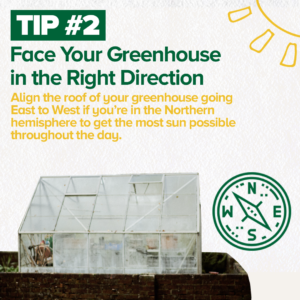
The point of a greenhouse is to capture the heat from the sunlight and maximize the exposure your plants get. The best way to do that in the Northern hemisphere is to align the roof of your greenhouse going East to West. That will ensure you get the maximum amount of sun in both Winter and Summer. Keep in mind that this is the reverse if you’re in the Southern hemisphere.


What Kind of Floor Should My Greenhouse Have? 

The primary consideration for your greenhouse flooring is drainage. If you have a big greenhouse, you might have a foundation underneath like a concrete slab. And in this case, you need to be sure that any water you pour in your greenhouse can get out.

If you don’t have a foundation, you still have the same consideration regarding drainage, it’s just much easier to handle. It can be as simple as concrete pavers with gravel in between. That provides a flat surface, it’s easy to clean and walk on, and it’s stable. Since there’s space in between the pavers, there’s room for water to drain into the ground.

Greenhouse Ventilation Requirements

Greenhouses are super effective at their jobs. They can raise the temperature anywhere from five to 30 degrees Fahrenheit greater than the ambient temperature. You could very easily cook your plants if you don’t have proper ventilation. 

The first thing you need to do for all of your greenhouse air conditioning needs is to calculate the total volume of your greenhouse. Multiply the length times the width times 1.5 of the height, which accounts for the volume that isn’t really there at the top. This number will tell you the cubic feet of air in your greenhouse. 

You’re going to reference this number whenever you’re looking at ventilation or heating options. You want to try to cycle all of the air in your greenhouse in one minute. If you have a 10’ by 10’ by 10’ greenhouse, that equals 1,000 cubic feet of air. You then need to find an exhaust fan that is rated to push 1,000 cubic feet of air per minute. 

Greenhouse Fans

There are a couple types of fans for greenhouses. First is a shop fan or a desk fan, which works for pushing air around, but it’s not the most effective way to cool a greenhouse. 

And second is an exhaust fan that’s set into the walls of your greenhouse and moves air from inside to outside and vice versa. Usually these fans come in pairs so you can put one on each side of the greenhouse to circulate air efficiently. 

Greenhouse Vents

There are many different kinds of greenhouse vents, but the best options are solar vents. They have wax inside of them that expands and contracts when it gets warm, which automatically opens and closes the vents with no electricity. Most greenhouse kits you buy probably won’t have any ventilation built in, so make sure to factor that into the cost of building a greenhouse. 

Ventilation is a necessity for a greenhouse in order to control the humidity, temperature, and air flow. Plan to incorporate fans and vents for proper greenhouse ventilation. 

Managing Humidity and Mold in Your Greenhouse

Ventilation is your number one defense against humidity. A trick to dealing with root rot or mold is to have airflow underneath your pots.

Many greenhouses have plant benches and the bottom of the bench is actually a grate so air and water can freely flow through. This is important because it means the air accesses the plant roots, which is where plants take in most of their oxygen. Having that additional airflow dries out the potting media faster, which will help prevent mold and rot. 

What’s the Ideal Greenhouse Temperature and Humidity?

A good greenhouse temperature is around 80 to 85 degrees Fahrenheit, but it all depends on what you’re growing. Opt for low humidity, especially in Summer, so temperatures are more bearable. 

To really control the temperature in your greenhouse, try a remote thermometer. It makes monitoring the temperature much easier, especially when dealing with snow and freezing outdoor temperatures. You can also plug all of your appliances into a smart plug bar. The bar allows you to connect to Bluetooth using an app, which helps you control temperature, light, and humidity from your phone. 

3 Beginner Greenhouse Tips from Patrick

Tip 1: A greenhouse isn’t necessarily the next step for improving your gardening skills. It’s a whole different category. Unfortunately growing in a greenhouse alone won’t make your plants healthier and happier: there’s a learning curve. Make sure you dial in the right parameters to optimize growth in your greenhouse to get those happy plants. 

Tip 2: You will deal with pests in greenhouses, but you have options. Greenhouses can actually give you enough space for a dedicated quarantine section of insect-ridden plants. You can use a corner shelf with all of your remedy supplies, far away from other plants. Put a sticky note with the date you placed it on the shelf, then transition it to the rest of your plants after about a month. 

You can also implement predatory insects in your greenhouse. Some great examples are ladybugs, praying mantises, lacewings, and parasitic wasps. Just make sure you’re not purchasing the invasive ladybug. 

Tip 3: If you’re not in a place in your life where you expect to be there for a while, then a greenhouse probably isn’t the best option. It’s a big investment in terms of money, time, and space. Many of them are at least a 10 year commitment unless you have a way to transport it. You still have options, like a cold frame or something a bit smaller like a grow tent.

To learn more about greenhouses, check out Patrick’s website Greenhouse Info.

*****

About Bloom & Grow Radio Podcast

Bloom & Grow Radio Podcast helps people care for plants successfully and cultivate more joy in their lives. Host Maria Failla, a former plant killer turned happy plant lady, interviews experts on various aspects of plant care, and encourages listeners to not only care for plants, but learn to care for themselves along the way.

About Our Interviewee

Patrick Grubbs has a B.S. in Biology, where he fell in love with plants through his first botany class. He’s published aquatic ecology research and authored several books related to succulents and gardening pests. 

Patrick has spent a great deal of his career split between science communication and hands-on permaculture and ecology projects. His passion is teaching other people to enjoy plants and animals the same way he does.

​​Follow Patrick:

Website

Email


Where to Buy

https://www.espoma.com/wp-content/uploads/2022/07/Greenhouse-1-1.png 700 700 Danielle Kirschner https://www.espoma.com/wp-content/uploads/2023/05/espoma-logo340w-1.png Danielle Kirschner2022-07-29 16:11:152025-07-30 16:55:28Beginner’s Guide to Greenhouses

BAGR Episode 150 Blog: All the Bulb Basics You Need

July 11, 2022/in Blog, Bloom and Grow Radio, Gardening, Spring Gardening

All the Bulb Basics You Need

Bulbs produce some of the most desirable flower gardens we all know and love, but a bulb can be really confusing to a beginner gardener. We look at this little stub in our hands that has no green attached to it and think, “Seriously, a daffodil is going to sprout up from this thing?!”

Jenks Farmer is a bulb expert and lifelong gardener, here to break down everything you need to know about the beauty and basics of bulbs.

 This blog is inspired by Episode 150 of Bloom and Grow Radio Podcast now known as Groing Joy with Maria Podcast – where host Maria Failla interviewed Jenks Farmer, founder of Jenks Farmer.

What Are Bulbs?

An easy way to think about a bulb is something that lives below ground, shoots up for the season, brings us some beautiful flowers, and then goes back below ground.

Bulbs are essentially a big energy storage system for the plants. Carbohydrates are stored underground in the bulb, so that that plant can survive wildfire, floods, or being eaten by animals. In botanical terms, a bulb is a modified stem with the leaves acting as food reserves.

What Kinds of Bulbs Are There?

Speaking of onions, the Allium genus contains all kinds of great bulbs including onions and garlic, but also many beautiful ornamental bulbs. There are tiny alliums at about 6” tall that have yellow, pink, and white flowers. There are also giant alliums you often see in English garden magazines with big purple spheres.

Other flowering bulbs include daffodils, tulips, dahlias, crinums, amaryllis, gladiolas, crocuses, and lots more!

Growing Crinum Bulbs

Jenks has been growing crinums for decades and they’ve become somewhat of his specialty. Crinums have huge bulbs, measuring as large as a softball. When they are clumped together, crinum bulbs can weigh up to 500 pounds!

Their flowers are like fireworks, coming in rich, hot, very modern pinks and whites. One of their common names is Milk and Wine Lily, referring to the fact that some of them have a wine-colored stripe down the middle.

Jenk’s new book Crinum: Unearthing the History and Cultivation of the World’s Largest Bulb is a deep dive into the amazing world of crinums. Not only does he discuss the gorgeous flowers, but he delves into their traditional medicinal uses originating in Africa and how they’re being used today in current medicine. They have strong ties to human history, being passed down for generations from family members in the South and really tying in the rich cultural history plants have in many societies.

Crinums have traditionally been thought of as a deep South flower because they don’t do great in really cold climates. But in cooler climates, they are certainly one of those flowering bulbs, like Dahlias,  you can dig up, bring indoors, and replant outside the next year.

What’s the Difference Between Annual Vs. Perennial Bulbs?

In gardening terms, an annual is something you plant once and it dies and you’re happy for it to live one season. Perennials are plants that you plant once and they keep coming back year after year. It’s best to have both perennial and annual bulbs in your garden for varying blooms.

Examples of perennial bulbs: are daffodils, tulips, crocuses, lilies, and dahlias (in warmer climates).

Examples of annual bulbs: are caladiums, and crinums.

What Does It Mean When a Plant “Naturalizes” or “Perennializes”?

When you have something perennialized in an outdoor garden, that means that it stays in its place and comes back annually for years. If something naturalizes, that means that it’s going to set seeds or send out some kind of a runner, moving around in your garden.

A lot of bulbs like alliums, tulips, daffodils, and snowdrops come from Mediterranean climates with hot, dry summers. They generally don’t perennialize well for many U.S. gardeners, because they need that dry baking period. When we’re talking about whether something is perennial or not, it completely depends on your climate.

When to Plant Bulbs

Within the wide world of bulbs, there are Fall, Spring, and Summer-flowering bulbs. Generally, you plant your bulbs a season ahead of the time you expect them to flower.

Daffodils and tulips, for example, are Spring-flowering bulbs, so you would plant them in the Fall when the ground is still workable. The first thing they do underground is grow a set of roots to get established. And then they start to grow up in early Spring and produce flowers in late Spring.

Summer-flowering bulbs include dahlias, crinums, amaryllis, and gladiolas, so you should plant them in the Spring when your soil is warming up.

Red spider lilies and some crocus varieties are Fall-flowering bulbs. You can plant them almost any time from early Spring through mid-summer.

Can You Grow Flowering Bulbs Indoors?

If you don’t have a large garden space, or if you just want to see some beautiful bulbs growing indoors, you definitely still have options! You can grow bulbs in a container inside, known as  “forcing bulbs” indoors. If you’re going to force bulbs, the time of year is similar to the above recommendations. For example, if you want Fall flowers for pots, you could plant some red spider lilies and Fall-flowering crocuses in early Spring.

Two Ways to Force Bulbs Indoors?

Here are two ways to force bulbs indoors: 

  1.  Refrigerate your bulbs for about 6 weeks and then plant them in pots. 
  2. Pot your bulbs up and put them outside, where they will get cold treatment naturally without taking up your space in the fridge. When you’re ready, bring your pots inside about 6 weeks before you want them to bloom and the heat indoors starts to force those bulbs into flower.

Caladiums are a fantastic option for indoor growing. They have big elephant ear-like leaves that are pink, red, and white and all mottled together. A rare bulb that also does great indoors is the Blood Lily that you can keep year-round. It has a beautiful, broad leaf and flowers in the middle of Summer, with a softball-sized, scarlet flower. Pineapple lilies also make great container plants. They have a stalk that looks like a pineapple with a long, extended flower and thousands of tiny burgundy red flowers.
How to Plant and Fertilize Bulbs

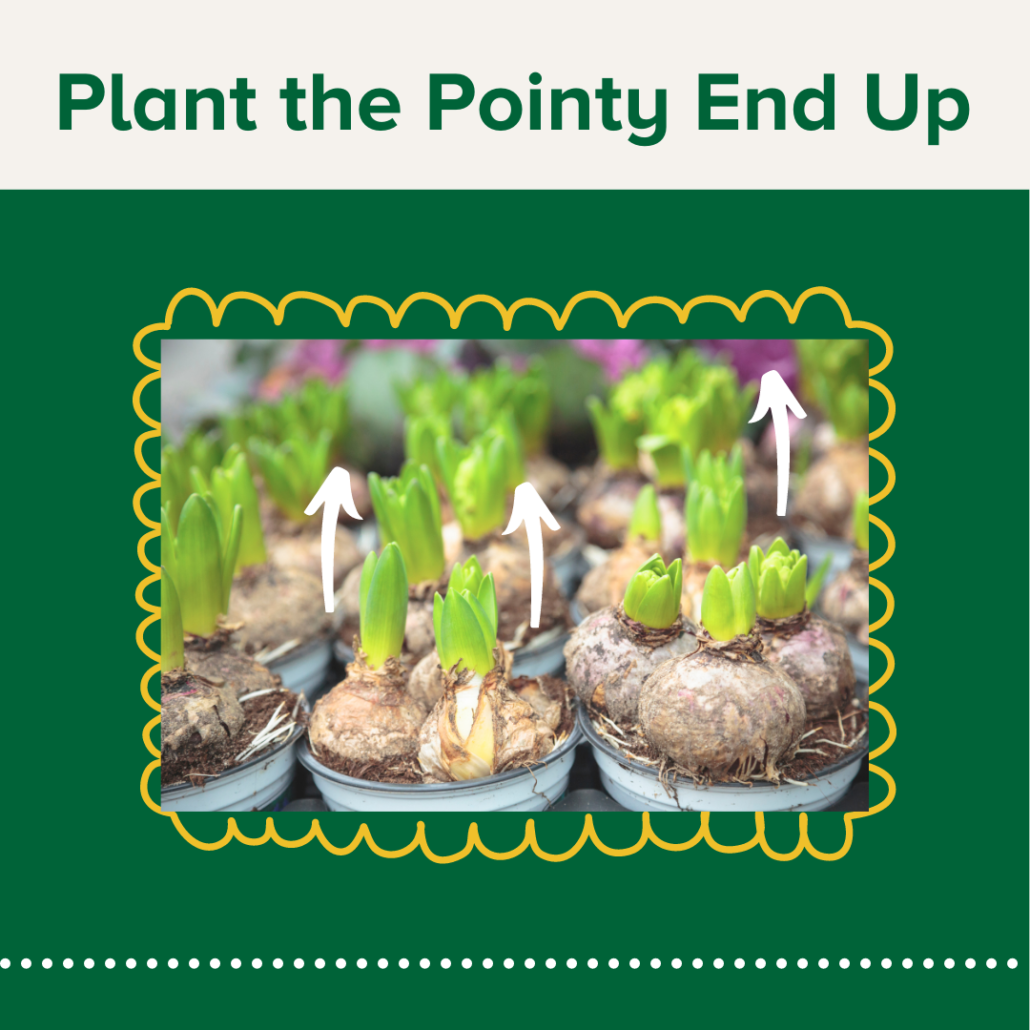
Contrary to what you might think, bulbs don’t necessarily have to be planted right-side up. But planting them upside down can delay their flowering. If you can, make sure to plant the pointy side of your bulb up.
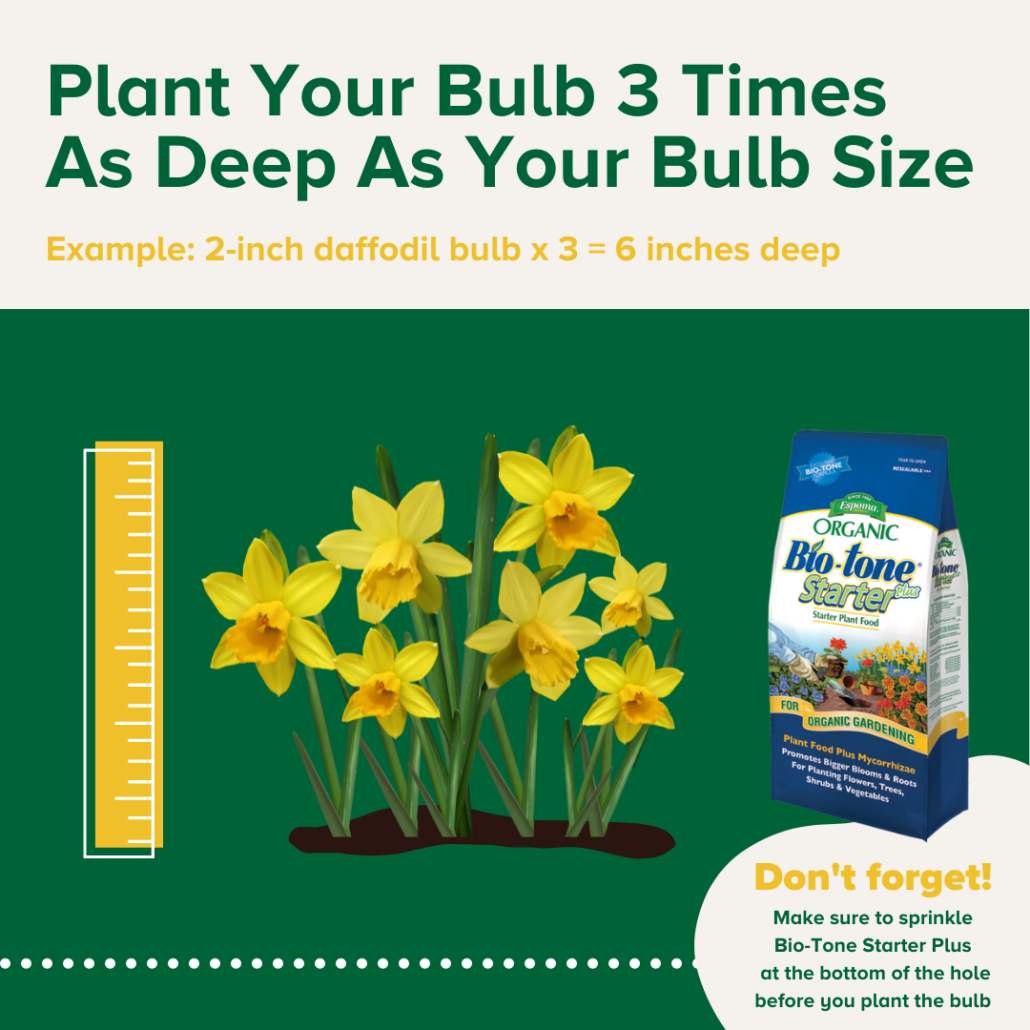
One of the most important parts of planting bulbs is getting the bulb depth right. The general rule is to plant bulbs three times as deep as the bulb size. A two-inch daffodil, for example, would be planted about six inches deep (2*3 = 6”).
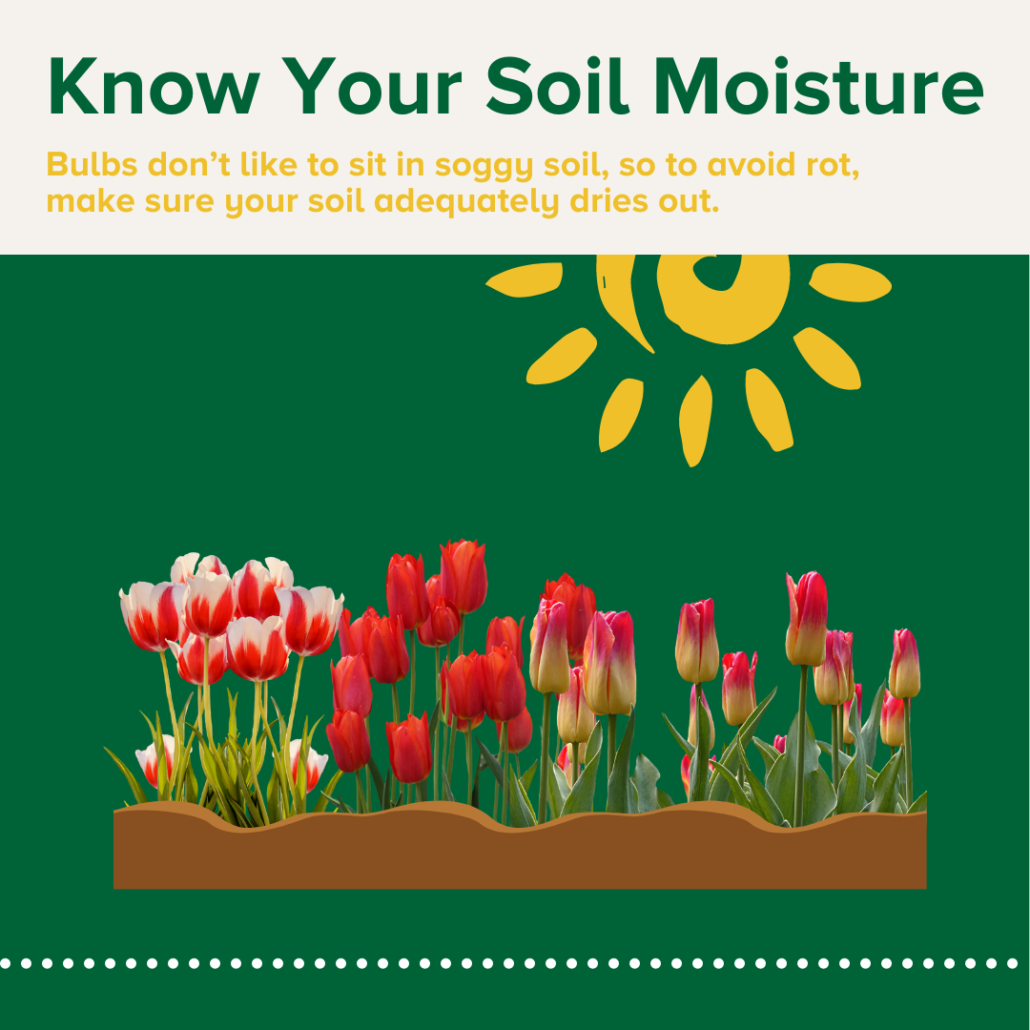
As far as soil goes, the key is making sure that the kind of bulb you’re planting is adapted to your soil moisture. Many bulbs are from dry places, so make sure your soil adequately dries out during the growing season.
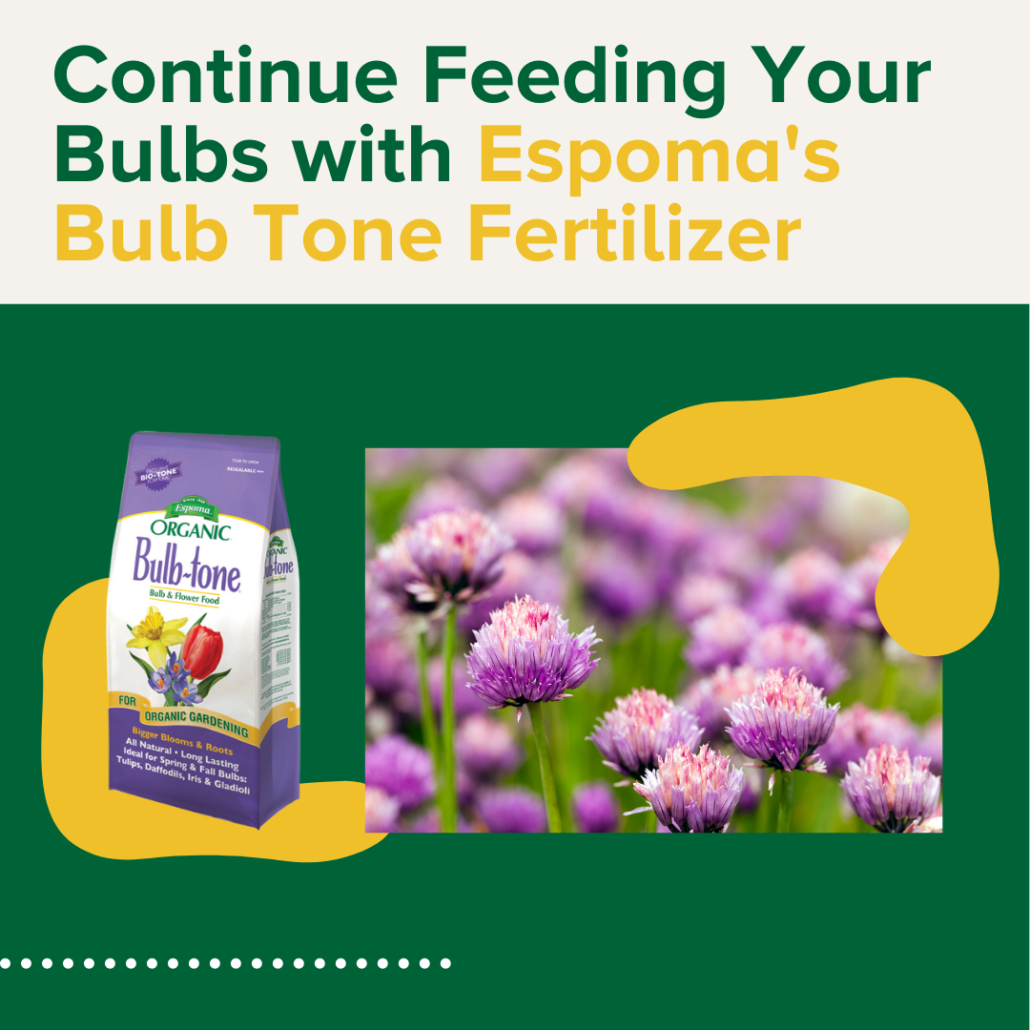
For fertilizing, wait until Spring right after your bulbs have flowered, then add in compost or some other organic fertilizer like Espoma’s Bulb-tone fertilizer, which is specifically designed to support bulb growth. After flowering, your bulb is trying to collect lots of nutrients for the bulb below ground to be ready for the next year.

When Will My Bulb Bloom?

You’ve planted your bulbs in the Fall and are on the edge of your seat, just waiting for those Spring bulbs to arrive. Below are some bulbs that will bloom in Spring, Summer, and Fall.

Spring: tulips, some alliums, daffodils, snowdrops, snowflakes, and irises.

Summer: dahlias, gloriosa lilies, true lilies, blood lilies, canna lilies, crinum.

Fall: dahlias, autumn crocus, red spider lilies.

How to Divide Bulbs

Most bulbs grow in a clump and over time, they will multiply underground, creating a clump of 10 to 15 bulbs. Many bulbs need to be divided to rejuvenate.

You want to wait to divide bulbs until the foliage starts to die off. The foliage helps to collect energy for the bulb for the next season, so if you move the bulb while the leaf is green and trying to build energy, you can damage it.

After the foliage has died off, dig down to the bulbs and start separating them. Sometimes you need water to force them apart. Let them dry out on the surface and then store them in a cool, dry location until you’re ready to replant them in the Fall or Spring.

Want to learn more about all things flower bulbs? Make sure to check out Jenks’ blog and brand new book, Crinum: Unearthing the History and Cultivation of the World’s Largest Bulb, available now!

******

About Bloom & Grow Radio Podcast

Bloom & Grow Radio Podcast is now Groing Joy with Maria.

The podcast helps people care for plants successfully and cultivate more joy in their lives. Host Maria Failla, a former plant killer turned happy plant lady, interviews experts on various aspects of plant care, and encourages listeners to not only care for plants but learn to care for themselves along the way.

About Our Interviewee

Jenks Farmer got his first flower bulb in the 1970s and has been growing them ever since. For the last twenty years, Jenks has led teams responsible for establishing two of South Carolina’s major botanical gardens. His designs for homes, museums, and businesses have received recognition and awards and have delighted hundreds of thousands of visitors with the joyful, easy exuberance of hand-crafted gardens.

Jenks wrote and published three books, including The Crinum Book, Funky Little Flower Farm, and Deep-Rooted Wisdom.

​​Follow Raffaele: 

Blog

Instagram

Website

Featured Products:
Where to Buy
https://www.espoma.com/wp-content/uploads/2022/07/How-to-Plant-_-Fertilize-Bulbs-5.png 1080 1080 espoma https://www.espoma.com/wp-content/uploads/2023/05/espoma-logo340w-1.png espoma2022-07-11 14:01:402023-09-11 16:55:28BAGR Episode 150 Blog: All the Bulb Basics You Need

Preserving Asian Heritage Through Seeds and Stories

July 10, 2022/in Blog, Bloom and Grow Radio, Fruits & Vegetables, Gardening, Seed Starting, Vegetable Gardening

Seeds not only provide us with food to eat, but they represent the future and allow us to reflect on our history. They are heirlooms, a connection to our ancestors and their stories. In this blog, we celebrate stories of Asian culture and connection to nature and food through seeds, with YC Miller from Kitazawa Seed Company. 

YC walks us through the importance of preserving our heritage through seeds with heartwarming stories from Kitazawa customers on how a simple vegetable can carry so much family history and pride. 

This blog is inspired by Episode 152 of Bloom and Grow Radio Podcast, where host Maria Failla interviewed YC Miller from Kitazawa Seed Company. 

How Growing Food Can Reconnect Us with Our Heritage

YC didn’t grow up growing any Korean vegetables. Coming to them as an adult has played a huge part in how she has reconnected with their heritage.

Fifteen years ago, YC went on a heritage trip to Korea. For a portion of the trip, she worked on a farm. She recalls that experience as one of the first times she understood what roots really meant. It really spoke to YC’s soul about who she was as a person and created a deep sense of belonging. 

That moment served as an awakening of their heritage, but also a reconnection with food and the plants, vegetables, and agricultural practices that went along with that. Ever since then, it’s been a constant learning process through their work at Kitazawa Seed Company.

Many Americans, descendants of immigrants, share a similar experience in reconnecting with their culturally significant vegetables and stories of families bringing seeds over from their home countries. With their work at Kitazawa Seed Company, YC says it’s been a pleasure to be able to celebrate and honor that connection, and to be a source of seeds and food that help foster that connection.

How Two Brothers Built Kitazawa Seed Company

Kitazawa Seed Company was started by two brothers in 1917.  It is the oldest Asian seed company in the United States, specializing in Asian varieties. The brothers were selling seeds to Japanese farmers in California, and also providing traditional Japanese vegetable seeds to home gardeners who were growing them for their families and communities.

From 1942 to 1945 Kitazawa Seed Company was forced to abandon the business due to WWII. The Kitazawa family, along with all other Japanese-Americans, were moved and put into Relocation Camps during that time. The brothers restarted the business after the war. Many of their customers had relocated due to land ownership changes. This is when Kitazawa began selling and shipping seeds across the United States and really flourishing. It has continued the tradition of selling both to commercial farmers and to the home gardener. 

A major goal of Kitazawa has been to bring in seeds that are otherwise inaccessible. It started as a company that focused mostly on Japanese vegetables, because that was primarily the customer base. With waves of immigration from Asia to the United States, there’s been a changing demand for different kinds of Asian vegetables. Now Kitazawa has expanded its offerings to be able to provide vegetables for lots of different communities. 

Preserving Seed Diversity and the Immigrant Experience

Kitazawa strives to provide lots of hybrid seed varieties that are reliable, but they also value open pollinated varieties. If you were to grow an open pollinated squash variety in California and grow that same variety in New York, saving seeds year after year, those seeds would adapt to the different microclimates they were grown in. While they’re still the same variety of squash, certain traits would emerge, making them better suited for each region.

An interesting parallel to note is the similarity in the seed and the home grower who originally brought it to the United States. Seeds come from a different homeland and take on the soil, the air, and the sunshine from their new home. As seeds thrive, they continue to change and evolve. Similar to the immigrant experience in adapting to your new environment. 

As home gardeners, we may not think much about saving seeds. But it’s something YC highly encourages us to do to create more locally adapted, resilient seed varieties. 

Where and How Does Kitazawa Source Their Seed Varieties?

A lot of Kitazawa’s seeds are imported from Asia, where they have been working with many of the same reliable growers for decades. There are plans in place to consider more domestic production, especially considering supply chain issues and shipping. There are amazing people doing small batch seed production in the United States that are doing incredible work, specifically with landrace varieties. Landrace seeds have evolved traits naturally over time in response to growing conditions like pests, climate, and diseases in a specific location.

Kitazawa not only considers a particular variety, but also a high standard of quality when bringing in seeds. They grow out new varieties first so they can ensure the health and vigor of the seeds they offer to customers. The process can take several years to not only source the seed, but to also ensure the integrity of the seed packet they sell.

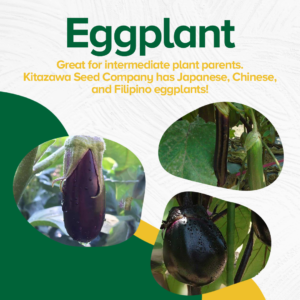
What Are the Differences Between Japanese, Chinese, and Filipino Eggplants?

One of Kitazawa’s new varieties is a Filipino eggplant. They have had customer requests for  years to carry a Filipino eggplant in their seed options. While they have lots of Japanese and Chinese eggplant varieties, none of them were quite right for their Filipino clientele. 

Traditionally, people think of a Japanese eggplant as being long, narrow, and purple. Generally the Japanese eggplants also have a purple calyx, which is the part of the eggplant that attaches to the stem. They are also quite firm with low moisture content, and often used for pickles. 

Chinese eggplants often have a green calyx and are lighter in color than the Japanese eggplants. Their texture is a bit creamier too.

The Filipino eggplant Kitazawa is sourcing is a greenish purple with a green and purple calyx. Generally, Filipino eggplants are more tender and a bit sweet. 

YC’s Recommended Kitazawa Varieties for Beginners

One of the great things about Asian vegetables is there’s such a huge diversity. There is something for everyone from the beginning gardener to the more experienced gardener and everyone in between.

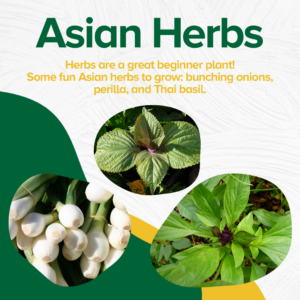
For people who are just starting out, some of the easiest plants to get started are Asian herbs. There is a huge variety of Asian herbs from bunching onions that you can use in pretty much everything to Thai basil and all of the different kinds of perilla. 

And then there are types that YC would consider big payoff varieties. With a crop like peas, you can eat the shoots and the peas once they form. They’re easy to grow and you get a lot of vegetables for your effort. Japanese cucumbers are another wonderful option and fairly easy to grow with a trellis.

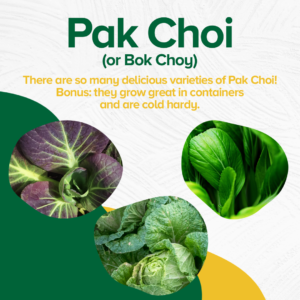
Kitazawa has a huge number of pak choi (or bok choy) available that can be easily grown in a container. They have a bunch of smaller varieties for small space growers. It’s a cold hardy vegetable you can grow in Spring and Fall. 

If that all sounds overwhelming, Kitazawa is always happy to give seed recommendations. You can give them a call and they’d be happy to help assist you. 

YC’s Favorite Recipe to Cook

Korean perilla is a Korean herb, and a very meaningful plant to YC personally, so it’s their go-to plant. She uses it in two ways: one, as a kind of lettuce wrap and two, she pickles it!

It’s really wonderful as a pickle or as a kimchi. Kitazawa carries many of the perilla varieties, including Japanese shiso, a Vietnamese variety, and a Korean variety. They’re also very easy to grow in containers! 

To learn more about different Asian recipes, check out the Kitazawa Recipe Blog. 

Visit  Kitazawa Seed Company

*****

About Bloom & Grow Radio Podcast 

Bloom & Grow Radio Podcast helps people care for plants successfully and cultivate more joy in their lives. Host Maria Failla, a former plant killer turned happy plant lady, interviews experts on various aspects of plant care, and encourages listeners to not only care for plants, but learn to care for themselves along the way.

About Our Interviewee

YC Miller works for Kitazawa Seed Company, which specializes in offering the highest quality Asian seeds to delight the diverse palates of their customers. They offer over 500 seed varieties that produce dento yasai or traditional heirloom vegetables of Japan, to the Asian vegetables popularly found in farmers’ markets, specialty grocery stores, and restaurants. Now you can grow them in your kitchen garden, sell them at your garden center and grow them commercially.

​​Follow Kitazawa Seed Company:

Website

Email

Featured Products:


Where to Buy

https://www.espoma.com/wp-content/uploads/2022/07/Copy-of-Asian-Heritage-1.png 1080 1080 espoma https://www.espoma.com/wp-content/uploads/2023/05/espoma-logo340w-1.png espoma2022-07-10 10:36:342022-07-10 10:44:08Preserving Asian Heritage Through Seeds and Stories

Video: Garden Answer’s Two New Perennials for 2023: Heliopsis & Agastache!

May 27, 2022/in Flowers, Garden Answer, Gardening, Spring Gardening, Spring Gardening

Who else is excited two see Garden Answer’s two beautiful new perennials in the ground? Follow along and see how a bit of Espoma Organic Land & Sea Gourmet Compost gets the soil just right prior to planting.

Featured Products


https://www.espoma.com/wp-content/uploads/2022/05/Two-New-perennials.jpg 1080 1920 espoma https://www.espoma.com/wp-content/uploads/2023/05/espoma-logo340w-1.png espoma2022-05-27 09:42:482022-06-03 12:11:06Video: Garden Answer’s Two New Perennials for 2023: Heliopsis & Agastache!

VIDEO: Planting Begonias & Impatiens with Garden Answer!

May 26, 2022/in Blog, Flowers, Garden Answer, Gardening, Spring Gardening

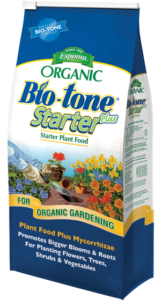
First up for Garden Answer’s Annuals in 2022: Begonias & Impatiens! As she gets these in the ground, some Espoma Organic Bio-tone Starter Plus will help get them off to a great start!


Featured Products:

https://www.espoma.com/wp-content/uploads/2022/05/2-perrenials-1-shrub-thumb-1.jpg 1080 1920 espoma https://www.espoma.com/wp-content/uploads/2023/05/espoma-logo340w-1.png espoma2022-05-26 13:45:222022-06-03 12:08:08VIDEO: Planting Begonias & Impatiens with Garden Answer!

VIDEO: Planting Bush Clematis, Ornamental Oregano and a Bloomerang Lilac Tree!

May 18, 2022/in Blog, Espoma Videos, Flowers, Garden Answer, Gardening, Spring Gardening, Spring Gardening

Espoma Organic Land & Sea Compost and Bio-tone Starter Plus will help ensure these different perennials and lilac trees establish fast and live long and happy lives. Join Garden Answer and see how it’s done!

Featured Products:

https://www.espoma.com/wp-content/uploads/2022/05/2-perrenials-1-shrub.jpg 1080 1920 espoma https://www.espoma.com/wp-content/uploads/2023/05/espoma-logo340w-1.png espoma2022-05-18 13:39:242022-06-03 12:05:53VIDEO: Planting Bush Clematis, Ornamental Oregano and a Bloomerang Lilac Tree!

Why Gardening Should Always be a Team Effort

May 10, 2022/in Blog, Fruits & Vegetables, Gardening, Spring Gardening, Spring Gardening, Summer Gardening, Vegetable Gardening

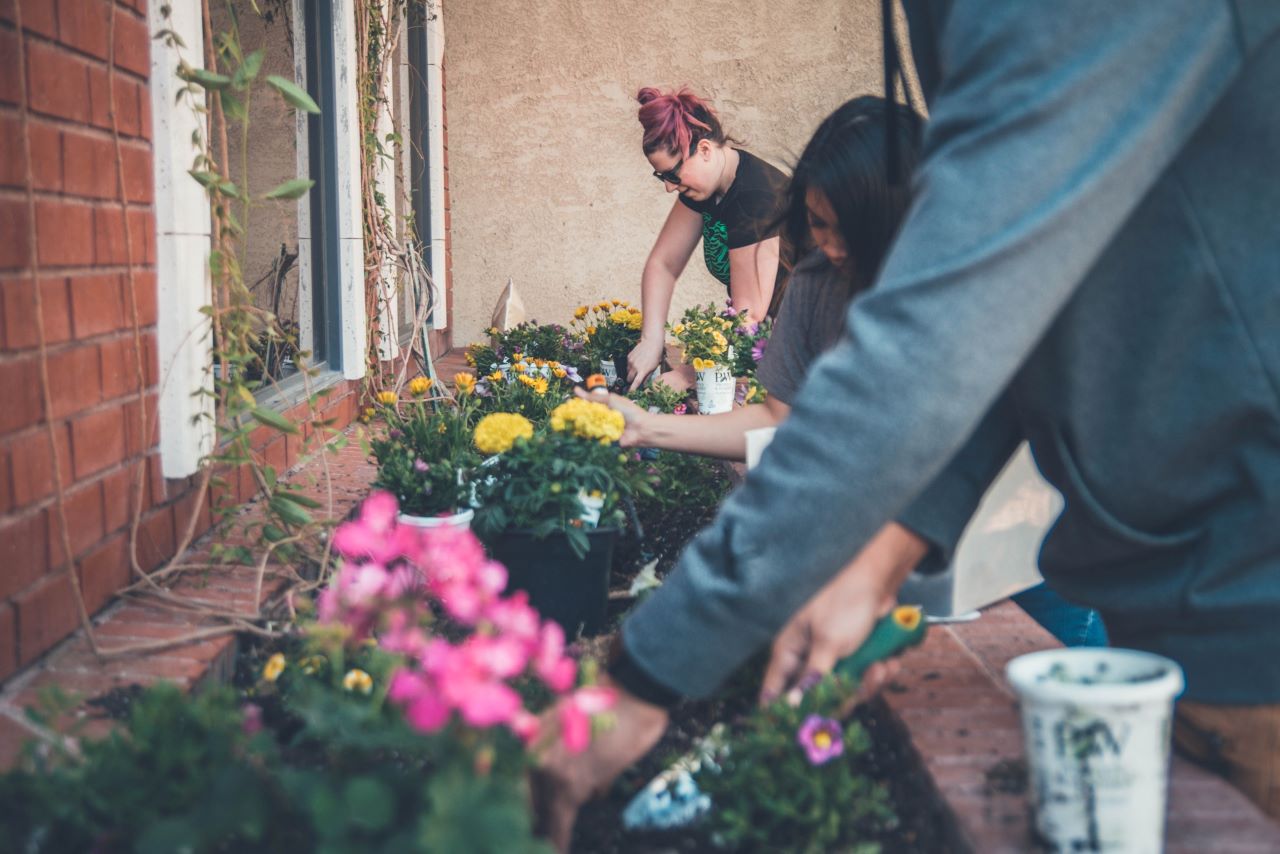
people gardening together

Spring is here, and there’s no better way to celebrate the new season than by getting outside and gardening. Even better, why not garden with your friends, families, and community members? It’s the perfect way to help our planet while also connecting with the people closest in your life. Don’t believe it? Here’s why gardening with other people should be at the top of your to-do list this spring.

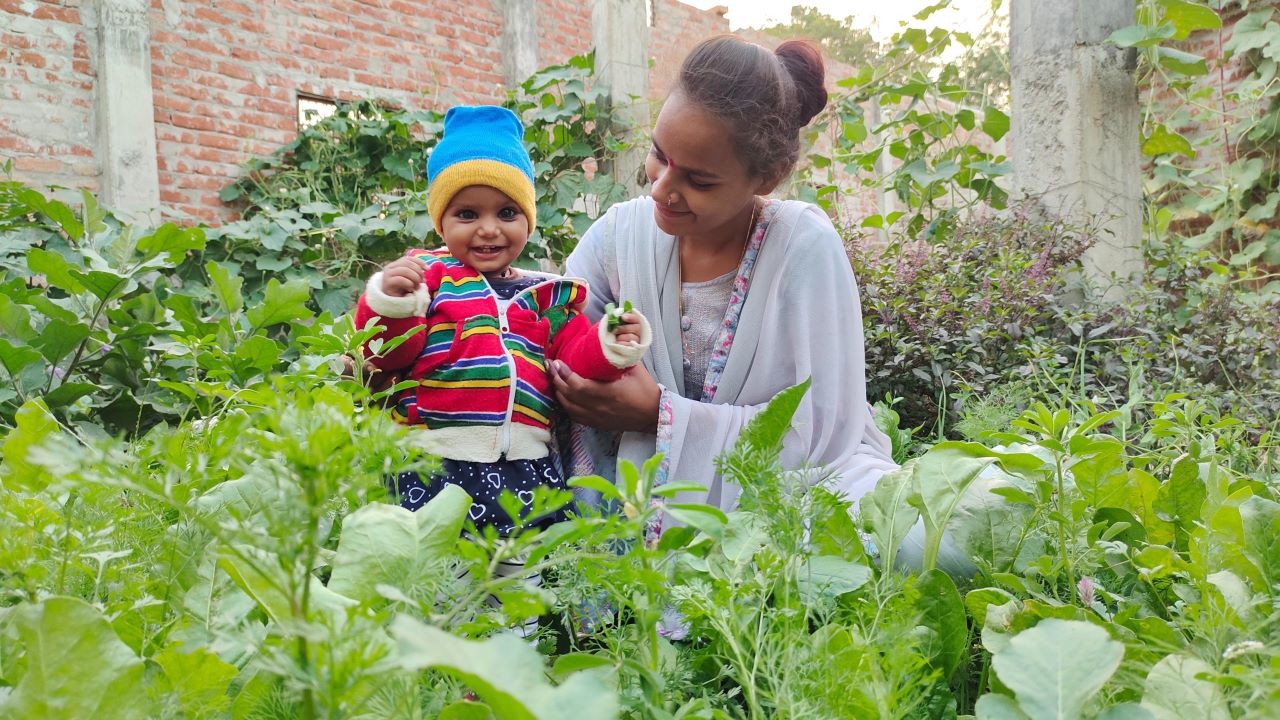
Woman and child in garden

1. It benefits your health.

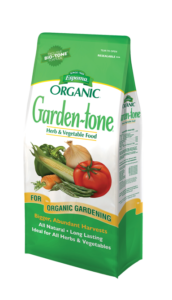
Verywell Family says that gardening is a moderately intense form of exercise. It’s a great way to burn some calories without feeling like you’ve just run a marathon. This also means it’s a fun way to get your family physically active as well. The website states that, “Kids ages three to five need to get three hours of physical activity each day, and older kids need a minimum of an hour daily.” You and your family can bond over planting onions, corn, potatoes, you name it! As a bonus, Espoma’s Garden-tone Natural & Organic Fertilizer will have your family fawning over your healthy crops all season long.

basket of carrots

2. It benefits the environment.

It goes without saying that when you plant a garden, you’re significantly doing good for the environment. Greenmatters claims that gardening improves air quality, protects soil, lessens global warming, minimizes landfills, and saves different kinds of wildlife. These might seem like daunting tasks, but it’s really easier than you think. Verywell Family suggests that when gardening with your family, “You might invest in a rain barrel and start a compost pile to make your garden more Earth-friendly, too.” 

Gardens for kids are an easy, engaging way to learn more about sustainability and its importance for our planet. And even for those who aren’t children, you’re never too late to learn something new. Gardening can teach your friends, family, and fellow neighbors about all the green benefits of growing plants and crops.

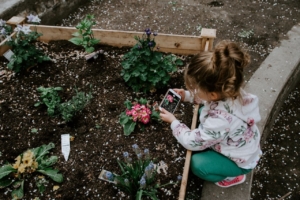
child taking picture of a flower

3. It’s just plain fun.

Whoever you plant your garden with, you go on a journey together to grow something entirely new. 

Harddy explains that “Watching the plants start to grow is an incredible achievement. When the planting is done together as a family, it makes the entire process even more meaningful from start to finish.” 

This rewarding process is a bonding experience that can strengthen your relationship with your family and local community. There’s also tons of ways to spice up your garden to make it a fun time for everyone involved. 

Playful Acre thinks that adding themes to your garden can make your children more engaged and interested in helping out. The blog tells us that having garden bed ideas spanning from “fairy tales to stories to favorite vacations abroad” can make your time outside all the more fulfilling.

Once your luscious garden is complete, the fun does not end there. There’s lots of ways afterwards to enhance the beauty of all your hard work.

Harddy recommends to “Use this time to come up with some beautiful decor you and your children can make together. Buy some terra cotta pots and have everyone paint one in their own unique designs. You can also clip the flowers you’ve grown to make gorgeous decorative arrangements for the dinner table.”

No matter who you garden with, whether your family, friends, or other local green thumbs, social gardening is your answer to springtime fun. Just as importantly, there are health benefits to gardening that keeps you and your close circle physically active on a daily basis. And of course, we need to upkeep our planet to make it a safe, beautiful place for everyone, and gardening helps us accomplish exactly that.

We can’t wait to see you and your squad planting seeds and growing meaningful relationships. Check out all our products ranging from fertilizers, to soils, and everything in between to make your next planting party a success. Happy gardening!

Featured Products


Where to Buy

https://www.espoma.com/wp-content/uploads/2022/05/TeamGarden1.jpg 854 1280 espoma https://www.espoma.com/wp-content/uploads/2023/05/espoma-logo340w-1.png espoma2022-05-10 16:58:052024-10-17 15:05:21Why Gardening Should Always be a Team Effort

Meet Your New Gardening Guide: Kaleb Wyse

May 9, 2022/in Blog, Fruits & Vegetables, Gardening, Kaleb Wyse

Kaleb Wyse

Kaleb Wyse is a fourth-generation to live on his family farm in Iowa. Leaving business and accounting, Kaleb started Wyse Guide as an outlet for his passions in the garden and indoors in the kitchen. His goal is to show viewers how they can start a garden no matter the size, preserve food, and create the home they love to live in.

Some things about Kaleb? You won’t find spirea or daylily in his garden. When Kaleb isn’t gardening, he’s busy crafting new recipes of his favorite foods, like ice cream and gourmet popcorn. While you’d think his favorite season is summer because he loves to garden, he adores the winter; he likes to slow down and curate his plans for springtime gardening season while he looks out at the Iowa snow. 

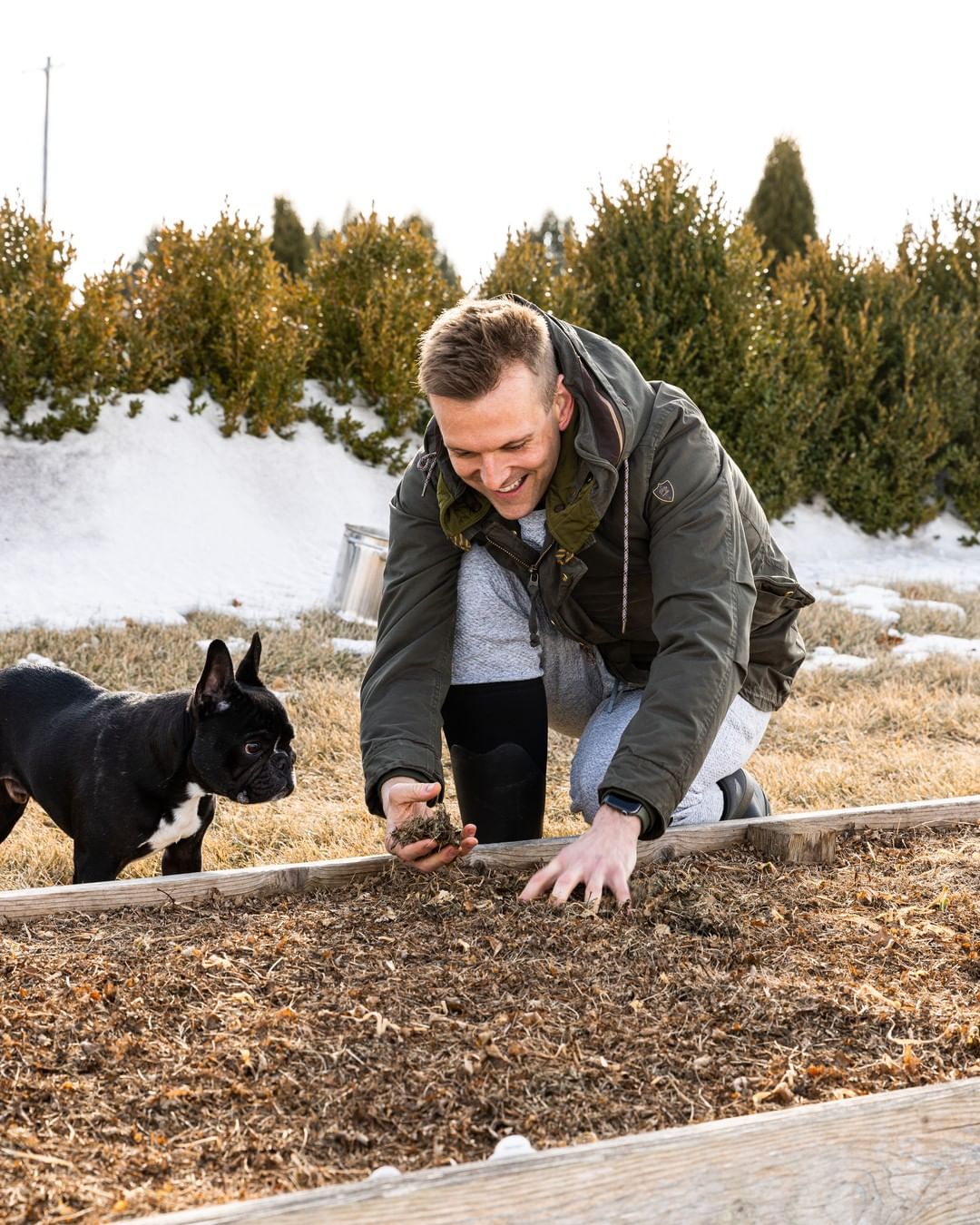
Kaleb Wyse and Kippie

His 3 year-old Frenchie, Kip, helps him out in the garden when he needs an extra hand, or paw in this case. Though he doesn’t like to do any garden work, he’s a good supervisor. 

Vegetable gardening is incredibly important to Kaleb — “We have the ability to grow actual food, think about how amazing that is! We can enrich our soil to be healthy and full of nutrients that will transfer to the vegetable garden plants we grow, making them more nutritious that what we buy that is mass grown.” He never grows tired of the excitement about how he can take a seed into something he can eat. Kaleb’s passions have sprouted instructional videos, recipes, and home gardening tips for everyone to use.

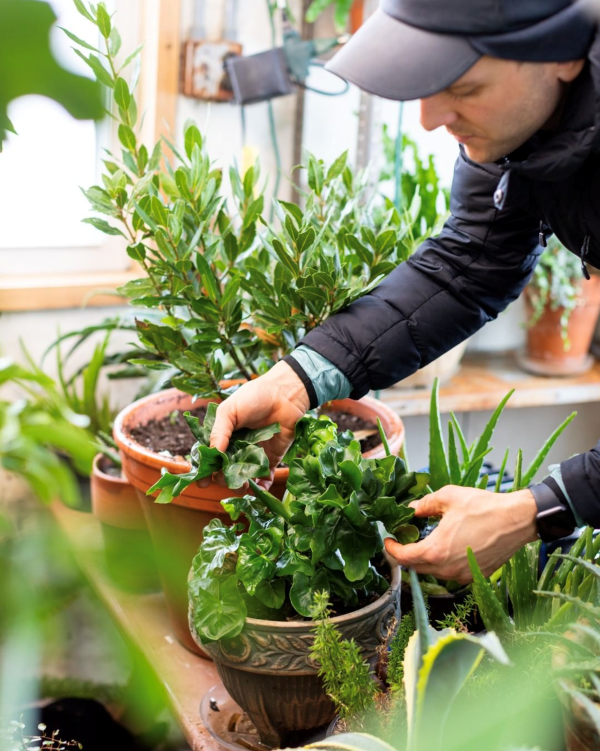
Kaleb with house plants

Be sure to check out Kaleb’s amazing gardening tips and recipes on Wyse Guide. When you have your list of garden vegetables you’re ready to plant, we’ve got you covered with fertilizers and soils sure to start the season off the right way.

https://www.espoma.com/wp-content/uploads/2022/05/image2.jpg 1350 1080 espoma https://www.espoma.com/wp-content/uploads/2023/05/espoma-logo340w-1.png espoma2022-05-09 16:30:222022-05-11 11:46:54Meet Your New Gardening Guide: Kaleb Wyse

Bonsai Care 101

May 3, 2022/in Blog, Bloom and Grow Radio, Bonsai, Container Gardening, Indoor Gardening, Indoor Gardening

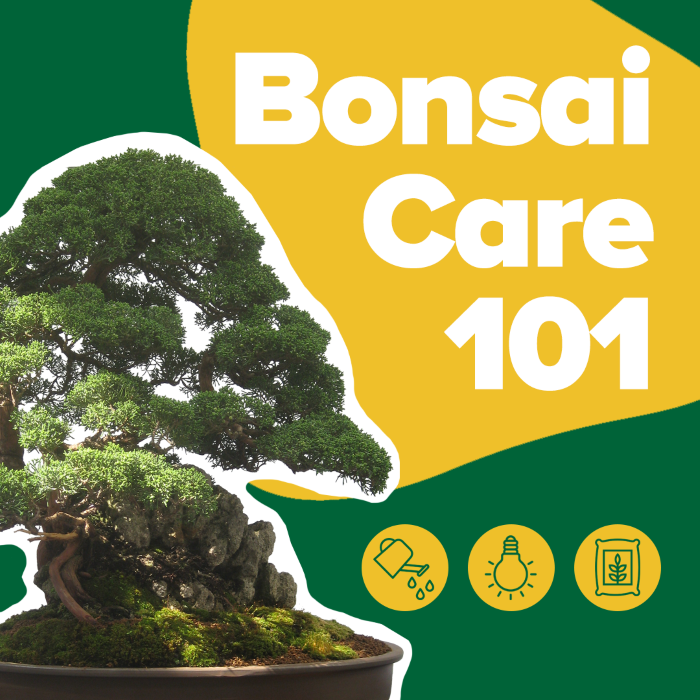
Picture of Bonsai tree

Bonsai Care 101

Bonsai trees–if you’re a millennial, you probably remember them from The Karate Kid movies. Did you know it’s actually pronounced “bone-sigh”? Bonsai means “to plant in a container or a potted plant.”

This blog all about bonsai care is inspired by Episode 119 of Bloom and Grow Radio–where host Maria Failla interviewed Bjorn from Eisei-En Bonsai.

Can Any Tree Be a Bonsai?

There are 3 characteristics to look for to help transform trees into the bonsai art we know and love:

  • Smaller leaves. You’re trying to create a large tree shrunk down into miniature form–so if you’re using a trunk with very large leaves, it looks quite out of proportion with the overall size of the plant.
  • Plants with bark on them. You should have to work with woody plants to achieve the true bonsai form. All of the conifers like juniper and pine are great for this!
  • Look for plants with apical dominance. Apical what?! Apical dominance means the bud at the tip of the stem stops the growth that occurs on the other buds along the stem. It does this to become the dominant stem and allow woody plants to grow taller–which is great for bonsai shaping!

Are Bonsai Grown Indoors or Outdoors?

You may be wondering, “can I grow a bonsai as a houseplant?” And the answer is yes–but with a few caveats.

You need to figure out if it’s a tropical or a temperate climate tree. Temperate climate trees have four seasons and need to go through their life cycles outdoors–think oaks and maples.

Tropical climate trees do not survive freezing temperatures and suffer in below 55 degrees F conditions, so these would be better options as indoor bonsai plants. Ficuses like the Weeping Fig (Ficus benjamina) and the Pot-Bellied Ficus (Ficus microcarpa) would both work great!

If you want an indoor bonsai, try sticking with the subtropical and tropical climate plants. And check out the Top 5 Bonsai Trees (Indoor and Outdoor Options) with Bjorn from Eisei-en Bonsai for more variety options!

How to Care for Bonsai Trees

Now that we know more about what to look for, let’s jump right into bonsai care. We’ll cover all the basics for soil, fertilizer, water, light, and pruning. Buckle up, ‘cause we’re on this road of planty learning for a while!

What Is the Right Soil for Bonsai?

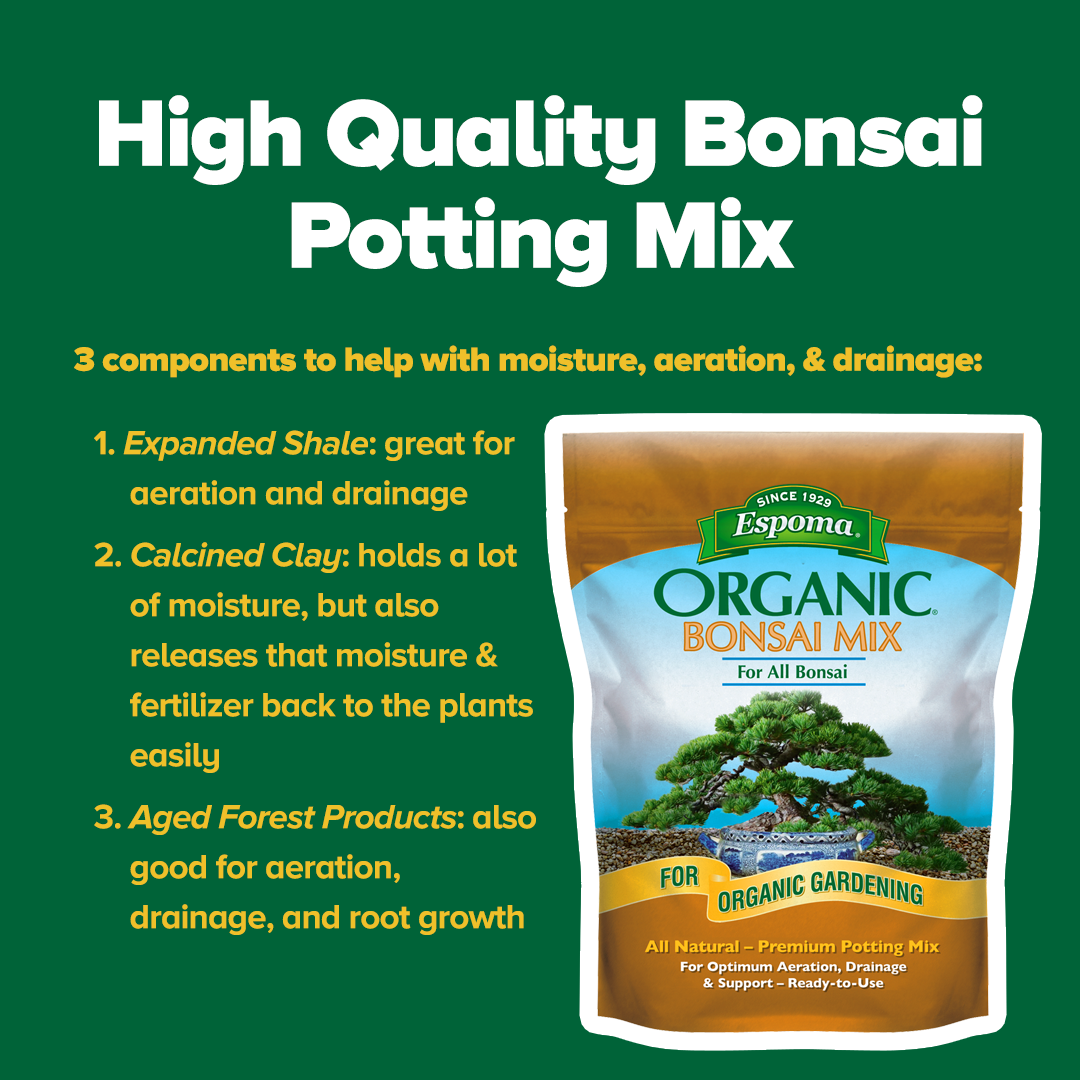
Since your goal is total control over the growth of the bonsai, you have to use almost entirely inorganic components when you mix your soil together. To make your own, try getting your hands on these 3 basic components:

  1. Expanded Shale: great for aeration and drainage
  2. Calcined Clay: holds a lot of moisture, but also releases that moisture & fertilizer back to the plants easily
  3. Aged Forest Products: also good for aeration, drainage, and root growth.

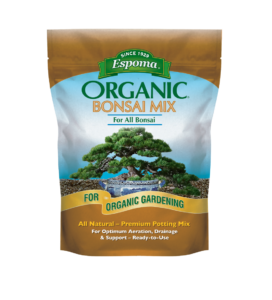
The particle size is quite large at 3/16 inch to ensure as much drainage and aeration to the root system as possible. Don’t want to make your own soil mix? Check out our Organic Bonsai Mix.

By keeping the plants in a mostly inert soil mix, you can then decide how much fertilizer to give the tree and the type of growth that you’re going to get out of the plant.

Bonsai Potting Mix

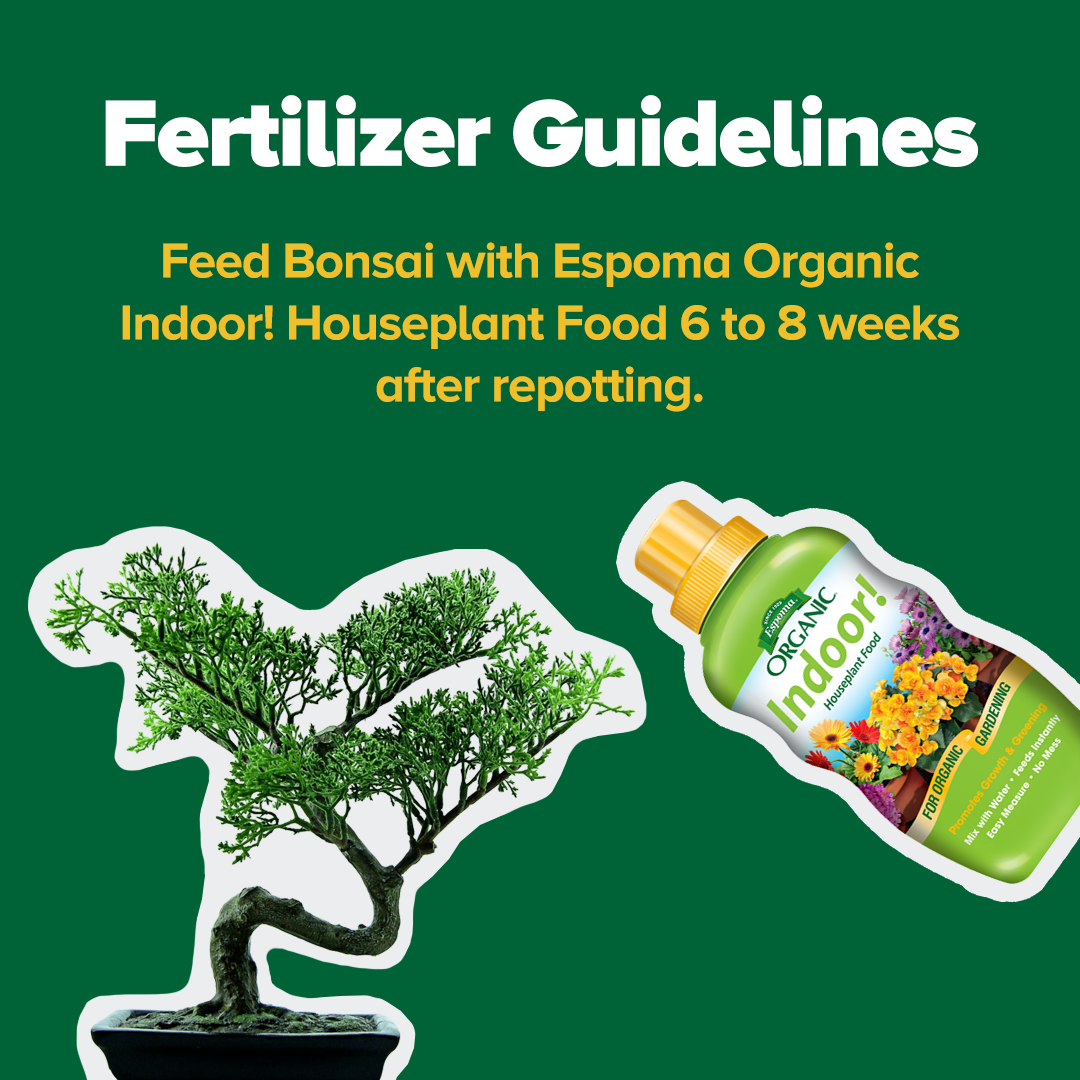
How Do I Fertilize Bonsai? 

Fertilizer is the key to controlling your plant’s growth. To keep the soil from clogging up, Bjorn recommends distributing bonsai fertilizer by adding synthetic or organic fertilizer to a tea bag and slowly allowing the nutrients to leach into the soil. Every time you water your bonsai, water directly over your nutrient tea bag.

So how much fertilizer and what type of fertilizer should you apply? That all depends on the stage of tree development.

  • Young Trees: at this stage you want to thicken the trunk of the plant. Use a very high-nitrogen synthetic or inorganic fertilizer, which produces elongating, inner nodes and bigger leaves on your tree.
  • Older Trees: with older trees, you’re simply in maintenance mode. Here you’ll need fertilizer that has a much lower nitrogen value and well-rounded, equal amounts of nutrients.

Bonsai Fertilizers

How Do I Water Bonsai?

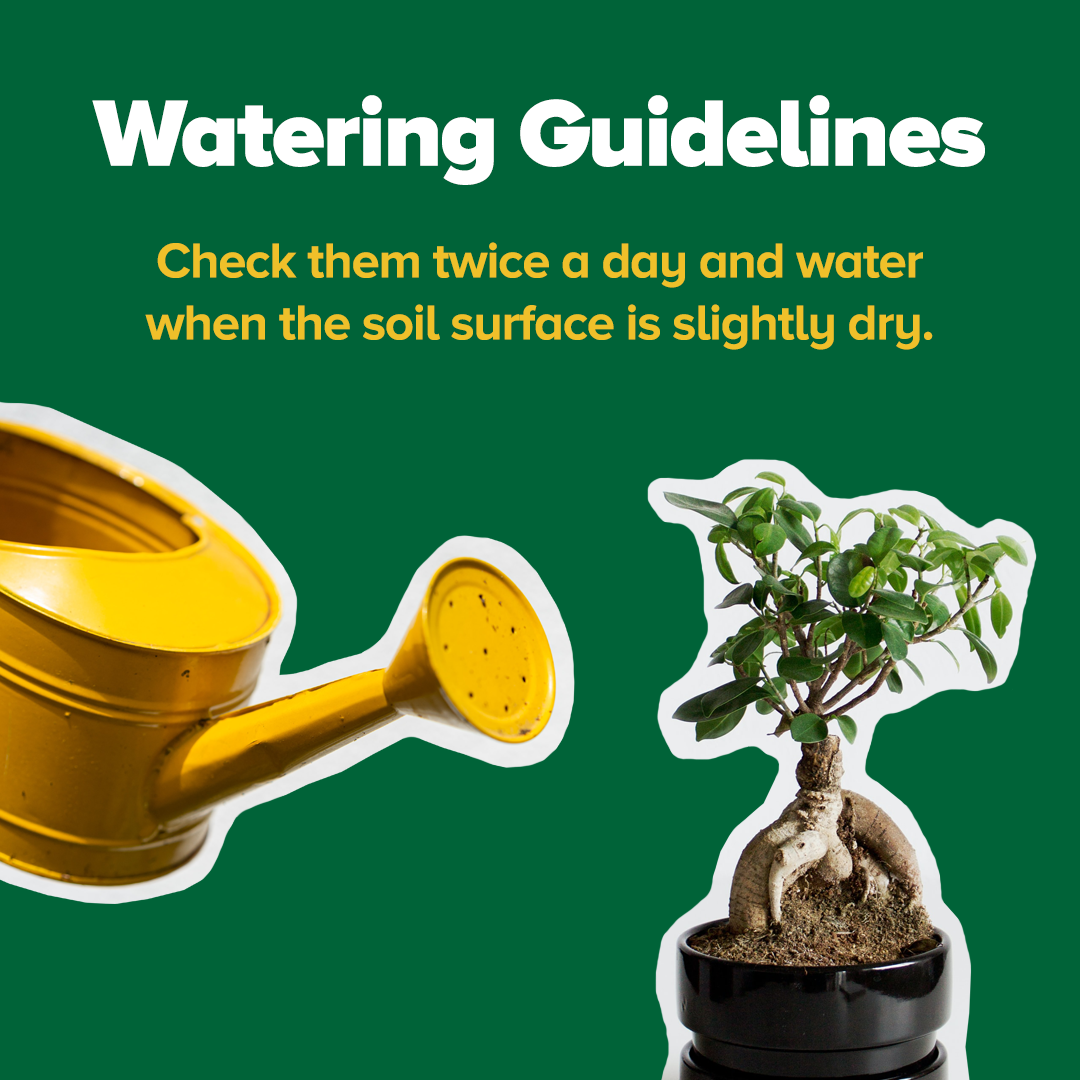
Since you’re using a rockier, more aerated soil, you’ll be watering more frequently than you would a regular potting mix.

A good general watering rule with bonsai plants: Bjorn suggests checking on them twice a day and water when the soil surface is slightly dry. Stick to the basic schedule of checking on your bonsai morning and evening, and all should be well in the bonsai world!

Bonsai Watering Guidelines

How Much Light Do Bonsai Need? 

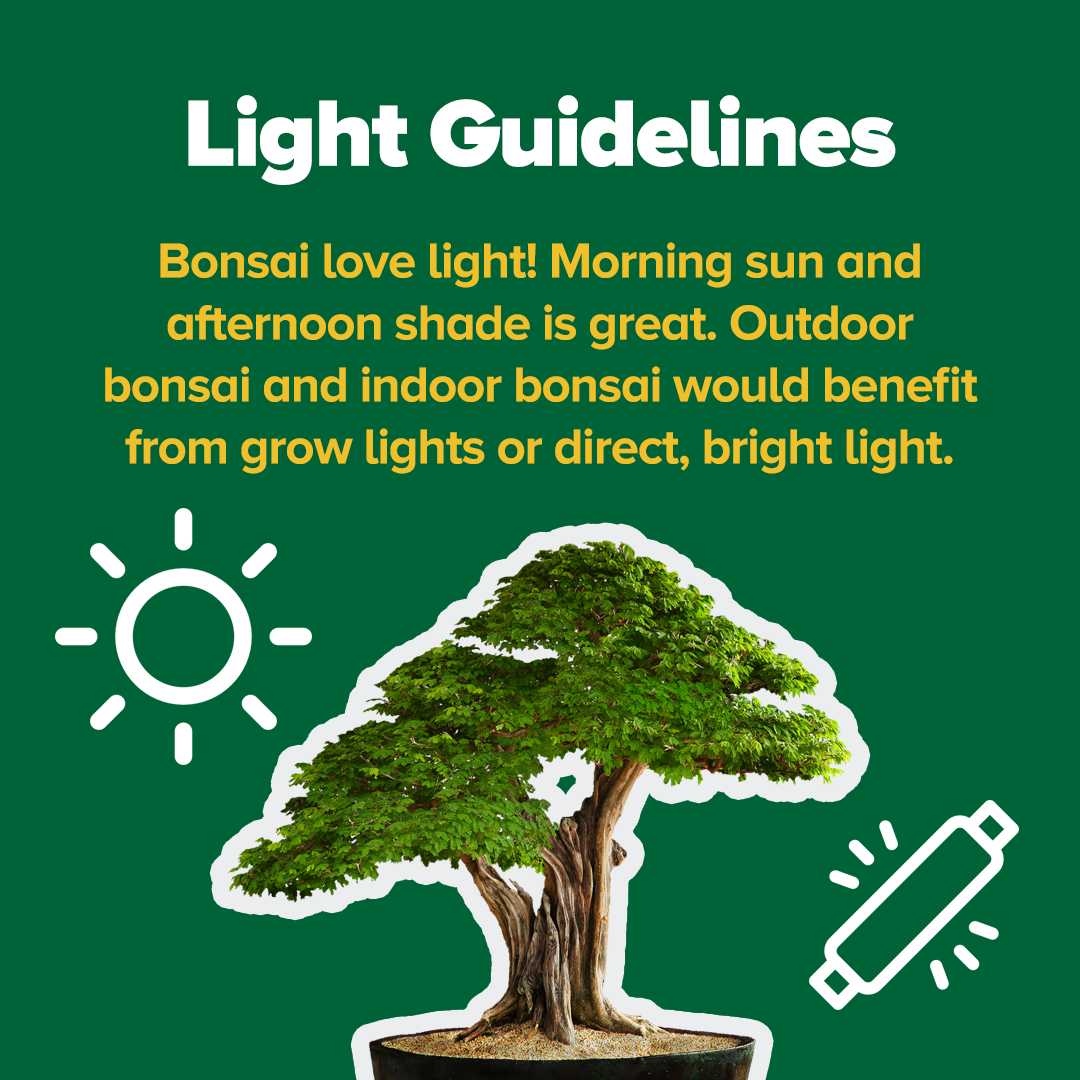
In general, you want your bonsai plants to have as much light as possible. Bjorn says the more light you have, the smaller the leaf size and the softer the branch structure. In the long run it will be easier to maintain that tree’s shape.

If you plan to keep an outdoor bonsai, morning sun and afternoon shade is best during summer. Indoor bonsai plants will need supplemental light, especially during the fall and winter months. Generally speaking, 12-14 hours of direct light is best for bonsai growth.

Bonsai Light Guidelines

How to Prune Bonsai? 

You might have guessed that pruning is one of the most important factors in creating a bonsai tree. There are two main parts to pruning: roots and shoots. Let’s go over both.

What is the difference between Root Pruning and Shoot Pruning?

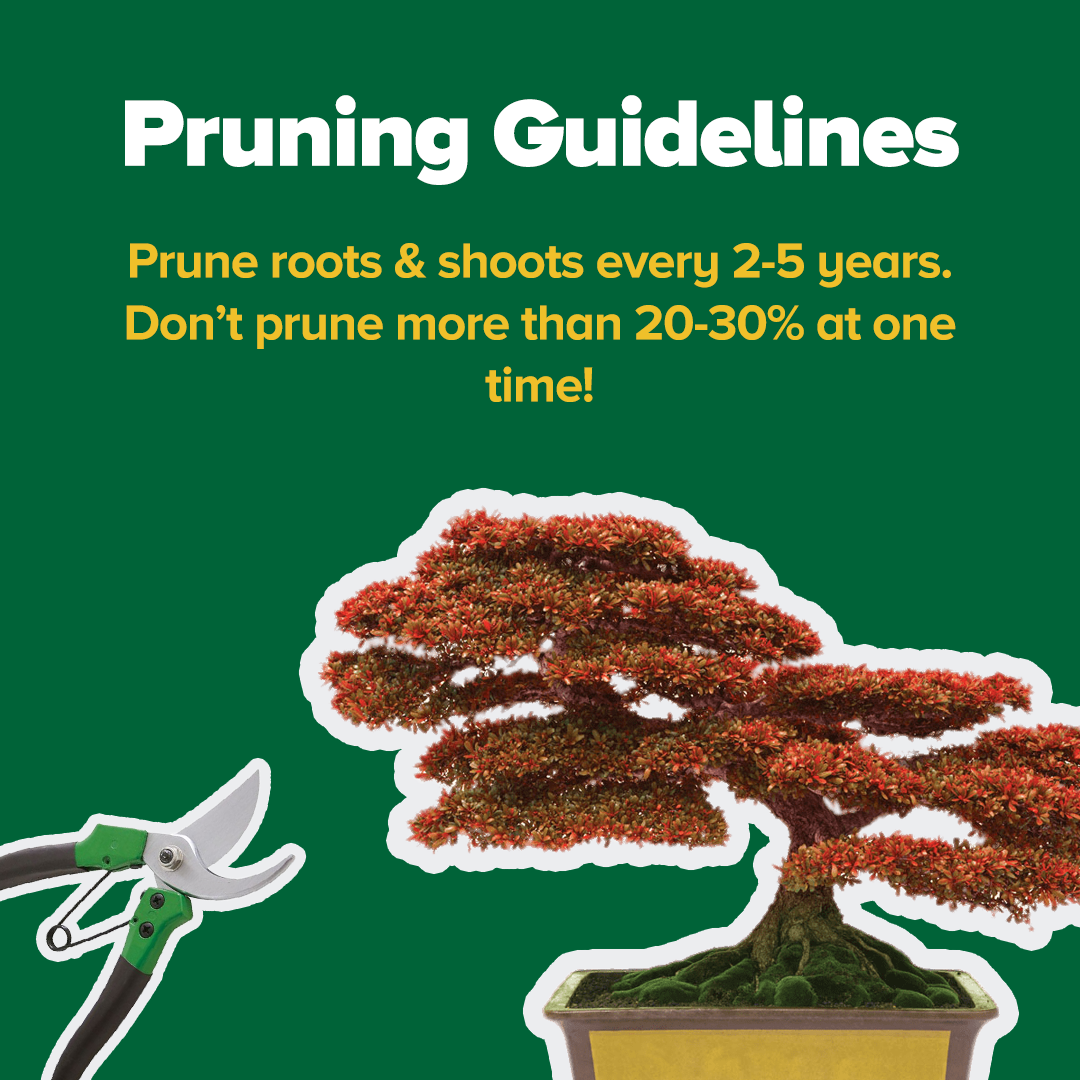
Root pruning should happen every 2-5 years in spring when you notice water is no longer penetrating the soil and simply pooling on the surface. Remove a lot of the old soil with a root rake or wooden chopstick. You will inevitably remove some roots through that process, but removing that old soil exposes the outer and underside of the root system. Make sure you don’t prune back more than 20-30% of the roots. Then simply replenish the space you’ve created with new potting mix. Since the mix is fresh, make sure to use your hands to pat the soil within the root system of the plant and give it a good watering to help settle the soil.

Shoot pruning is also done every 2-5 years in late spring or early summer after new growth has appeared. Your bonsai should have put out about 6-10 leaves–cut it back to two leaves with dormant buds. Essentially, you want to look for those little bitty nubs that are right at the base of the leaves. As long as you’re counting at least two, you can cut them back.

Think about pruning like you’re always trying to push the growth back and create desired directionality in one direction or another within the plant. Make sure to avoid pruning your roots and shoots in the same year–that would be far too much stress on your precious bonsai.

Bonsai Pruning Guidelines

Bonsai is a Wonderful Practice for Mindful Plant Parents!

Are you someone who likes to interact with your plants on a daily basis, control all the elements, and look towards the future? Then the bonsai is a perfect fit for you! Caring for a bonsai is one of the most engaging and interesting hobbies you can get into. It really shifts your perspective on instant gratification, which will definitely make you think differently about not only plants, but also life in general.

Ready, Set, Grow!

If you’re ready to grow your own bonsai, make sure to check out the Eisei-en Bonsai YouTube channel with Bjorn and find all the specific guidelines for each tree variety along with tons of other helpful information.

Where can one buy a bonsai tree? If you’re in Nashville, Tennessee, you absolutely have to get one of Bjorn’s bonsai plants at Eisei-En Bonsai Garden. Otherwise, check out Brussel’s Bonsai online for plants, tools, and pots!


About Bloom & Grow Radio Podcast

Bloom & Grow Radio Podcast helped people care for plants successfully and cultivate more joy in their lives. Host Maria Failla, a former plant killer turned happy plant lady, interviews experts on various aspects of plant care, and encourages listeners to not only care for plants, but learn to care for themselves along the way.

About Our Interviewee

Bjorn from Eisei-En Bonsai

Bjorn Bjorholm’s bonsai love started when he got a bonsai tree for his 13th birthday after watching all the Karate Kid movies. Even though his first bonsai croaked (hello plant parent initiation), Bjorn was hooked and founded the Knoxville Bonsai Society in high school with his father. After graduating from the University of Tennessee focusing on Japanese language and business, he moved to Japan and began a bonsai apprenticeship for 6 years under Master Keiichi Fujikawa at Kouka-en bonsai nursery in Osaka, Japan. His tenure as an apprentice at Kouka-en was followed by three years as artist-in-residence, making him the first foreign-born working bonsai professional in Japan. Bjorn now owns Eisei-en Bonsai in Nashville, TN, the premier bonsai garden, nursery and school of the Eastern US.

Follow Bjorn:

Website

Instagram

YouTube


References

  1. Episode 119 of Bloom and Grow Radio
  2. How Woody Plants Grow: https://extension.illinois.edu/blogs/garden-scoop/2020-12-12-how-woody-plants-grow
    1. Used to describe apical dominance
  3. Temperate Deciduous Forest: https://earthobservatory.nasa.gov/biome/biotemperate.php
    1. Used for temperate tree examples
  4. Ficus benjamina: https://plants.ces.ncsu.edu/plants/ficus-benjamina/
    1. Used for info on Ficus benjamina
  5. Ficus microcarpa: https://plants.ces.ncsu.edu/plants/ficus-microcarpa-ginseng/
    1. Used for info on Ficus microcarpa
  6. A Bonsai Close-Up on Indoor Tropical Bonsai: https://prairiestatebonsai.com/a-bonsai-close-up-on-indoor-tropical-bonsai/
    1. Used for indoor bonsai light requirements

Featured Products


Indoor Liquid Plant foodBonsai potting mix


Where to Buy

https://www.espoma.com/wp-content/uploads/2022/05/Bonsai-Care-1.png 700 700 espoma https://www.espoma.com/wp-content/uploads/2023/05/espoma-logo340w-1.png espoma2022-05-03 07:43:152024-10-01 17:32:39Bonsai Care 101
Page 6 of 29«‹45678›»
Where to Buy

Get News & Updates

Recent Posts

  • VIDEO: Bringing In Your Plants for Winter 🪴❄️ with Summer Rayne Oakes
  • Final Fall Plantings & Tips for Bringing Plants Inside for Winter 🍁🪴 with Wyse Guide
  • Simple Fall Plantings 🪴🌻🍁 with Garden Answer
  • Video: How to Manage a Wild Garden with Summer Rayne Oakes 🌿🌸
  • VIDEO: Planting Beautiful New Plants and Feeding the Lawn Organically 🌸🚜🌱 with Garden Answer

Tags

All-Purpose Potting Mix bio-tone Bio-tone Starter Bio-tone Starter Plus Cactus Mix caring for houseplants Container Gardening DIY project Espoma espoma grown espoma organic Espoma Organics Espoma Video fall gardening Family fert flower garden flowers garden Garden Answer Gardening gardening tips gardens grow holly-tone houseplants Indoor! indoor gardening indoor plants Kaleb Wyse organic organic fertilizer Organic Gardening organic plant food Organic Potting Mix Outdoor Gardening Planting plants Potting Mix potting soil Spring Gardening summer rayne oakes vegetable garden Vegetable Gardening Wyse Guide

Espoma. A Family Tradition Since 1929.

Espoma Organic logo
  • Espoma Dealer
  • Espoma Pro
  • Garden Club
  • Privacy Policy

Scroll to top