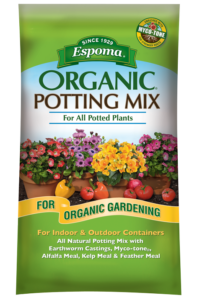
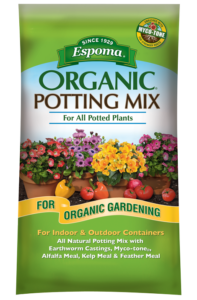
Taking time to care for plants is the perfect way to slow down and enjoy the cooler seasons. Spend the day with Laura from Garden Answer as she repots ornamental grasses and a Mangave plant in her greenhouse, refreshing them with Espoma Organic Potting Mix to keep them happy, healthy, and hungry for new growth!
https://www.espoma.com/wp-content/uploads/2026/02/Espoma_0126_GardenAnswer_RepottingGreenhouse_thumbnail.png360640Matt Dauphinaishttps://www.espoma.com/wp-content/uploads/2023/05/espoma-logo340w-1.pngMatt Dauphinais2026-02-04 12:07:562026-02-04 15:50:50VIDEO: Repotting in the Greenhouse with Garden Answer
As the season winds down, Laura from Garden Answer takes on her final bulb planting of the year, sharing practical planting and bulb-care tips along the way. In this project, she plants more than 300 Thalia daffodils alongside a mix of spring bloomers, including Persian Pearl, Snowdrops, and Lilac Wonder—showing how late-season planting can still deliver impressive results.
Laura walks us through her process, emphasizing the importance of proper bulb depth, spacing, and soil preparation. These foundational steps help bulbs establish strong roots before winter, setting the stage for healthy growth and vibrant blooms in spring.
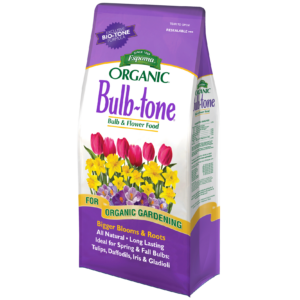
To support early root development, Laura incorporates Espoma Organic Bulb-tone at the time of planting. This organic, slow-release fertilizer is specially formulated for bulbs and helps:
Encourage strong root growth before dormancy
Support bigger, more vibrant spring blooms
Feed gradually over time for long-term plant health
Reduce the risk of burning young roots compared to quick-release fertilizers
By combining proven planting techniques with the right nutrition, this end-of-season bulb planting shows how a little extra care now can make a big difference when spring arrives.
https://www.espoma.com/wp-content/uploads/2025/12/Espoma_1225_GardenAnswer_Bulbs_Thumbnail.png7201280Matt Dauphinaishttps://www.espoma.com/wp-content/uploads/2023/05/espoma-logo340w-1.pngMatt Dauphinais2025-12-23 10:38:372025-12-23 11:06:16VIDEO: Planting the Last Bulbs of the Season with Garden Answer
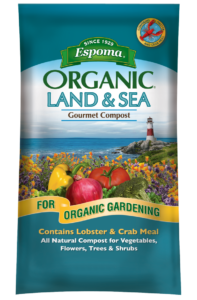
Laura from Garden Answer shows how to plant spring-blooming bulbs in large containers for a big, colorful show next season. She fills eight pots with Menton tulips and Spanish bluebells, feeding them with Espoma Organic Bulb-tone and then topdressing with Espoma Organic Land & Sea Compost to refresh the tired soil and support strong, natural growth.
The Planting Plan: A “Bouquet” in Every Pot
Laura creates a layered “bouquet” effect in each container:
Center: Menton tulips
Outer edge: Spanish bluebells
Both bloom late in the season, so the colors overlap beautifully. Spanish bluebells grow about 14–18″ tall, while Menton tulips reach 23–25″, giving each pot a soft, tiered look. Planting in raised containers keeps everything at waist height, which makes bulb planting much easier than digging in the ground.
Step-by-Step: How Laura Plants Her Bulb Containers
1. Prepare the Container
Laura removes soil down to about 6 inches deep. This makes room for the first layer of bulbs and ensures they’re planted at the proper depth.
2. Amend the Soil with an Organic Fertilizer
Before placing any bulbs, she sprinkles Espoma Organic Bulb-tone into the container.
Why it helps:
Provides slow-release, organic nutrition right where roots grow.
Encourages strong root development, which is key for bulbs to overwinter and bloom well.
Gentle, natural formula that’s safe for people, pets, and pollinator-friendly gardens when used as directed.
3. Plant Tulips “Shoulder to Shoulder”
Menton tulip bulbs go in first at 6 inches deep, planted:
Pointy side up, flat side down.
Very close together—“shoulder to shoulder”—rather than spaced as they would be in the ground.
This tight spacing lets her fit about 100 tulip bulbs per pot, creating a dense, show-stopping spring display.
4. Add Spanish Bluebells
She covers the tulips with a couple of inches of soil, then plants the Spanish bluebells in a ring around the outer edge at about 4 inches deep. Bluebell bulbs look a bit different, but the rule still applies: roots down, growth point up.
5. Add compost
Because the potting mix has been used before and is showing roots and wear, Laura doesn’t just add more regular soil. Instead, she topdresses each container with Espoma Organic Land & Sea Compost.
Why it helps:
Adds rich organic matter back into tired soil.
Improves soil structure and moisture retention, which bulbs love.
Supplies a gentle nutrient boost from premium ingredients like lobster and kelp meal, helping bulbs grow strong and bloom beautifully.
6. Water Thoroughly
After planting and topdressing, Laura waters each container deeply.
Her key watering tip:
Aim for even moisture across the entire soil surface, not just one side of the pot.
In winter, check containers every 2–3 weeks. The goal is soil that’s slightly moist, never soggy, and never bone dry.
Bulb-Specific Tips for Container Success
Laura’s main bulb care reminders:
Chill time matters:
Tulips and daffodils generally need 12–16 weeks of consistent cold (around 35–45°F).
Hyacinths often need 8–10 weeks; crocus and snowdrops around 6–8 weeks.
Mild climate? Go pre-chilled: If you garden in a warmer region, order pre-chilled bulbs so they arrive ready to plant and still bloom well.
Drainage is essential: Containers must have drainage holes so bulbs don’t sit in water and rot. In very wet climates, you may need to protect pots from constant rainfall; in dry climates, remember to water occasionally.
With the right chill, good drainage, consistent moisture, and organic nutrition from Bulb-tone and Land & Sea Compost, these containers are now set up for a spectacular spring show—naturally.
https://www.espoma.com/wp-content/uploads/2025/12/Espoma_1225_BulbTone_Thumbnail-copy.jpg10801920Matt Dauphinaishttps://www.espoma.com/wp-content/uploads/2023/05/espoma-logo340w-1.pngMatt Dauphinais2025-12-09 16:44:432025-12-23 09:58:46VIDEO: How to Plant Spring Bulbs in Containers 🌱🌷 with Garden Answer
Fall might feel like the end of the gardening season, but as Kaleb from Wyse Guide shows, it’s actually a perfect time to plant and bring in your favorite tropical plants for the winter months.
In this project, Kaleb refreshes the front of his home with hydrangeas, using Espoma Organic Bio-tone Starter Plus to support strong root growth, then replants a massive elephant ear and pots it up in Espoma Organic Potting Mix so he can enjoy it again next year.
Kaleb’s late fall gardening tips:
1. Plant for Roots, Not Blooms Kaleb takes advantage of fall’s warm soil and cool air to give hydrangeas time to establish. Adding Espoma Organic Bio-tone Starter Plus helps new shrubs settle in quickly and build the strong root systems that lead to better growth next spring.
2. Build Healthy Soil & Keep Watering Hydrangeas thrive in rich, well-draining soil, so Kaleb amends where needed and uses drip irrigation to keep moisture consistent on his sunny, south-facing porch. Even with drip, he checks soil weekly and waters during fall—and even winter warm-ups—so new roots never dry out.
3. Store Tropicals to Enjoy Them Again Instead of letting frost take his elephant ear, Kaleb trims it back and pots it into Espoma Organic All-Purpose Potting Mix. Over winter, it rests indoors with minimal watering, ready to return outdoors next season.
Even as the season slows, there’s still so much you can do to care for your garden. A little fall planting, some root-focused feeding, and thoughtful winter storage of warm-season plants can set you up for an even more beautiful spring.
https://www.espoma.com/wp-content/uploads/2025/11/Bring.jpg7201280Matt Dauphinaishttps://www.espoma.com/wp-content/uploads/2023/05/espoma-logo340w-1.pngMatt Dauphinais2025-11-18 15:54:332025-11-18 15:54:33Final Fall Plantings & Tips for Bringing Plants Inside for Winter 🍁🪴 with Wyse Guide
Laura from Garden Answer brings a burst of fresh autumn color to the garden! 🌻 She shares an update on her sunflowers, plants new boxwoods with Espoma Organic Bio-tone Starter Plus to help the roots establish naturally, and refreshes her fall containers with vibrant ornamental kale, rudbeckia, and pansies. Using Espoma Organic Potting Mix, Laura ensures every plant has the rich, healthy soil it needs to thrive this season.
Laura from Garden Answer is back in the garden with three beautiful new plants—hydrangeas, calycanthus, and stokes’ asters—giving them a strong start using Espoma Organic Bio-tone Starter Plus.
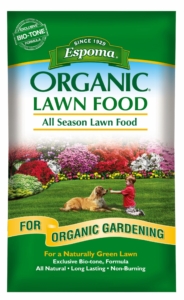
Then it’s husband Aaron’s turn to step in with lawn care. He’s using Espoma Organic All Season Lawn Food to keep their grass lush and green. His tip? Fertilize monthly to keep the lawn healthy and thriving!
https://www.espoma.com/wp-content/uploads/2025/10/Espoma_1025_Fertilizing_Thumbnail.jpg10801920Matt Dauphinaishttps://www.espoma.com/wp-content/uploads/2023/05/espoma-logo340w-1.pngMatt Dauphinais2025-10-20 15:08:152025-10-20 15:08:15VIDEO: Planting Beautiful New Plants and Feeding the Lawn Organically 🌸🚜🌱 with Garden Answer
From planning to petals, follow along as Laura from Garden Answer plants ten Rugosa roses in three beautiful varieties: the classic single pink Rosa rugosa, the crisp white Rosa rugosa ‘Alba’, and the fluffier double white ‘Blanc Double de Coubert.’ These own-root roses (no grafts here!) were chosen for their strength, fragrance, and show-stopping hips that carry color from summer into winter.
Laura’s #1 Planting Tip:
Always plant with a high-quality organic starter fertilizer like Espoma Organic Bio-tone Starter Plus!
When Laura plants, she reaches for Espoma Organic Bio-tone® Starter Plus. It’s her go-to because it:
Builds stronger roots fast.Bio-tone is packed with beneficial microbes and mycorrhizae that help new plantings establish quickly.
Reduces transplant stress. Healthier roots mean better water and nutrient uptake—so plants settle in and start growing.
Feeds gently and naturally. An organic, starter-grade fertilizer that supports early growth without pushy top growth.
Works for everything you plant. Ideal for shrubs, perennials, trees, veggies, and roses of all kinds. If it’s going in the ground, mix in Bio-tone.
How Laura uses it: At planting time, she mixes Espoma Organic Bio-tone Starter Plusinto the backfill soil and sets each rose at its current soil level (since these are own-root roses). Then she waters in well to activate the microbes and help eliminate air pockets.
Planting Pro Tip: Always backfill, then water deeply to settle soil around roots. Consistent moisture after planting helps Bio-tone’s microbes go to work.
Rugosa Roses: Tough, textural, and full of seasonal interest
Laura is planting Rugosas for their resilience and beauty:
Cold-hardy and adaptable. Depending on variety, Rugosas can thrive from roughly Zones 2–10, making them a great choice for many climates.
Size & presence. Expect a medium to tall shrub—often 5–7+ feet at maturity—so give them room to show off.
Sun & low maintenance. They love full sun and don’t need deadheading. Occasional shaping and removal of dead wood keeps them tidy.
Iconic hips. Big, colorful hips provide long-lasting interest—and look gorgeous against evergreens and conifers, just like Laura’s pairings.
Own-root reliability. Because these roses are grown on their own roots, if they die back and regrow, they’ll still return true to variety.
No matter what you’re planting, success starts below the soil line. Espoma Organic Bio-tone Starter Plussets roots up to thrive—from shrubs like Rugosas to perennials, edibles, and young trees—so your garden establishes faster, stays healthier, and looks better, sooner.
Has your garden started to feel like a tedious task on your never-ending to-do list? Here are 10 ways to avoid garden burnout by making gardening more efficient and simple, so you can enjoy it without feeling weighed down.
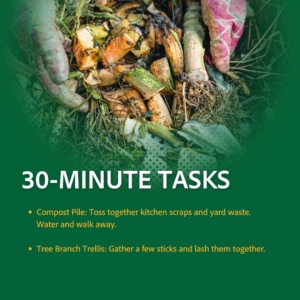
One of Kim’s foundational philosophies is to break down large tasks into smaller, manageable ones (3-, 5-, 8-, 10-, or 30-minute jobs), which is the basis of her book. The 10 Minute Gardener also organizes these by season (early, mid, late, dormant), so you can adapt them no matter where you garden.
Practical Time-Saving Tactics You Can Try Today
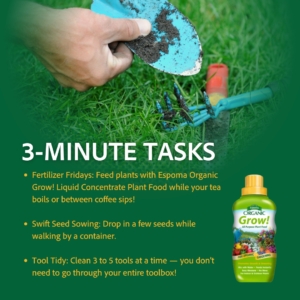
3-Minute Gardening Tasks
Fertilizer Fridays – Every Friday, while your tea kettle is boiling or you’re sipping coffee, take 3 minutes to fertilize your plants with an organic liquid fertilizer like Espoma Organic Indoor! Houseplant Food. You can also water them or pick off brown leaves.
Swift Growth Seed Sowing – Keep a small basket of seeds handy by your back door or in your pocket. During a quick break, pop a few pea seeds along a trellis or lettuce seeds into a container to keep succession planting going.
Three-Minute Tool Tidy – Clean and oil a few garden tools, like pruners, that may be getting rusty or sticky.
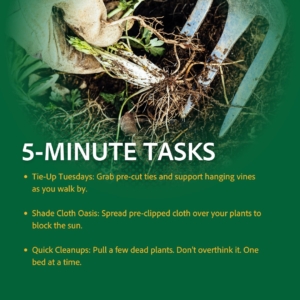
5-Minute Gardening Tasks
Tie-Up Tuesday (and Thursday!) – Dedicate a few minutes twice a week to trellis plants like cucumbers. Keep tie tape or twine in your pocket so you can do this quickly while walking through the garden.
Shade Cloth Oasis – Pre-clip shade cloth to trellises so you can dash out and cover plants when the sun is blazing.
End-of-Season Cleanups – Pull out dead plants and toss them into nearby trash bins or pop-up bins to keep your garden tidy.
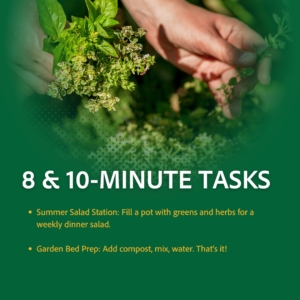
8- & 10-Minute Gardening Tasks
Summer Salad Station – Plant a container with salad greens, a tomato or cucumber, and herbs for a quick, ready-to-harvest dinner garden.
Compost Pile Refresh – Toss together kitchen scraps and yard waste to build your compost pile. Give it a splash of water, then walk away and let nature do the work.
Tree Branch Trellis – Gather a few sturdy sticks and lash them together to create a simple, rustic trellis for climbing plants.
Be Consistent and Keep Things Within Reach
The key is to keep everything handy and accessible. You don’t need complicated strategies to make gardening easier. Keep a basket of seeds by the door, stash pruners in multiple spots, and have tie tape at the ready. Making tools and supplies accessible ensures you stay consistent and efficient.
https://www.espoma.com/wp-content/uploads/2025/09/Time-Saving-1.jpg10801080Matt Dauphinaishttps://www.espoma.com/wp-content/uploads/2023/05/espoma-logo340w-1.pngMatt Dauphinais2025-09-11 16:15:582025-09-11 16:15:5810 Time-Saving Tactics for a More Efficient Garden | Growing Joy with Maria
Spend an early morning with Laura from Garden Answeras she plants hibiscus and silverthorn, adding vibrant blooms and silvery foliage for fresh contrast in her garden. To give these new shrubs the best start, she uses Espoma Organic Bio-tone Starter Plus, ensuring strong roots and healthy growth from day one.
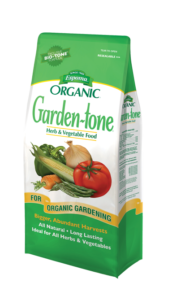
Later, Laura moves to the vegetable garden to harvest onions—planted with Bio-tone and later fed with Espoma OrganicGarden-tone—while sharing her favorite tips for growing, curing, and storing a successful harvest.
4 Key Takeaways from Laura’s Garden Day
Start with a high-quality starter fertilizer Using a starter fertilizer like Espoma OrganicBio-tone Starter Plus at planting gives shrubs and perennials a strong foundation. It promotes quick root establishment, reduces transplant shock, and sets the stage for healthier growth and more abundant blooms.
Planting shrubs: water, spacing, and layout matter Place shrubs where they’ll have room to grow to full size, then step back to check balance and flow in the garden. After planting, create a shallow watering basin around the root zone to ensure deep, even moisture while they establish.
Feed onions consistently through the season Laura planted her onions with Bio-tone, then followed up with Garden-tone to keep them growing strong. A steady supply of organic nutrients helps onions size up properly and develop great flavor.
Harvest onions at the right stage Onions are ready when their necks soften and the tops flop over. Gently pull them, then cure in a shaded, airy space for 7–10 days to allow skins to dry and harden for better storage.
From thoughtful planting to a plentiful harvest, Laura shows how preparation and care lead to success. A starter fertilizer like Bio-toneStarter Plus sets new plants up for stronger roots, while follow-up feedings with Garden-tonekeep vegetables productive and delicious.
Ready to put these tips into action? Try Espoma OrganicBio-tone Starter Plus on your next planting day, and don’t forget to keep edibles thriving with Espoma Organic Garden-tone. Share your garden moments with us @EspomaOrganic on IG—let’s grow together! 🌱
Laura from Garden Answer shows us how to plant five sun-loving perennials—even in the peak of summer heat. From elegant Siberian iris to bold salvia, she layers color and texture into her garden while reminding us that planting in hot weather can still be successful with the right care. To set her new perennials up for success, Laura uses Espoma Organic Bio-tone Starter Plus, the ultimate “planting insurance” that boosts root growth and helps prevent transplant loss.
6 Quick Tips for Planting Perennials in Summer Heat
Expect a little wilting – It’s normal for new plants to droop in full sun, but they’ll perk back up once the day cools.
Water consistently – Keep soil evenly moist during establishment to reduce stress.
Plant early or late – Beat the midday sun by working in the morning or evening.
Feed at planting – Mix Bio-tone Starter Plus right into the hole to encourage strong root growth and long-term success.
Mulch generously – A layer of organic mulch helps conserve water and keep roots cool.
Even on the hottest days, your garden can keep growing with the right prep and care. 🌱 Whether you’re adding in new perennials or refreshing containers, remember that feeding the soil naturally makes all the difference.
👉 Watch Laura’s full video for inspiration, then grab your favorite Espoma Organic products and let’s get growing!
https://www.espoma.com/wp-content/uploads/2025/08/1-6.jpg10801920Matt Dauphinaishttps://www.espoma.com/wp-content/uploads/2023/05/espoma-logo340w-1.pngMatt Dauphinais2025-08-20 12:28:582025-08-20 12:28:58VIDEO: Planting Perennials in Full Sun ☀️🌿🌸 with Garden Answer