Espoma Organic
  • Products
    • Close
    • Product Line Overview
    • Plant food finder
    • Garden Fertilizers
    • Potting Soils
    • Lawn Fertilizers
    • Liquid Fertilizers
    • Single Ingredients
    • Conventional Plant Foods
    • Animal Care Products
  • Where to Buy
  • Our Story
    • Close
    • Our Story
    • Locations
    • Historical Timeline
    • Our Commitment
    • Directions
    • Solar
    • Join our Team
    • Espoma Brand Partners
  • Learn
    • Close
    • Espoma Blog
    • FAQ’s
    • Pocket Guide
    • Espoma Guides
    • Garden Clubs
    • Safe Paws Lawn
    • PRODUCT FACT SHEETS
    • Fertilizer Fundamentals
      • Close
      • Understanding Plant Nutrition
      • Reading Labels
      • Choosing the Right Type of Fertilizer
      • Terms & Definitions
    • Gardening Projects
    • Resource Links
  • Contact Us
  • Menu Menu

Tag Archive for: Organic potting mix for houseplants

VIDEO: Bringing In Your Plants for Winter 🪴❄️ with Summer Rayne Oakes

November 20, 2025/in Blog, Container Gardening, Espoma Videos, Indoor Gardening, Succulents, Summer Rayne Oakes

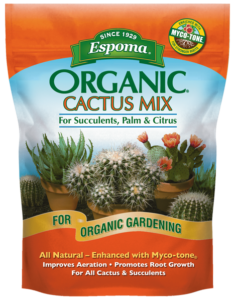
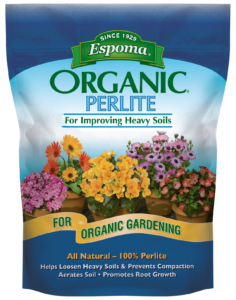
When the mornings turn chilly and frost threatens, it’s time to bring your non-cold-hardy plants indoors. In this video, Summer Rayne Oakes demonstrates how she gathers her Aloes, Pelargoniums, Euphorbias, air plants, and more, refreshing containers with Espoma Organic Cactus Mix, and Espoma Organic Perlite to help them settle in for the winter months.

Here are six quick tips to help you do the same.

1. Bring Plants In Before the First Freeze

Any tender plant—succulents, tropicals, Pelargoniums, air plants—needs to move indoors once nighttime temperatures dip into the 30s and low 40s °F. Cold snaps can damage foliage fast.

2. Check for Pests and Outdoor Debris

Before carrying your plants inside, give them a quick inspection:

  • Look for ants or insects in the soil
  • Remove spent leaves
  • Trim away any mushy or damaged growth

This keeps your indoor environment clean and your plants stress-free.

3. Give Overgrown Plants a Gentle Trim

A light haircut helps plants transition into winter dormancy. Summer trims her Pelargoniums to remove dead growth and tidy the shape, making them easier to overwinter.

4. Refresh Soil With a Fresh Organic Potting Mix

After a full season outdoors, potting soil can become compacted, washed out by rain, or depleted of nutrients. Refreshing the top few inches—or fully repotting—gives plants the clean, breathable foundation they need to stay healthy indoors.

For most houseplants, reach for Espoma Organic All-Purpose Potting Mix. It’s rich, airy, and packed with organic ingredients that support strong roots through winter.

Summer uses Espoma Organic Cactus Mix for her succulents because they need faster drainage and extra airflow around their roots. This helps prevent rot during the cooler months when succulents naturally take up less water.

Adding a scoop of Espoma Organic Perlite boosts drainage even more—great for Aloes, Agaves, and Euphorbias heading into low-light, low-growth winter conditions.

5. Repot or Divide Crowded Succulents

Aloes and other succulents often outgrow their pots by fall. Take a cue from Summer and divide offsets or repot into fresh soil so each plant has room to breathe indoors.

6. Feed Indoor Plants Through Winter

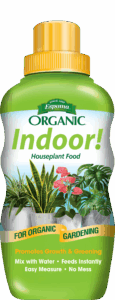
Even during slower growth, indoor plants still appreciate gentle nourishment. Use a high-quality organic liquid fertilizer—like Espoma Organic Indoor! —to keep roots strong and foliage healthy all winter long.

A little effort goes a long way!

A little trimming, a pest check, and a refresh with Espoma Organic potting soils and a little liquid fertilizer is all it takes to help your plants thrive indoors this winter.

Let’s get growing—indoors! 🌿

*****

Featured Products:
Espoma Organic Potting MixOrganic Potting soil -Espoma Organic Cactus MixEspoma Organic PerliteEspoma Organic Indoor! liquid fertilizer


Where to Buy


https://www.espoma.com/wp-content/uploads/2025/11/Ep-431-Primp-Prune-collect-B.jpg 1080 1920 Matt Dauphinais https://www.espoma.com/wp-content/uploads/2023/05/espoma-logo340w-1.png Matt Dauphinais2025-11-20 12:28:022025-11-20 12:28:02VIDEO: Bringing In Your Plants for Winter 🪴❄️ with Summer Rayne Oakes

How to Care for Alocasia | Growing Joy with Maria

August 5, 2025/in Blog, Growing Joy with Maria, Indoor Gardening

Do you think it’s difficult to care for Alocasia? They are so easy to fall in love with because of their alien-like leaves and colors, but many plant parents feel confused when they suddenly drop leaves or look unhappy. This is particularly true if you’re not a Mindful Plant Parent (find your Plant Parent Personality Here). But the answer is no. Alocasia isn’t a difficult plant; it’s just particular. 

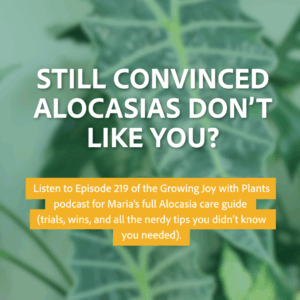
This blog is inspired by Episode 219 of the Growing Joy with Plants podcast with Maria Failla. After years of trial and error, she finally cracked the code on keeping Alocasia alive indoors, and now you can too.

Why So Many People Struggle with Alocasia

Alocasia isn’t “difficult.” It just has high standards. They are native to Southeast Asian rainforests, so they are used to high humidity, indirect light, and evenly moist soil. So most modern homes are not exactly a match. But if you can recreate that environment indoors, your Alocasia will gift you with its stunning leaves that you see all over Pinterest and social media..

How to Care for Alocasia

1) What light do Alocasia need?

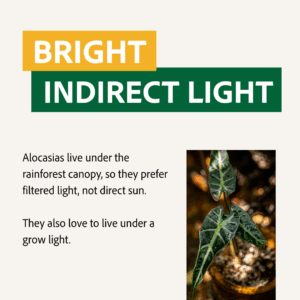
Alocasia like bright indirect light

Bright, Indirect Light

This means “filtered sunlight,” not direct rays. Alocasias prefer to be a few feet from a sunny window or under a grow light. If it’s only holding onto 2 to 3 leaves, that’s a sign it’s starving for more light.

2) How often should I water an Alocasia?

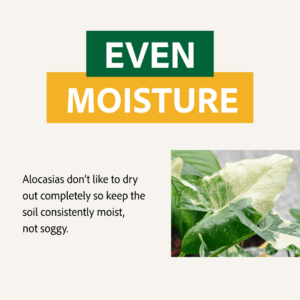
Alocasia like even moisture

Keep the soil evenly moist at all times.

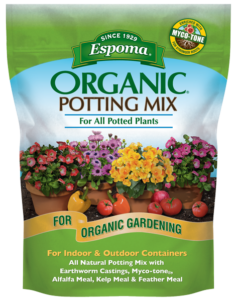
Alocasia like even moisture, so make sure you’re using quality organic soil like Espoma Organic Potting Mix. Let only the top inch dry out before watering. It stores water in little tuber-like roots that look like mini potatoes, so don’t be alarmed when you see them while repotting!

3) What type of humidity does my Alocasia need?

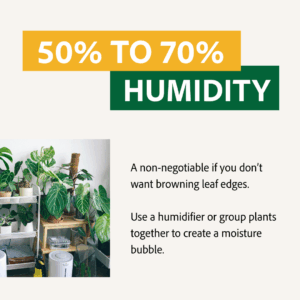
Alocasia like 50% to 70% humidity

High Humidity is Everything

Crispy tips? Curling leaves? That’s low-humidity talking. Alocasia loves 50%–70% humidity, which is achievable with a humidifier, a grouped plant setup, or a closed terrarium. Note that misting is not enough and can even cause fungal issues.

4) When do I fertilize my Alocasia? 

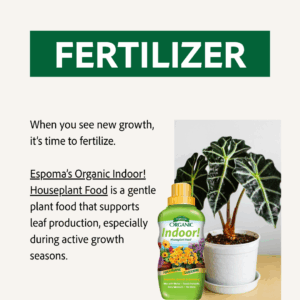
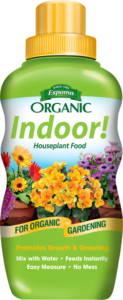
Fertilizer with Espoma Organic Indoor! liquid plant food

Fertilize When It’s Growing

Whenever new leaves appear, it’s time to feed. You can feed them using Espoma Organic Indoor! liquid plant food for greener leaves! Simply dump a capful into your watering can. Many Alocasia under grow lights continue growing through winter, so adjust your fertilizer routine to match the plant and not the calendar.

5) Do Alocasia go dormant? 

Not exactly….In winter, Alocasia may drop a few leaves. This is a natural rest period (also known as quiescence) and not a full dormancy. So don’t freak out if you see a few yellow or dropped leaves come wintertime. It’s natural.

Troubleshooting Common Alocasia Problems


1) Why does my Alocasia have yellowing leaves? 

Yellow leaves on Alocasia are likely due to overwatering. Trim the leaf and let the soil dry slightly before watering again.

2) Why is my Alocasia drooping or wilting?

Drooping or wilting is likely due to underwatering, overwatering, or low humidity.

3) Why can’t my Alocasia grow more than 3 leaves at a time?

It likely needs more light to support a larger leaf system..

4) Why are the edges of my Alocaisa leaf crispy and brown? 

This is usually due to dry air and humidity.

Favorite Alocasia Varieties to Try

If you’re ready to bring one home, here are the top picks for you:

  • Alocasia Ninja – almost black leaves with bold stripes.
  • Alocasia Cuprea (Red Secret) – copper-toned leaves with deep purple backs.
  • Alocasia Dragon Scale – pale green leaves with deep veining!
  • Alocasia Polly (African Mask) –  small, classic that you’ll see in so many garden centers.
  • Alocasia Lola – taller than Polly
  • Alocasia Watsoniana (White Vein) – Glossy leaves with striking white veins.
  • Alocasia Stingray – wild, tail-shaped leaves that really do look like a stingray.

The Alocasia isn't difficult to grow, give it a try! (graphic)

Give Alocasia a Try

The Alocasia is a diva… in the best way. It isn’t impossible to care for, but it just wants what it wants. Give it good light, humidity, and care, and it will grow and give you stunning leaves and be the envy of all your plant friends! Think of it as a little green alien that just needs the right home environment to feel at peace.

Listen to episode 209 of the Growing Joy with Maria Podcast

To learn more about Alocasia care, listen to Episode 219 of the Growing Joy with Plants podcast, all about Alocasia, with Maria Failla.

Learn more about Growing Joy with Maria:

🪴🌿 Website

🪴🌿 Facebook

🪴🌿 Instagram

🪴🌿 YouTube


Featured Products:

Espoma Organic Indoor! liquid fertilizer Espoma Organic Potting Mix


Where to Buy

https://www.espoma.com/wp-content/uploads/2025/08/Alocasia-1.png 1080 1080 Matt Dauphinais https://www.espoma.com/wp-content/uploads/2023/05/espoma-logo340w-1.png Matt Dauphinais2025-08-05 13:05:412025-08-05 13:05:41How to Care for Alocasia | Growing Joy with Maria
Where to Buy

Get News & Updates

Recent Posts

  • VIDEO: Planting Spring Bulbs in Containers 🪴🌷 with Summer Rayne Oakes
  • VIDEO: Planting the Last Bulbs of the Season with Garden Answer
  • How to Care for Ferns 🌿 | Growing Joy with Maria
  • VIDEO: One Last Autumn Stroll 🍁🍂 with Summer Rayne Oakes
  • VIDEO: How to Plant Spring Bulbs in Containers 🌱🌷 with Garden Answer

Tags

All-Purpose Potting Mix bio-tone Bio-tone Starter Bio-tone Starter Plus Cactus Mix caring for houseplants Container Gardening DIY project Espoma espoma grown espoma organic Espoma Organics Espoma Video fall gardening Family fert flower garden flowers garden Garden Answer Gardening gardening tips gardens grow holly-tone houseplants Indoor! indoor gardening indoor plants Kaleb Wyse organic organic fertilizer Organic Gardening organic plant food Organic Potting Mix Outdoor Gardening Planting plants Potting Mix potting soil Spring Gardening summer rayne oakes vegetable garden Vegetable Gardening Wyse Guide

Espoma. A Family Tradition Since 1929.

Espoma Organic logo
  • Espoma Dealer
  • Espoma Pro
  • Garden Club
  • Privacy Policy

Scroll to top