Plant Fall Bulbs with Garden Answer
Planting fall bulbs for beautiful spring flowers is easy! Laura from Garden Answer shows you the tricks you need to get your best blooms yet. Don’t forget to add Espoma’s Bulb-tone!

Planting fall bulbs for beautiful spring flowers is easy! Laura from Garden Answer shows you the tricks you need to get your best blooms yet. Don’t forget to add Espoma’s Bulb-tone!
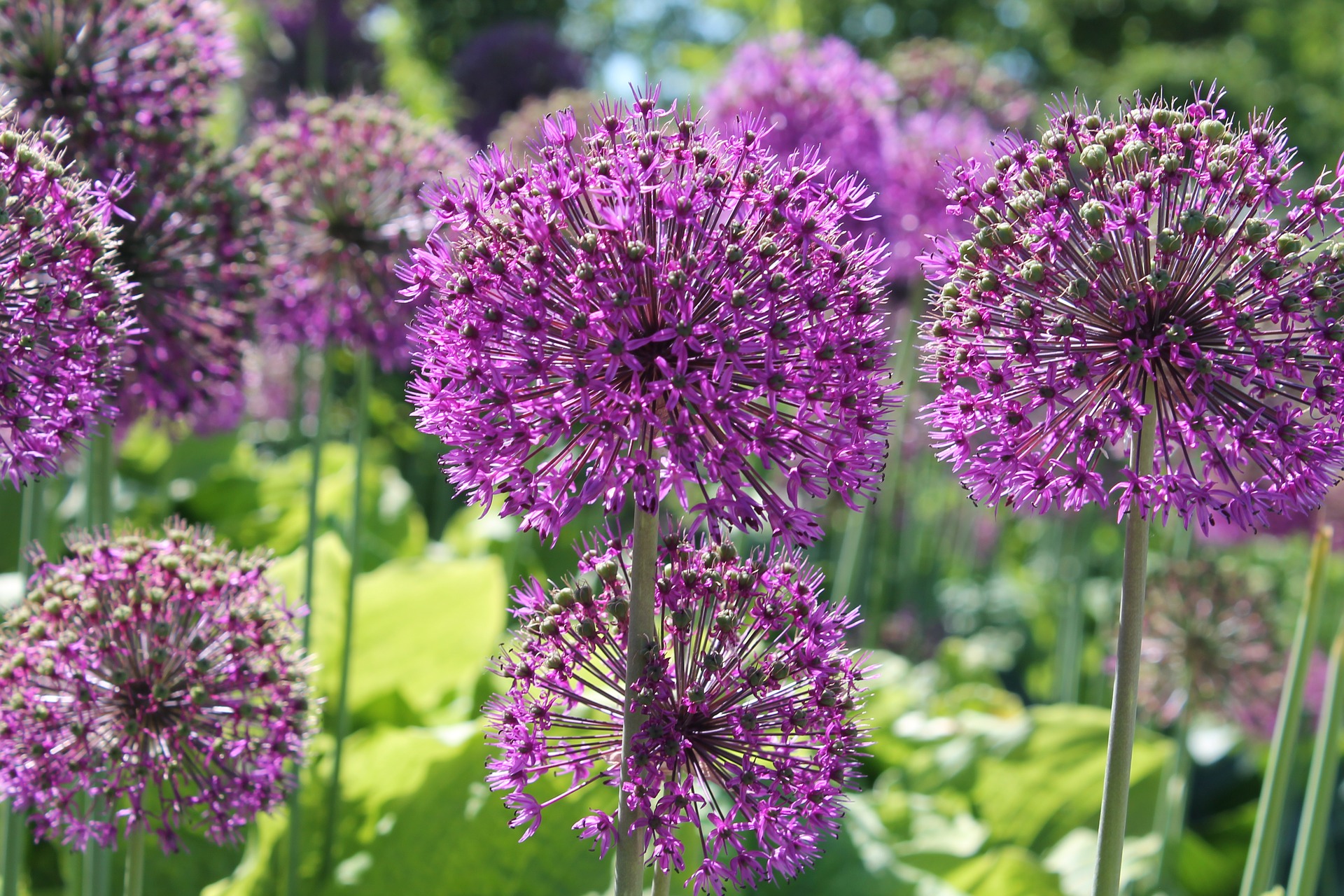
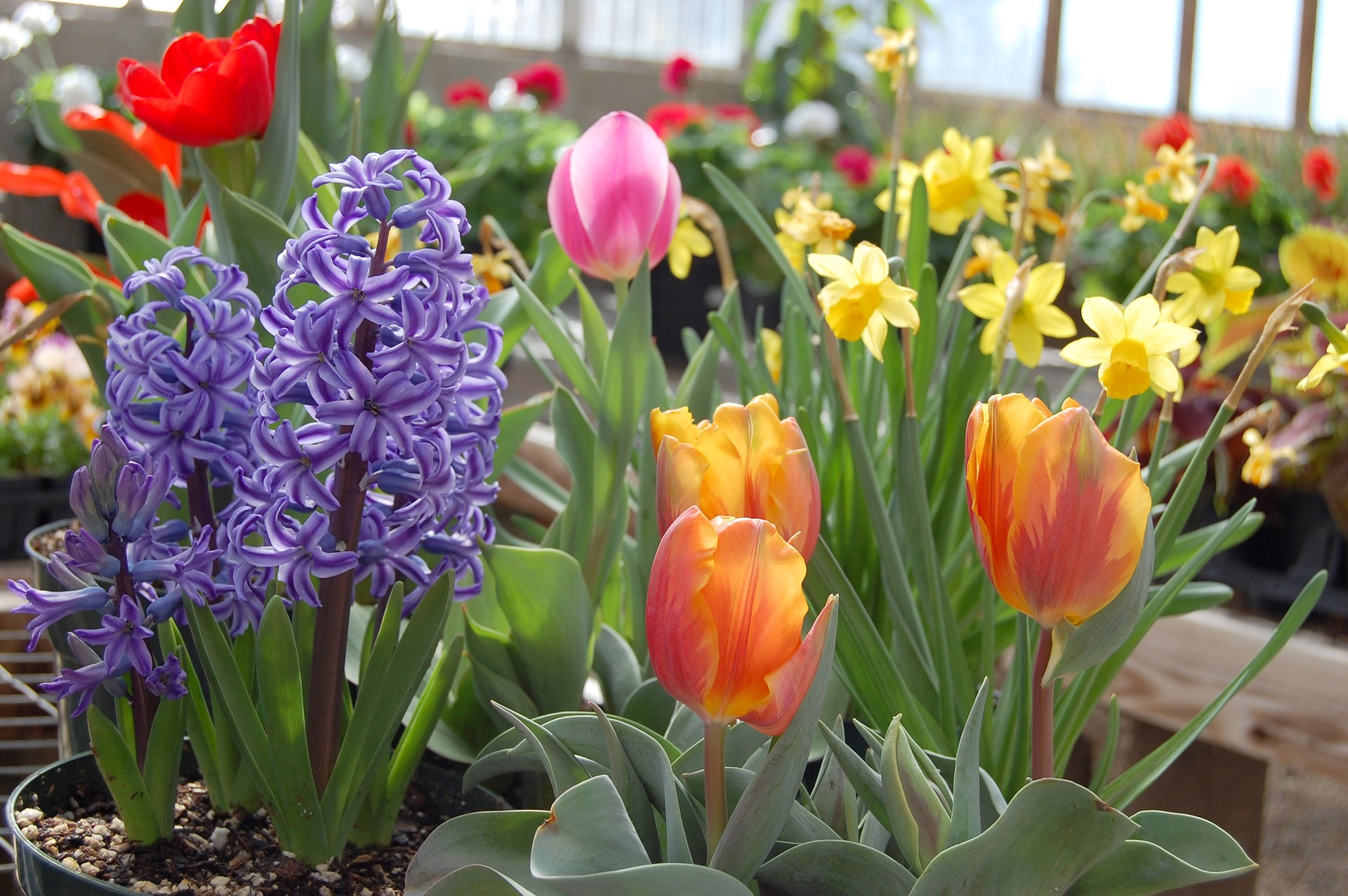
This month we’ve covered how to plant cool-season veggies. If flowers are more your thing, then it’s time to plant spring-blooming bulbs. Favorites such as tulips, daffodils, hyacinth and alliums are planted in fall but burst forth with color in spring.
There’s nothing difficult about planting bulbs and you can plant dozens of them in just a few minutes. Here are three easy steps for planting fall bulbs.
Today, the experts at North Haven Gardens answer the top 10 most common questions about planting bulbs.
Top 10 Burning Bulb Questions
1. When should I plant spring flowering bulbs?
Spring-flowering bulbs such as tulips and daffodils are planted September to November. They need several weeks underground to grow roots before the ground freezes.
Check your hardiness zone to be sure when the best time is to plant. Usually, Zones 1 – 4 can plant late August through late September and Zones 4 – 7 can plant mid-September through early November.
2. How far apart and how deep should I plant?
The bulb package should tell you how deep and wide to plant bulbs. If you’ve lost your package, follow the 3×3 rule. Plant bulbs three times as deep as their height and keep 3x the diameter of the bulb between plantings.
3. Which end is up?
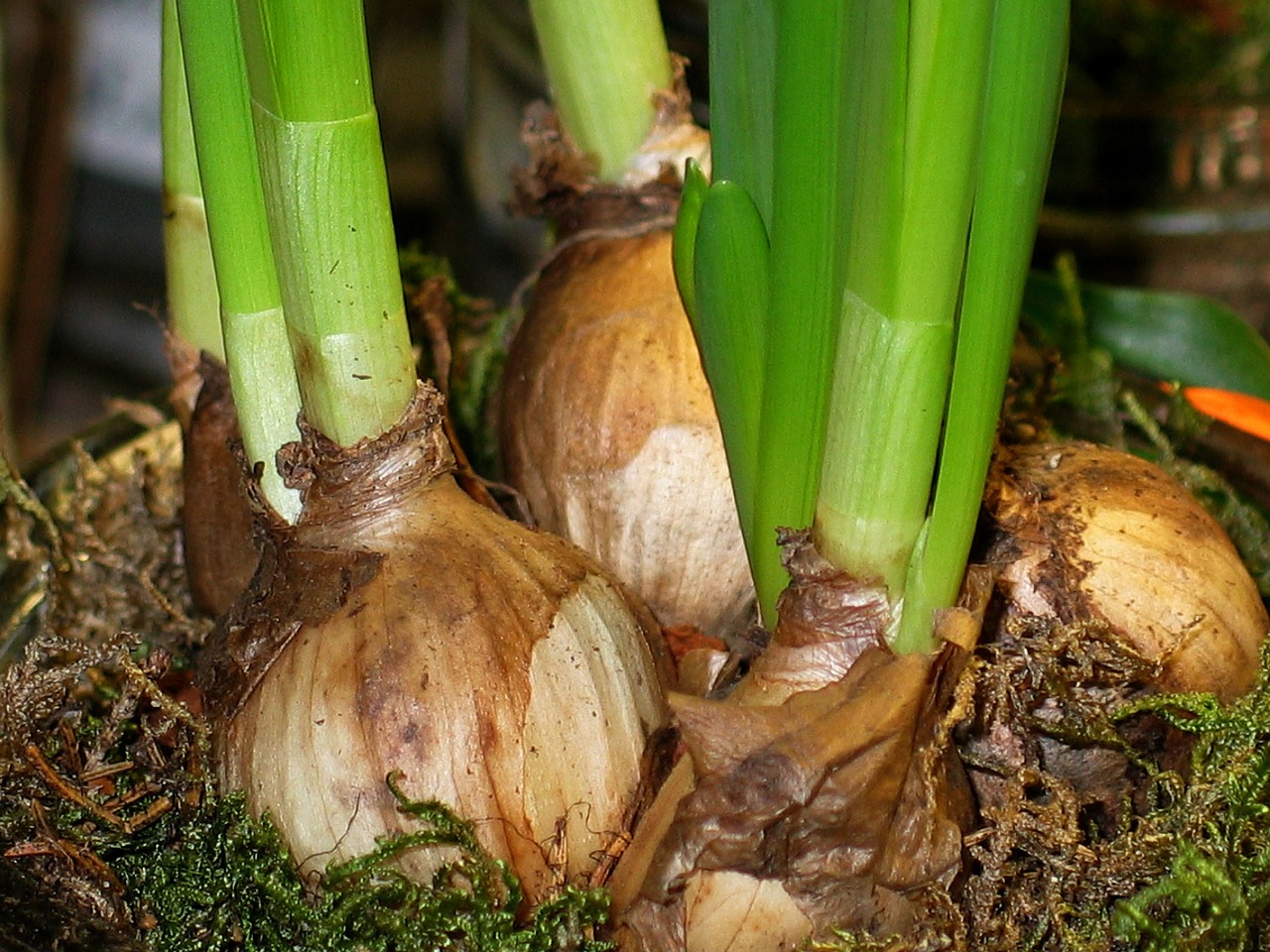
Bulbs with pointy ends make it easy: plant the pointed end up. Corms and tubers should have roots attached. Plant those down.
4. When should I feed my bulbs?
Bulbs do store their own food, but a little extra nutrition will help them last years. Add a sprinkle of Bulb-tone to the hole of each newly planted bulb. Come spring, sprinkle a little more Bulb-tone on top of the soil to give them an extra boost.
5. Should I water the flower bulbs after I plant them?
We call spring-flowering bulbs drought-tolerant. While they’re not exactly, you only need to water immediately after planting them.
6. Should I mulch bulbs?
We are huge advocates of mulch as long as it’s applied correctly. In cool climates you can mulch after the soil freezes. In warm climates, Zones 8 and above, mulch after planting and watering.
7. What should I do with the leaves after the flowers have faded?
Give leaves at least 8 weeks of growing, after the flowers fade. You can cut the stem, but the foliage provides energy for next year’s blooms. This is also a good time to feed bulbs, as they’re building up reserves.
One solution is to camouflage the fading foliage. Plant perennials or cool-season annuals. They will emerge right as unsightly foliage is fading.
8. Are there any bulbs deer don’t eat?
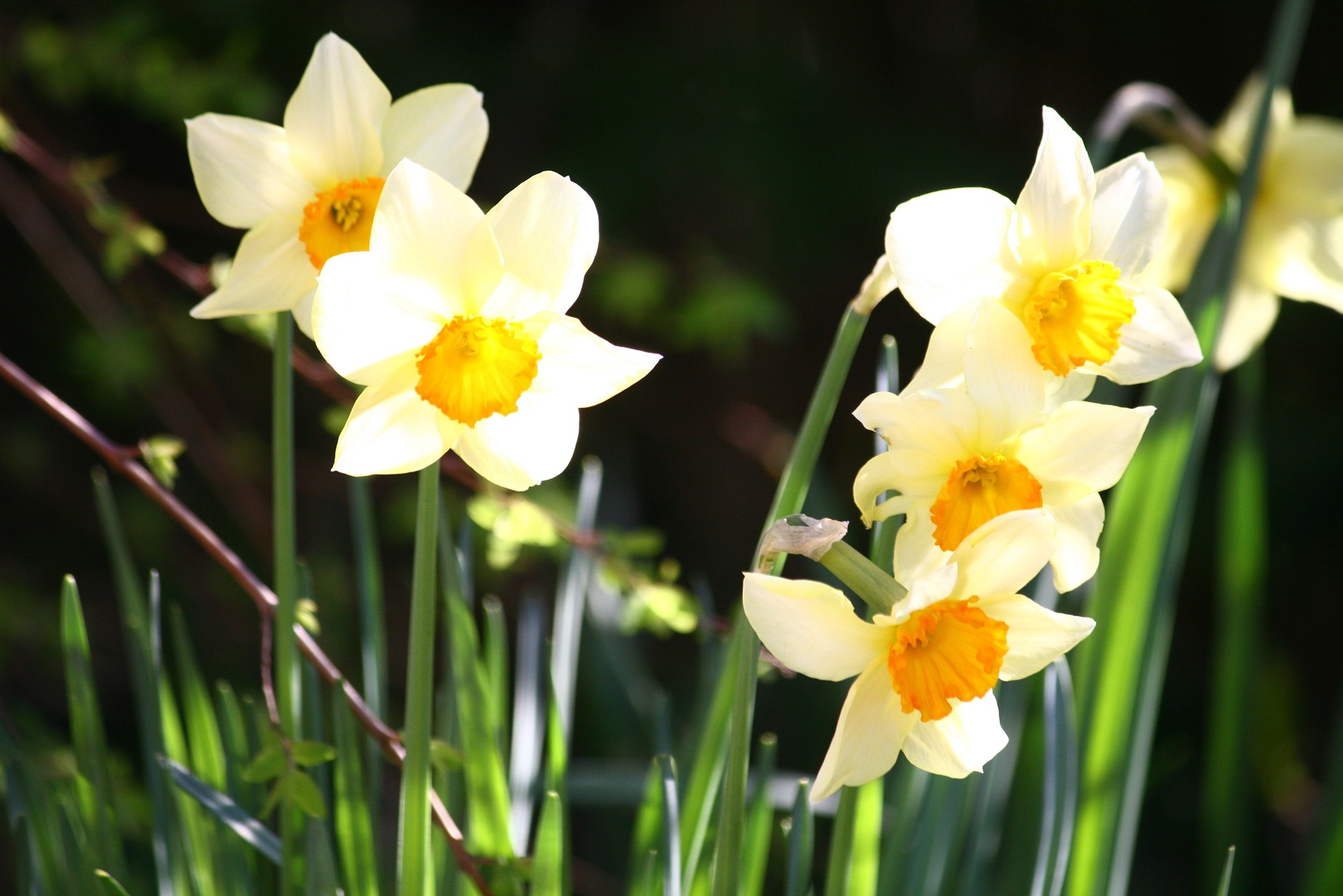
Daffodils are the most pest free spring bulbs you can grow. Alliums, in the onion family, are also unappealing to deer. However, if they’re really hungry, they’ll eat anything.
9. What about other pests?
There are measures you can take to keep unwanted visitors from eating your bulbs. Lay a small layer of hardware cloth or chicken wire over the top and around the sides of the new plantings. Just don’t forget to remove it come spring.
10. Will my flower bulbs come up again next year?
Flower bulbs are divided into three groups: annuals, perennials and naturalizing. Annual bulbs such as tulips produce their most beautiful display during the first year and if you’re lucky, may also emerge the following year. Perennial bulbs such as daffodils and hyacinth emerge and continue to bloom year after year. Naturalizing bulbs such as muscari, snowdrops and crocus will emerge every year and better yet, increase in number.
Have a question we didn’t answer? Visit our Facebook page and ask us!
Tips for planting bulbs from Longfield Gardens, premium online bulb source
Fall is planting time for spring-blooming bulbs such as tulips, daffodils and alliums. There’s nothing difficult about planting bulbs and you can plant dozens of them in just a few minutes.
Spring bulbs are always the first flowers to bloom each spring,” said Hans Langeveld, co-owner of Longfield Gardens. “You plant them in fall and then forget about them until spring rolls around and your garden is filled with flowers that are ready to bloom.”
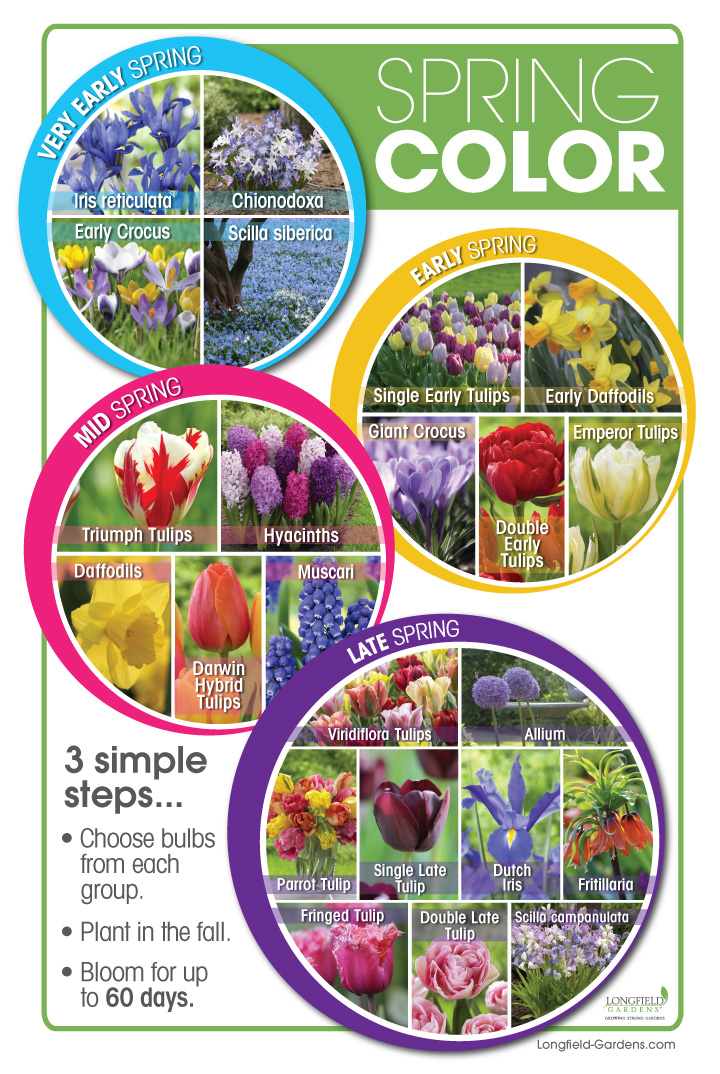
Langeveld assures gardeners that creating a colorful spring garden requires just 3 easy steps: choosing your bulbs, knowing when to plant, and following some basic planting instructions.
Best Time for Planting Bulbs
“You want to get the bulbs into the ground at the proper planting time for your region,” Langeveld said.
As a general rule, spring-blooming bulbs can be planted anytime before the soil begins to freeze. But bulbs will benefit from having a few weeks to establish roots before the ground is frozen.
Gardeners can reference this map for recommended planting times. Light purple areas should plant bulbs from September to October; medium purple from September to November and dark purple areas should plant between October and December.
Breathe it in! Spring has arrived and brought the first flowers of the year with it! After the white of winter, sunny daffodils and a rainbow of tulips are a welcome sight.
Flower bulbs are inexpensive, easy to plant, provide stunning cut flowers and can last for years when taken care of properly.
The secret to keep spring flowering bulbs producing year after year is a spring time feeding of Bulb-tone.
Think about it. When planted, bulbs are packed full of nutrients to last all winter. Come spring, they’ve used all the food they have stored.
It’s like they’ve just run a winter-long marathon — and now they need you to greet them at the finish line with snacks and water.
Right now, your spring bulbs — tulips and daffodils included — are exhausted and starving even if they don’t look like it!
So, they need a hefty feeding to keep them robust.
Bulb-tone gives them everything they need to come back strong next year. Fertilizing spring bulbs also helps them fight off diseases and pests.
So, when should you feed spring flowering bulbs?
Fertilize spring bulbs after the plants have bloomed and are about 6” tall. That’s just about as tall as a dollar bill!
Now, what should you look for in bulb food?
Use an organic plant or bulb food that is low in nitrogen and has a higher amount of phosphorous. Nitrogen is the first of three numbers on fertilizer bags, — phosphorus is the second number on the bag. For example, Bulb tone by Espoma has a 3-5-3 Nitrogen- Phosphorous-Potassium ratio, which is exactly what bulbs need.
The advantage of using a plant food made specifically for bulbs is that it provides a complete feeding.
Your bulbs will love Espoma Organic Bulb-tone. This specially formulated bulb food is fortified with microbes to create a healthy soil and environment for bulbs. Plus, of course, it’s pet and kid friendly.
Now to boost spring bulbs, apply Bulb-tone at a rate of 4 lbs. per 60 square feet. Simply sprinkle the organic bulb food around the bulbs to ensure they come back stronger than ever next year.
One thing to remember – leaves on flowering bulbs produce food, and keep bulbs well fed throughout winter. So embrace your bulbs’ leaves! They add a lovely pop of glossy greenery to your landscape.
Only cut bulbs’ leaves when they begin yellowing or showing signs of decay. For tulips and daffodils, this can happen as late as June or July.
Now that your spring blooming bulbs are stocked with food and nutrients, they should come back next year!
What’s your favorite spring blooming bulb? We love white and yellow daffodils with green leaves – since they showcase Espoma colors! Share your favorite on our Facebook Page.