Espoma Organic
  • Products
    • Close
    • Product Line Overview
    • Plant food finder
    • Garden Fertilizers
    • Potting Soils
    • Lawn Fertilizers
    • Liquid Fertilizers
    • Single Ingredients
    • Conventional Plant Foods
    • Animal Care Products
  • Where to Buy
  • Our Story
    • Close
    • Our Story
    • Locations
    • Historical Timeline
    • Our Commitment
    • Directions
    • Solar
    • Join our Team
    • Espoma Brand Partners
  • Learn
    • Close
    • Espoma Blog
    • FAQ’s
    • Pocket Guide
    • Espoma Guides
    • Garden Clubs
    • Safe Paws Lawn
    • PRODUCT FACT SHEETS
    • Fertilizer Fundamentals
      • Close
      • Understanding Plant Nutrition
      • Reading Labels
      • Choosing the Right Type of Fertilizer
      • Terms & Definitions
    • Gardening Projects
    • Resource Links
  • Contact Us
  • Menu Menu

Plant Some Pansies to Celebrate Spring’s Arrival

April 3, 2019/in Flowers

Pansies and violas look delicate but are in fact, tough as nails. They liven up our gardens and decorative pots in early spring and late fall, unfazed by cold weather or even snow. The first and last flowers of the year are the most precious and their “faces” shine even on the grayest days. Treat yourself to these little sunshines.

All pansies are violas but not all violas are pansies. Think of the smaller flowered varieties like the good old Jonny Jump Up as violas and the larger flowered varieties as pansies. Some violas are perennial, but they are mostly used as cool season annuals. Whichever you choose, they’ll provide seasonal color for weeks, and even months on end!

Today’s violets are descended from a European wildflower. In the Victorian language of flowers they were used to convey feelings of love and admiration or “I’m thinking of you.” Sentiments not openly shared in that time. The pansy was also the symbol adopted by the Free Thinkers Society, as the word pansy is from the French verb pensée, meaning to think. Wouldn’t you like to send a secret message to someone special?

Another charm of this family of flowers is that they are edible. In the simplest form, you could float one small flower on top of a cocktail. Decorate cakes and salads with their fresh blooms, add them to herb butters or suspend them in honey or jellies. Just one petal of the larger flowered pansies looks heavenly when garnishing appetizers. They even go with grilled meat. When consuming, it’s always best to use your own organically grown flowers and give them a quick rinse before eating.

Both pansies and violas can be planted in the ground, accentuating the edge of borders or growing up together with your spring bulbs. They are marvelous in containers too. An early season container combination could include a closely planted base of violas with pussy willow branches stuck into the soil between them for height. In the autumn, look for the orange and black varieties for a Halloween theme.

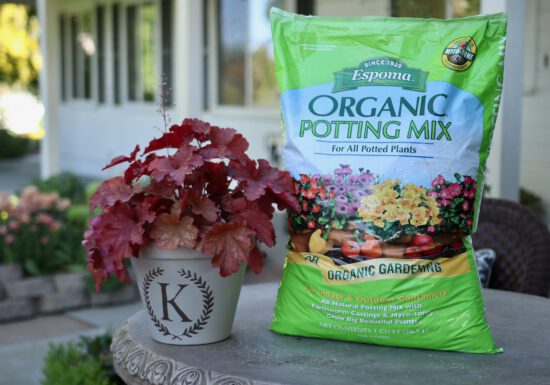
When assembling your container, make sure to use good quality organic potting soil like Espoma’s Organic Potting Mix and feed your container plants once a month with a Espoma’s Bloom! Liquid Fertilizer. This foundation will ensure that your plants have everything they need to thrive and bloom and be safe to eat. If you’re planting your violas in garden beds give them a feeding of Plant-tone, an organic, slow release fertilizer.

Violas and pansies will grow in sun or part shade but will do best with about 5-6 hours of light per day. Pansies will bloom longer if they get late afternoon shade. They don’t really like the heat. They both do best in moist but well-drained soil. In general violas tolerate both cold and heat better than pansies. Deadheading spent flowers is well worth your time and will keep plants flowering longer.

Espoma products for pansies and Violas

Espoma Organic Potting Soil MixBloom! Plant Food


Where to Buy
https://www.espoma.com/wp-content/uploads/2018/06/pansies.jpg 854 1280 espoma https://www.espoma.com/wp-content/uploads/2023/05/espoma-logo340w-1.png espoma2019-04-03 08:00:002019-05-07 09:56:09Plant Some Pansies to Celebrate Spring’s Arrival

Perlite vs. Vermiculite

March 29, 2019/in Espoma Videos, Flowers, Fruits & Vegetables, Spring Gardening

Perlite or Vermiculite? How do you choose which one to use?

For Drainage and Aeration: Choose perlite
For Water Retention: Choose vermiculite

In this video, Laura from Garden Answer breaks down when to use which.

Perlite

  • Great for or Seed Starting or blending a custom potting mix
  • Helps loosen heavy soils and prevents compaction
  • White granular particles contain about 6% water
  • Neutral pH
  • Holds nutrients and 3-4 times it’s weight in water
  • Clean, odorless, sterile and non-toxic
  • Will not rot or mold
  • Lightweight substitute for sand
  • Can float to the top of potted plants due to its light weight

Vermiculite

  • Great for or Seed Starting or blending a custom potting mix
  • Helps loosen heavy soils and prevents compaction
  • Retains moisture and plant nutrients
  • Mixes well with soil
  • Clean, sterile, odorless, non-toxic
https://www.espoma.com/wp-content/uploads/2019/03/IMG_3082.jpeg 3368 6000 espoma https://www.espoma.com/wp-content/uploads/2023/05/espoma-logo340w-1.png espoma2019-03-29 14:39:432024-08-12 20:37:58Perlite vs. Vermiculite

VIDEO: Spring Flowers Melt the Winter Blues with Garden Answer!

March 19, 2019/in Blog, Flowers, Garden Answer

Spring has sprung and it’s time to get outside and plant up some early spring containers. A trip to the local garden center will surely inspire you. Plant big pots of brightly colored bulbs and annuals to liven up entryways, patios and balconies. Laura from Garden Answer shows you just how easy it is to do in the video below.

Laura fills her containers with tulips and violas, true harbingers of spring. Alternatively, you could also use daffodils and other cold hardy annuals like Iceland poppies or nemesia. In cold climates, it’s important to select plans that are hardy enough to withstand a cold snap.

These early spring containers will flower for a month or so, bridging the gap from early spring to the frost-free date. When it’s time to plant summer containers, replant the tulips out into the garden where they’ll bloom again next spring. The violas may also be moved to a lightly shaded area of the garden.


Four Easy Steps to Early Spring Containers

  1. Prep Containers. Fill containers three-quarters full with good, quality potting soil like Espoma’s Potting Mix and prepare to plant bulbs at the depth they were in the nursery pot.
  2. Add Nutrients. Add Bulb-tone fertilizer to the soil, following package directions.
  3. Get ready to plant. Gently remove the plants from their pots and loosen roots. Add plants.
  4. Finish it up. Backfill containers with more potting soil and water deeply.


Enjoy flowers for even longer by choosing tulips or daffodils that are not yet in full bloom. When finished blooming, just remove the flower stem. The leaves will still provide a vertical accent and the bulbs need the foliage to replenish themselves.

Taking time to deadhead the violas will extend their bloom time. If temperatures are cool, you may only need to water containers once a week.

Check out these videos from Garden Answer about tulips and early spring planting.


Plant Your Window Boxes Like Garden Answer


How to Care For Your Tulips After They’ve Bloomed


Featured Products:


Where to Buy

https://www.espoma.com/wp-content/uploads/2019/03/Thumbnail.jpg 1080 1920 espoma https://www.espoma.com/wp-content/uploads/2023/05/espoma-logo340w-1.png espoma2019-03-19 14:13:302024-03-13 15:58:00VIDEO: Spring Flowers Melt the Winter Blues with Garden Answer!

5 Flowers for Halloween

October 24, 2018/in Flowers

With Halloween just around the corner, it’s time to start decorating. While some enjoy   spooky and scary décor, others delight in the whimsical side of Halloween. Planting orange plants will provide some living décor for a Happy, and not so scary, Halloween!

These plants provide an instant festive flare and grow well in containers on your porch, deck or patio. Place them alongside pumpkins and other décor. You can bring some of these inside, to add to your own haunted house! Try a few of these for a fun, floral twist this Halloween:

5 Orange Plants for Halloween

Photo courtesy of Proven Winners

Bracteantha

These beautiful flowers will elevate your space with their pumpkin orange petals and bright yellow centers. While they are an annual, they work well for the fall season without having to commit all year long. Plant them in full sun to watch these foot-tall stems steal the show. Use Espoma’s Organic Flower-tone when planting to keep the vibrancy of these flowers through the Halloween holiday.

Marigolds

The bold color and wonderful scent set marigolds apart. Known for sparking strong emotions in people, this flower works well for the occasion. Since they are easy-to-grow and require full sun, you will see marigolds all season long. Plus, they start to bloom in the spring and will continue through the end of autumn – they are worth the work. They are hardy and will grow in zones 2-11.

Goldenrod

While this is not exactly the bright orange Halloween suggests, goldenrod is still one of the most visually stunning plants to put in your yard. It is debated often whether it is a weed or a wildflower, so if you are on the fence about it, plant it in a container or a garden bed to contain where it will go. It grows well in full sun and just about anywhere.

Dahlias

As a fan favorite, your neighbors will be checking out your garden every chance they get! This might be the easiest bloom to grow on the list. They are technically a ‘tuber’, and are best fed with  Espoma Organic Bulb-tone in the spring (once the ground is no longer frozen). They are available in all shapes and sizes. Be sure to pick out your favorite orange varieties to make a stunning fall appeal. In zones 8-10 simply plant and forget them (though you won’t forget the flowers!).  In cooler zones grow them as annuals or dig them up in the fall and store dry indoors.  You can divide them and replant the following spring.  Be sure to use some Bio-tone Starter Plus when planting!

Helenium

Sometimes known as sneezeweed, this vibrant orange bloom will not affect allergy sufferers. It will however, brighten up your space and attract all kinds of pollinators. They come in shades of orange, yellow, dark red and golden brown with a prominent center and stiff skirt-like petals. Plant them in full sun with a well-draining soil. Helenium grows well in zones 3-9.

Want to add more fall flair to your yard? Laura from Garden Answer shows us how to create a fall container.


Where to Buy
https://www.espoma.com/wp-content/uploads/2018/10/Helenium-1-1.jpg 667 1000 espoma https://www.espoma.com/wp-content/uploads/2023/05/espoma-logo340w-1.png espoma2018-10-24 17:02:292024-08-23 08:34:585 Flowers for Halloween

7 Flowers for a Sun-Kissed July Bouquet

August 1, 2018/in Flowers

Summertime brings plenty of sunshine, relaxing days outdoors, fresh veggies ready for harvest farmers markets — and best of all, fresh flowers from your garden. The season’s hot weather makes it perfect for enjoying outdoor blooms and snipping a few off to create your own sun-kissed bouquet. Check out the below varieties that will add a big burst of color from late summer into fall.

Sunflowers

Nothing says summer quite like a bright and cheery sunflower. Choose dwarf varieties which typically have smaller blooms and reach about 1 foot in height. They are perfect for small space gardening and children love planting these bright flowers. Grow in full sun or partial shade in Zones 1-10. Start sunflowers indoors in Espoma’s seed starting mix for extra flower power.

Dahlias

A classic favorite, dahlias dazzle with blooms from mid-July until September. Available in a variety of sizes, colors and designs, it’s hard to plant just one. These dazzling beauties will add style to your garden anywhere you plant them. While they are technically a tuber, you plant them the same way you would plant a bulb. Dahlias are winter hardy in zones 8-11, but gardeners in zones 2-7 can plant them in the spring.

Zinnias

Find zinnias in a variety of bright and beautiful colors. These heat-tolerant plants bloom quickly from mid-summer until frost and are easy to grow. The more you cut your zinnias, the more flowers the plants will produce. While these flowers are deer resistant, they are monarch butterfly favorites. Grow in full sun in Zones 1-10.


Hydrangeas

Guide to Growing Hydrangeas Here

Hydrangeas embody everything we love about gardening. They have billowy texture, come in bright colors and are easy to care for. With their larger-than-life blooms and immense foliage, they can be planted anywhere from container to flower bed. Check with your local garden center to find the best hydrangea variety for your zone.

Lavender

Perfectly purple lavender is a garden must-have. Their flowering period covers the summer months of June to August. As a bonus, their scent is known to deter pesky mosquitoes. Use lavender in a bouquet just on its own or as filler with other summer blooms. Best suited for zones 5-8.

Roses

Roses are the most classic flower to include in a garden. They’re prolific bloomers, fragrant and colorful. They are hardy in zones 4-9 and with the right care, can come back to thrive year after year. Feed your roses monthly with Espoma’s Organic Rose-tone to ensure proper growth.


Gerbera Daisies

With a bright and cheery demeanor, gerbera daisies have quite a bit of flair. They will have single, double or even multiple petals, which can add some texture and contrast to your garden. They will withstand the summer heat with their sturdy stems and big blooms. Feed regularly with Flower-tone to give their stems a boost.

Products:


Where to Buy


https://www.espoma.com/wp-content/uploads/2018/04/shutterstock_786179203.jpg 664 1000 espoma https://www.espoma.com/wp-content/uploads/2023/05/espoma-logo340w-1.png espoma2018-08-01 08:00:082022-04-13 13:31:237 Flowers for a Sun-Kissed July Bouquet

Best Wildflowers for your Wedding Bouquet

July 17, 2018/in Flowers

Whether your wedding colors are blush and bashful or burgundy and navy, cut wildflowers from your own garden will go with almost any color pallet.

Did you know growing these bouquets of pastel-hued flowers or fiery reds and yellows can be done right in your own backyard? The important thing is to be creative, maximize your growing abilities and time your blooms with your big day.

5 Wildflowers for Wedding Bouquets

Sunflowers

Choose hybrid, pollenless varieties of sunflowers for bouquets and centerpieces. Varieties that are single-stem will produce one beautiful stem per seed or plant in a short amount of time. Choose from a variety of shapes and colors. Golden yellow sunflowers with dark-centers are classic, but ones with green centers or lemon-hued flowers make for unique looking bouquets. Grow in full sun or part shade in Zones 1-10. Feed blooms with Espoma’s Bio-Starter Plus when you plant for extra flower power.

Zinnias

Find zinnias in a variety of bright and beautiful colors. These plants bloom from mid-summer until frost and are one of the easiest wildflowers to grow. Plus, the more you cut zinnias, the more flowers the plants will produce. While these flowers are deer resistant, they are monarch butterfly favorites. Grow in full sun in Zones 1-10.

Cosmos

A popular cut flower, cosmos will add a pop of color to any bouquet. Their pink, crimson, white or chocolate flowers last until frost and are attractive to both butterflies and hummingbirds. Flowering non-stop, two to three inch blossoms grow on fern-like stems. Feed throughout the growing season with Flower-tone to get fantastic blooms. Grow in full sun in Zones 1-10.

Daisies

With their white rays and yellow centers, daisies brighten up any bouquet. They grow 1-3 feet tall and will not take up too much space in a garden or bouquet. Feed regularly with Bloom! liquid plant food for vibrant whites and beautiful fragrance. Grow in full sun in Zones 3-8.

Black-eyed Susan

Named for their dark brown centers peeking out of the gold or bronze petals, black-eyed susans thrive in the sun. These daisy-like blooms are perfect for a late summer or fall bouquet. They tend to grow to about 2 feet tall and handle high heat and drought conditions well. Grow in full sun in zones 3-9.

Directions

It’s time to make the cut once your wildflowers are in bloom.

Cut stems in early morning or late evening to prevent wilting from the harsh sun and heat. Strip any foliage  that will be placed directly in the water. Leave foliage near top of the stems for added interested and filler in your bouquet.

Thinking bulbs might be a better fit for your wedding bouquet? Find out how Garden Answer gets beautiful blooms.

https://youtu.be/qMDXnGYJUlc

Espoma Products for DIY Bouquets

Bloom! Plant Food


Where To Buy
https://www.espoma.com/wp-content/uploads/2018/07/zinnia-cut-flower-bouquet.jpg 667 1000 espoma https://www.espoma.com/wp-content/uploads/2023/05/espoma-logo340w-1.png espoma2018-07-17 08:00:112024-08-19 11:34:19Best Wildflowers for your Wedding Bouquet

Plant America – Red, White and Blue Plants

July 3, 2018/in Flowers

While getting ready to decorate and hang the flag high for the Fourth of July, think of your garden. Show off your patriotic colors with red, white, and blue plants for your garden or containers.

Don’t worry though, patriotic colors stay in season all year long. Red hues will make your garden look bigger, white plants are perfect for a moon garden and blue plants bring peace of mind for relaxation.

Plants for the Fourth of July

Rocket’s Red Glare – picks for red plants:

Photo courtesy of Star® Roses and Plants

Red Roses

Red roses are one of the most traditional plants to grow in the garden. They either become the statement plant or are a fine complement to a focal point. You can use roses to cover up an unsightly area or add fragrance. Feed regularly with Rose-tone to ensure bright colors and thriving blooms.

Red Gerbera Daisies

With a bright and cheery demeanor, gerbera daisies have quite a bit of flair. They will have single, double or even multiple petals, which can add some texture and contrast to your garden. They will withstand the summer heat with their sturdy stems and big blooms. Feed regularly with Flower-tone to give their stems a boost.

Broad Strips and Bright Stars- picks for white plants:

Ox-Eye Daisies

Ox-Eye daisies’ will be in full bloom by the Fourth of July. With their white rays and yellow centers, they will be sure to brighten up a patriotic space. They grow 1-3 feet tall so they will not take up too much space. Feed regularly with Bloom! liquid plant food for vibrant whites and beautiful fragrance.


White Dahlias

With a variety of sizes and varieties, dahlias can add a lot to a garden. As one of the most popular summer flowers, dahlias live up to their reputation. Whether you choose a ball or a collarette, the dahlia will be the talk of the neighborhood. When planting, feed with Bulb-tone for full, bulbs that will last all summer.

Twilight’s Last Gleaming – picks for blue plants

hydrangea care, hydrangea color, growing hydrangas

Photo courtesy of Bailey Nurseries

Blue Hydrangeas

Large, beautiful blue hydrangeas are a great addition to your patriotic garden. Their bold blooms make them perfect for freshly cut or dried flowers. Getting off to the right start in the right location is key to keeping your hydrangeas blue. If you are having a little trouble keeping your blooms blue, feed with Holly-tone and amend the soil with Espoma Organic Soil Acidifier to keep the soil acidic.

Brazelberries jelly bean, Espoma soil acidifier, Holly-tone, growing blueberries

Photo courtesy of Bushel & Berry

Blueberries

A quirky take for your patriotic garden, but perhaps one of the most American fruits, blueberry is another great choice. With their red insides and blue exteriors, they would be perfect with red and white companions. Plus when you are itching for a holiday snack, head right outside and pick one off! Be sure to feed with Holly-tone to give it the nutrients it needs.

We recommend using Espoma Organic Bio-tone Starter Plus at the time of planting to help produce large root systems very quickly.  This will help ensure that new plantings get maximum water and nutrients from the soil to minimize transplant loss.


Featured Products:


Where To Buy


https://www.espoma.com/wp-content/uploads/2018/07/white-dahlia-.jpg 667 1000 espoma https://www.espoma.com/wp-content/uploads/2023/05/espoma-logo340w-1.png espoma2018-07-03 17:00:422024-08-17 09:06:56Plant America – Red, White and Blue Plants

Hydrangea Hype: Garden Inspiration

June 27, 2018/in Flowers

Beautifully flowering hydrangeas are a telltale sign of summer. The white, blue, pink or purple flowers paired with bright green foliage look gorgeous in every summer garden.

With big colorful blooms and beautiful green foliage, summer’s favorite flower makes a bold statement in any garden.

Hydrangea Basics

Besides their obvious beauty, there are some facts about hydrangeas worth knowing before embarking on your hydrangea garden journey. With many varieties of the hydrangea species, it is important to keep in mind which ones thrive in your zone and garden. For example, if you live in a cool zone, the Smooth Hydrangea (Hydrangea arborescens) is a great choice to add to your garden.

Hydrangeas are acid-loving plants. To keep your hydrangeas happy use Espoma’s Organic Holly-Tone to fertilize.  You can even adjust the acidity of the soil to change the color of some hydrangeas. Do you prefer blue to pink? It’s easy to enjoy a garden full of blue hydrangeas by simply decreasing (lowering) the pH of the soil. We recommend amending your soil with Espoma’s Soil Acidifier to help turn your hydrangeas blue.

Hydrangeas in containers

Short on space? No problem! There are several varieties that will thrive in your small space. Our Hydrangea Variety Guide will help find the right dwarf hydrangea to put in your containers.

Next, find a spot that matches the amount of light they need. Be sure to use a good quality potting soil such as Espoma’s Organic Potting Mix. Choose a container that is 1/2 or 1/3 bigger than the plant itself. It is important that the plant does not get crowded in its container. The last step is to water well and most importantly, enjoy the big beautiful blooms!


Don’t settle for bushes. Grow a tree!

While we’re typically used to seeing low growing hydrangea bushes, how great would it be to see hydrangeas on trees? Well, the good news is, you can! Hydrangea paniculata, also known as Grandiflora, produces white conical flowers instead of big spherical blossoms. With some pruning and proper care, it can grow up to 25 feet tall! Grandiflora, known among gardeners as Pee Gee Hydrangea, is your best bet for growing a hydrangea tree.  Check your hardiness zone, as hydrangea trees thrive in USDA plant hardiness zones 5 through 8a. Hydrangeas prefer full sun for most of the day and a bit of afternoon shade, so be sure to choose a generally bright spot.

One of the most important parts of growing a hydrangea tree is pruning. The main difference between a hydrangea shrub and a tree is training, pruning and proper care.


Friends that bloom together stay together

Hydrangeas make great companion plants. Pair them with delicate foliage, bold flowers or subtle ornamental grasses for an extra pop of color in your garden. Pair with shrubs, flowers and grasses for a look that pleases.

Begonias and geraniums are beautiful flowers that come in many different shades making them a perfect companions for hydrangeas. Create a colorful rainbow garden by pairing blue hydrangeas with pink geraniums or white hydrangeas with scarlet begonias. Whichever you choose, look for companion plants that bloom around the same time.

Photo courtesy of Proven Winners

Multi-size, multi-color, and just plain beautiful

When we picture hydrangeas — with their larger-than-life blooms and immense foliage — we naturally envision large plants. Believe it or not, hydrangeas come in not one, not two, but three sizes! Dwarf varieties are petite beauties that pack a powerful punch. Scroll through our Hydrangea Variety Guide to find the right dwarf or full-size hydrangea for you.

hydrangea care, hydrangea color, growing hydrangas

Hydrangea appreciation

Appreciate your hard work growing your hydrangea garden by putting together hydrangea bouquets to decorate your home, creative art projects, making a hydrangea wreath, or dry them out for year-round arrangements! There is no end to the beauty your hydrangeas will bring to your garden and your home.


Espoma Products Hydrangeas will Love:

Where to Buy
https://www.espoma.com/wp-content/uploads/2018/06/2375-penny-mac-hydrangea-landscape.jpg 478 640 espoma https://www.espoma.com/wp-content/uploads/2023/05/espoma-logo340w-1.png espoma2018-06-27 11:30:182019-05-07 09:58:07Hydrangea Hype: Garden Inspiration

5 Edible Flowers to Grow In Your Garden

June 21, 2018/in Flowers

When you think about an edible garden, berries, tomatoes and salad greens usually come to mind. However, nothing is quite as gourmet or unusual as adding bright blooms and petals to your salads, desserts and meals. Edible flowers picked straight from your organic garden and rinsed before adding to a dish make a colorful and tasty complement to your summer meals.

The best tasting part of many flowers is the petals. Remove pistils and stamens or stems before consuming.

Note that not all flowers are edible, do your research to properly identify flowers before eating them. You’ll also want to make sure your flowers are grown organically for the healthiest and safest choice. Choose Espoma’s Bloom! liquid fertilizer or Flower-tone for organic gardens.

For flowers that look good as well as taste good, consider some of the following:


Daylilies

These perennial garden favorites also make for great meal additions. Add to stir-fries salads, dessert or sautés. Harvest blossoms just before they open and stuff as you would squash blossoms. These plants are grown almost anywhere, but thrive in USDA hardiness zones 4-9.

Lavender

Lavender is an all-purpose bloomer. Besides serving as both an edible and ornamental plant in your garden, lavender is also pet-friendly and can help to repel pests. Add flowers to sauces, dressings, baked goods, ice cream and more. Don’t forget to remove the flowers from the stalk. Hardy in zones 5-9.

Coneflower

Bright and colorful coneflower is known for its healing properties and is often used as a home remedy for colds. These plants are also known favorites of pollinators. Add petals to salads and dishes for a vibrant splash of color, save the roots and seed heads for tea.  Best grown in zones 3-9.

Violas (Pansy, Viola, & Violets)

Sweet pansies, violas and violets make wonderful additions to lollipops, ice cubes and cakes. Pansies are especially great because the whole flower is edible. Choose varieties best suited to your growing conditions. Best suited for zones 2-10.

Best Products for Growing Edible Flowers:

Bloom! Plant Food

Where to Buy
https://www.espoma.com/wp-content/uploads/2018/06/pansies.jpg 854 1280 espoma https://www.espoma.com/wp-content/uploads/2023/05/espoma-logo340w-1.png espoma2018-06-21 08:00:162024-08-16 13:46:515 Edible Flowers to Grow In Your Garden

Let’s Build a Butterfly Garden 🦋

June 18, 2018/in Flowers

What’s better than decorating your home with summer bouquets of flowers directly from your garden? Having a cut flower garden is not only convenient for on-demand bouquets, but also for adding color to your garden with stunning oranges, yellows, purples, pinks, and blues. While you often choose plants for bees, these flowers are for butterflies.

Pollinators need love year-round, and that starts with gardening organically. In honor of National Pollinators Month, here are our best tips for celebrating by building a butterfly bouquet with the flowers they love!

 Breathtaking Flowers Butterflies Will Love

Yarrow (Achillea)

Yarrow is a vibrant yellow perennial. It has a lengthy flowering time from June through September. It is a relatively tall flower with an average growth height of 2.5-3 feet. Butterflies love these flowers because they’re easy to land on and also loaded with sweet nectar. Give your flowers a strong soil base to help them thrive through the hot summer months with Espoma’s Organic Garden Soil. Best suited for zones 3-8.

Ox-Eye Daisies

Ox-Eye Daisies are a classic addition to your garden. Their flowering time covers the summer months from May to August. With their white rays and yellow centers, they will be sure to brighten up your cut flower garden. They grow 1-3 feet tall so they will not take up too much space. Butterflies love Ox-Eye Daisies because they are nectar-rich. Best suited for zones 3-8.


English Lavender

English Lavender is a garden essential! Their flowering period covers the summer months of June to August. They grow to the perfect height of 1.5-2 feet. People and butterflies love English Lavender for its fragrance and remarkable blue-purple color… Best suited for zones 5-8.

Blanket Flower (Gaillardia)

The Blanket Flower is a vivid, color-rich butterfly flower to add to your garden. They flower in summer months from May through August. Blanket Flowers tend to be on the shorter side, only growing 6-12 inches tall. Their stunning blood-orange red petals and yellow tips will have your jaw on the floor by the time flowering season rolls around. Butterflies cannot pass up the nectar and vivid colors on these stunning flowers. In order to get the biggest flowers, fertilize with Espoma’s Bloom! liquid plant food. Best suited for zones 3-10.

Bee Balm

Bee balm is another pollinator favorite that should earn a spot in your pollinator garden. The Bee Balm’s flowering period only covers July through August, but their violet blue, red, pink, or white color will be worth it. They thrive in zones 4-8 and are relatively tall, growing an average of 2-3 feet. Bee balm is nectar-rich and its bright coloring makes it an easy sell to butterflies. Boost your Bee Balm with Espoma’s Organic Flower-tone fertilizer for big, healthy flowers. Best suited for zones 4-8.


Featured Products:


Where to Buy


https://www.espoma.com/wp-content/uploads/2017/06/Butterfly-Flower.jpg 1667 2500 espoma https://www.espoma.com/wp-content/uploads/2023/05/espoma-logo340w-1.png espoma2018-06-18 16:30:192025-06-26 11:24:50Let’s Build a Butterfly Garden 🦋
Page 7 of 13«‹56789›»
Where to Buy

Get News & Updates

Recent Posts

  • Video: Feeding Evergreens with Skye Hamilton 🌲
  • VIDEO: A Formal Garden Tour with Summer Rayne Oakes
  • VIDEO: Repotting in the Greenhouse with Garden Answer
  • VIDEO: How to Winterize Your Chicken Coop with Summer Rayne Oakes
  • VIDEO: Planting Spring Bulbs in Containers 🪴🌷 with Summer Rayne Oakes

Tags

All-Purpose Potting Mix bio-tone Bio-tone Starter Bio-tone Starter Plus Cactus Mix caring for houseplants Container Gardening DIY project Espoma espoma grown espoma organic Espoma Organics Espoma Video fall gardening Family fert flower garden flowers garden Garden Answer Gardening gardening tips gardens grow holly-tone houseplants Indoor! indoor gardening indoor plants Kaleb Wyse organic organic fertilizer Organic Gardening organic plant food Organic Potting Mix Outdoor Gardening Planting plants Potting Mix potting soil Spring Gardening summer rayne oakes vegetable garden Vegetable Gardening Wyse Guide

Espoma. A Family Tradition Since 1929.

Espoma Organic logo
  • Espoma Dealer
  • Espoma Pro
  • Garden Club
  • Privacy Policy

Scroll to top