Dahlias are beautiful, eye-catching, and one of the most rewarding flowers you can grow, but they do require a little more setup than your average cut flower. A few key steps can make a huge difference in how many blooms you actually get, and how long the season lasts.
This blog is inspired by Episode 285 of the Growing Joy with Plants Podcast, where Maria chats with Anne of The Dahlia House about everything you need to know to grow dahlias successfully this season.
Why Dahlias Are Worth Growing
Dahlias ask a little more of you than zinnias do. You’re dealing with tubers, so the setup matters and they are slightly more sensitive to cold, so many gardeners need to dig them up to overwinter them.
But what you get in return is a flower that comes in almost every color except blue and in many shapes (e.g., tiny pompons & dinnerplate sized).
And they’re generous too! Dahlias are what gardeners call “cut and come again” flowers, which means the more you cut, the more they produce.
Cut big, cut often, and you’ll get more stems. One tuber you plant this spring can multiply into 5, 10, or even 15 new tubers by the time fall comes around, that you can separate and 10x your harvest the following year.
How to Choose and Source Healthy Dahlias

In order to grow healthy Dahlias, it starts with a high quality tuber.
A lot of big box stores source from Holland, and some of those can carry diseases that can spread through your beds. So make sure you buy from a reliable grower who is transparent about their disease protocols.
Also, skip the unicorn dahlias when you’re starting out because those are the rare, limited-run varieties that go for $40 or $50 a tuber. It’s best to start with a solid $8 to $10 tuber, learn the plant, have several successes and build your fancier collection from there.
How to Store Dahlias Before Planting
If your tubers arrive and you’re not ready to plant, you can keep them in the fridge between 40 and 50 degrees. Cold is fine, but freezing turns them into mush.
If you want to get a head start:
1. Grab a plastic grocery bag
2. Add a small handful of soil and a little water
3. Drop in your tubers
4. Leave it under the kitchen sink or in a corner of the dining room for two to three weeks
It sends a wake-up signal to the tuber. Little feeder roots start to grow, eyes start to sprout, and you basically make the growing window longer before the ground is even ready to be worked on.
When to Plant Dahlias
Dahlia tubers should be planted when the soil temperature around 50 degrees at night.
But for a more practical signal, it’s when:
- the lilacs are blooming
- you see the peonies starting to grow
Most aim to get them in the ground a little before the last frost date because the tubers can handle a bit of cold better than a seedling can.
How to Prepare Your Soil for Dahlias
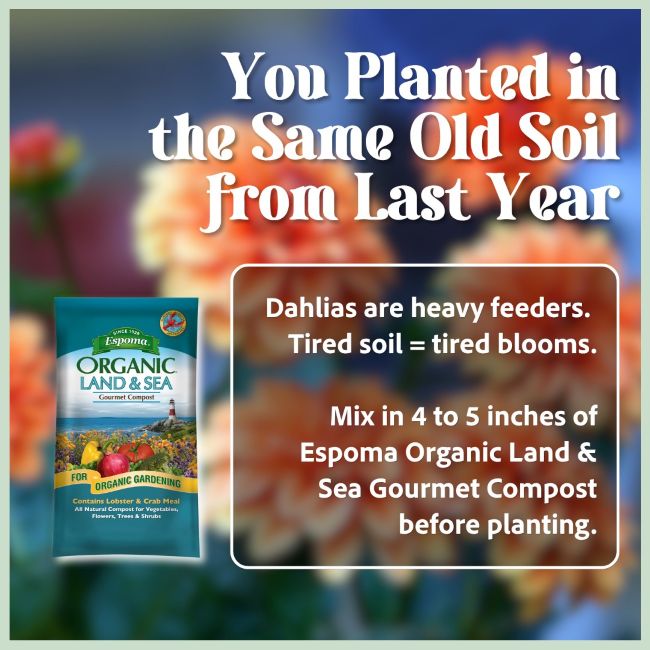
Dahlias are heavy feeders, and many gardeners struggle with getting this right. Anne mentioned that planting in the same untouched soil year after year is like eating white bread every day versus multigrain. There’s just not enough nutrition.
Work in about 4 to 5 inches of compost through the top foot of your bed before planting. Espoma Organic Land & Sea Gourmet Compost is a natural fit here as it feeds slowly and builds up the organic matter dahlias grow in.
At planting time, add Espoma Organic Biotone Starter Plus to give the tubers support as they do the hard work to establish and send out shoots.
How to Plant Dahlias the Right Way
Plant the tuber on its side so the eye (the small bump where the plant grows from) is facing up. Two inches deep is fine, especially if you’re planning to dig them up each fall. They’ll find their way to the surface regardless, but eyes facing up get them there faster.
Space them at least 12 inches apart in the ground. For containers, go big. An 18-inch pot can hold two to three tubers.
How to Protect Dahlia Sprouts from Slugs and Pests
Fresh dahlia sprouts are the favorite snack of every slug and snail.
Anne applies Sluggo Plus before the tubers are even in the ground and then again 3 to 4 weeks later to cover the window when they’re just coming up.
It’s organic, safe for kids and pets, and it also helps with earwigs that can cause problems later in the season.
What Type of Sunlight and Water do Dahlia’s Need?
- Light: Full sun (6+ hours); afternoon shade in extreme heat; you can mist leaves to cool the plant
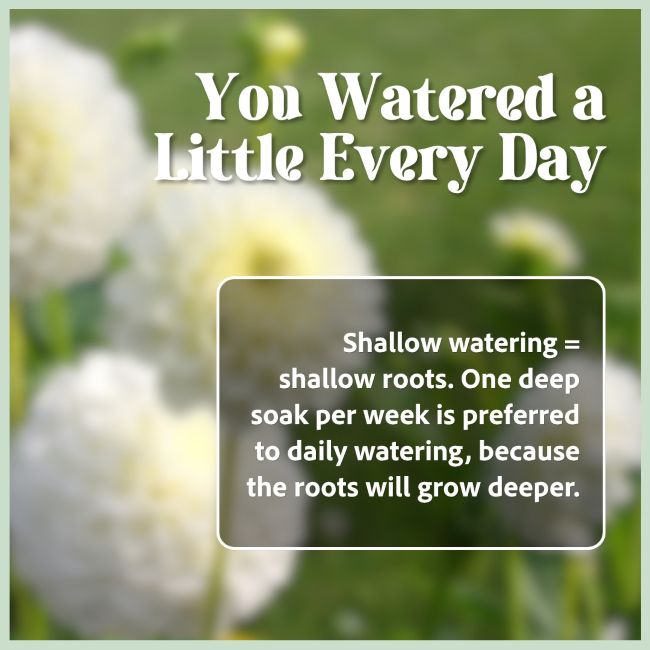
- Watering: Deep soak once or twice a week (avoid daily shallow watering)
How to Cut Dahlias for a Longer Vase Life
Cut in the morning or evening, never in midday heat, and strip the leaves off the stem before it goes in water because the plant keeps trying to feed every leaf, and you want that energy going straight to the bloom.
The biggest vase life tip Anne learned from her mom: cut stems underwater.
Hold the stem end under a running faucet and make your final cut while it’s underwater, because it keeps air out of the stem and lets the flower take in a full drink right away.
Dahlia Bloom Timeline: What to Expect After Planting
Plant in May and don’t expect blooms until late July or August because dahlias are slow growers.
They bloom for 3 solid months and push later into fall than almost anything else in the garden. Anne actually takes vacation in June, because once they’re planted, pinched and growing, they don’t need much until blooms start showing up in July.
Plant them, feed the soil well, pinch at the right time, and then enjoy a season full of gorgeous Dahlia blooms!
To learn more, listen to the full Growing Joy podcast episode
Learn more about Growing Joy with Maria:
🪴🌿 Website
🪴🌿 YouTube
Featured Products: